
Grace Meng (D-NY)
Recognizing the cultural and historical significance of Lunar New Year in 2026.
A Democratic resolution with 3 Republican cosponsors · See all 56 cosponsors
Last activity — Referred to the House Committee on Oversight and Government Reform.
In committee
Introduced and handed to a committee in the chamber it started in.
The committee holds it, and most bills are never heard from again. A hearing or a committee vote would be news; silence is the usual outcome, and it kills the bill without anyone voting against it.
Its path through Congress
- Introduced
- In Committee
A House resolution is the House speaking for itself: stating a position, honouring someone, or setting its own rules. Adopting it is the whole process. Once the House agrees to it, it is officially the House's word; it is not a law, so the Senate and the President have no part in it.
What this bill would do
This resolution recognizes the cultural and historical significance of the Lunar New Year in 2026. It notes that the holiday begins after the second new moon following the winter solstice and extends for 15 days until the Lantern Festival. The text highlights that the celebration has been expanded globally by the Asian diaspora and is observed by millions of people in the United States. The resolution identifies specific cultural names for the holiday, such as Seollal and Tết. Finally, the House of Representatives intends to express respect for Asian Americans and those celebrating worldwide during the Year of the Horse.
Yes
- Scored +5
Would Asian Americans be better off under this?
The resolution expresses respect and offers well wishes specifically to Asian Americans celebrating the holiday.
- Scored +3
Does this narrow racial gaps in how people are treated?
The resolution honors the cultural and historical significance of the Lunar New Year celebrated by Asian Americans.
The opposite
No question was scored the opposite.
Who it would affect, and how
Potential Positive Impacts for People
-
Recognition of Cultural Identity: The resolution recognizes the cultural and historical significance of Lunar New Year, which is celebrated by millions of Asian Americans and many non-Asian Americans in the United States (Resolution Section 1).
-
Expression of Respect: The House expresses its deepest respect for Asian Americans and all individuals throughout the world who celebrate this occasion (Resolution Section 2).
-
Well Wishes: The resolution provides formal wishes for a happy and prosperous new year to Asian Americans and all individuals who observe the holiday (Resolution Section 3).
Potential Negative Impacts for People
- No negative impacts are mentioned in the text.
Groups and Interests Ranking
Every group the model scored this bill for, from -10 to +10. Tap or hover a score for the reason it gave.
- Demographic And Interest Groups
- Would Asian Americans be better off under this? — The resolution expresses respect and offers well wishes specifically to Asian Americans celebrating the holiday.
- Social Issues And Justice
- Does this narrow racial gaps in how people are treated? — The resolution honors the cultural and historical significance of the Lunar New Year celebrated by Asian Americans.
- 2/12/2026
- Submitted in House
- Referred to the House Committee on Oversight and Government Reform.
- 56 Cosponsors added.
4 bills Congress.gov lists as related to this one — companions in the other chamber, earlier versions, and bills this one absorbed or was folded into.
 Ami Bera
Democrat · California
 Brendan Boyle
Democrat · Pennsylvania
 Nanette Barragán
Democrat · California
 Ed Case
Democrat · Hawaii
 Judy Chu
Democrat · California
 Salud Carbajal
Democrat · California
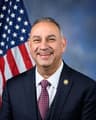 Gilbert Cisneros
Democrat · California
 Herbert Conaway
Democrat · New Jersey
 Suzan DelBene
Democrat · Washington
 Mark DeSaulnier
Democrat · California
 Debbie Dingell
Democrat · Michigan
 Bill Foster
Democrat · Illinois
 Brian Fitzpatrick
Republican · Pennsylvania
 Lizzie Fletcher
Democrat · Texas
 Valerie Foushee
Democrat · North Carolina
 Al Green
Democrat · Texas
 John Garamendi
Democrat · California
 Josh Gottheimer
Democrat · New Jersey
 Jimmy Gomez
Democrat · California
 Daniel Goldman
Democrat · New York
 Henry Johnson
Democrat · Georgia
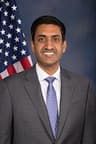 Ro Khanna
Democrat · California
 Raja Krishnamoorthi
Democrat · Illinois
 Young Kim
Republican · California
 Sydney Kamlager-Dove
Democrat · California
 Zoe Lofgren
Democrat · California
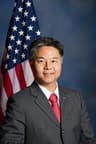 Ted Lieu
Democrat · California
 Susie Lee
Democrat · Nevada
 Nicole Malliotakis
Republican · New York
 Doris Matsui
Democrat · California
 Seth Moulton
Democrat · Massachusetts
 Kevin Mullin
Democrat · California
 Dave Min
Democrat · California
 Jerrold Nadler
Democrat · New York
 Eleanor Norton
Democrat · District of Columbia
 Jimmy Panetta
Democrat · California
 Ayanna Pressley
Democrat · Massachusetts
 Deborah Ross
Democrat · North Carolina
 Robert Scott
Democrat · Virginia
 Brad Sherman
Democrat · California
 Linda Sánchez
Democrat · California
 Marilyn Strickland
Democrat · Washington
 Eric Swalwell
Democrat · California
 Thomas Suozzi
Democrat · New York
 Suhas Subramanyam
Democrat · Virginia
 Lateefah Simon
Democrat · California
 Dina Titus
Democrat · Nevada
 Mark Takano
Democrat · California
 Norma Torres
Democrat · California
 Rashida Tlaib
Democrat · Michigan
 Ritchie Torres
Democrat · New York
 Jill Tokuda
Democrat · Hawaii
 Derek Tran
Democrat · California
 Nydia Velázquez
Democrat · New York
 Bonnie Watson Coleman
Democrat · New Jersey
 James Walkinshaw
Democrat · Virginia