Bill · H.R. 9132· House(119-HR-9132)
Preventing International Surrogacy Exploitation Act
- Introduced
- 6/3/2026
- Last activity
- 6/3/2026 — Referred to the House Committee on the Judiciary.
- Sponsored by
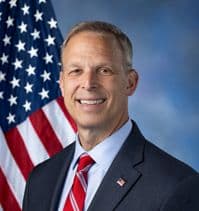
- Scott Perry
- Cosponsors
- - 28 - 0
- Introduced
- In Committee
What this bill would do
The Preventing International Surrogacy Exploitation Act seeks to prohibit foreign nationals from entering into or enforcing surrogacy contracts within the United States. It aims to invalidate agreements made between foreign national prospective parents and U.S.-based surrogate mothers. The bill intends to impose criminal penalties on surrogacy brokers who facilitate these void agreements. Additionally, the act addresses the legal custody of children born from such arrangements. It also limits the ability of foreign nationals to claim immigration benefits based on the citizenship of children born through these prohibited contracts.
Yes
Does this give the federal government more power?+5
The bill increases federal authority by invalidating private contracts and imposing criminal penalties on brokers.
Does this make elections run better?+3
The bill aims to prevent foreign nationals from obtaining U.S. citizenship through surrogacy to potentially influence elections.
Would children be better off under this?+2
The bill establishes that custody for children born under voided agreements will be decided based on the best interests of the child.
The opposite· 3 of 5
Would immigrants be better off under this?-6
The bill restricts immigration benefits for foreign parents of U.S. citizen children born via surrogacy.
Would business owners be better off under this?-5
Surrogacy brokers face significant criminal penalties and fines under this act.
Does this make it easier for immigrants already here to become citizens?-5
The bill explicitly limits the ability of foreign parents to claim immigration benefits based on the citizenship of their children.
Who it would affect, and how
Potential Positive Impacts for People
-
Criminal Penalties for Brokers: The bill imposes fines and up to 10 years in prison for surrogacy brokers who knowingly or recklessly facilitate void agreements (Section 5).
-
Legal Clarity for Custody: For children born under these void agreements, legal custody would be decided based on the "best interests of the child" according to the law of the state where the surrogate resides (Section 6).
-
Protection against Foreign Influence: The bill finds that current unrestricted surrogacies allow foreign nationals, including those from adversarial countries, to obtain U.S. citizenship via infants born through these contracts (Section 2).
Potential Negative Impacts for People
-
Invalidation of Contracts: Surrogacy agreements between foreign nationals and U.S. citizens or residents will be considered void and unenforceable (Section 4).
-
Restrictions on Legal Parentage: The bill aims to invalidate contracts between prospective parents with citizenship or permanent residence in a foreign country and a surrogate mother in the United States (Section 2).
-
Limitation on Immigration Status: Foreign nationals who are parents of a citizen born through an unenforceable surrogacy agreement may be denied rights, privileges, or status under immigration laws (Section 7).
Groups and Interests Ranking
Every group the model scored this bill for, from -10 to +10. Hover a score for the reason it gave.
- Demographic And Interest Groups
- Good For Children+2Good For Immigrants-6Good For Business Owners-5Good For L G B T Q Community-4
- Governance And Ideology
- Increases Federal Power+5Improves Electoral Process+3Improves Due Process-3
- Social Issues And Justice
- Improves Pathway To Citizenship-5
- 9/16/2026
- 1 Cosponsor added.
- 9/14/2026
- 1 Cosponsor added.
- 9/8/2026
- 1 Cosponsor added.
- 8/31/2026
- 1 Cosponsor added.
- 8/3/2026
- 1 Cosponsor added.
- 7/14/2026
- 1 Cosponsor added.
- 7/13/2026
- 1 Cosponsor added.
- 6/30/2026
- 1 Cosponsor added.
- 6/25/2026
- 1 Cosponsor added.
- 6/23/2026
- 2 Cosponsors added.
- 6/22/2026
- 1 Cosponsor added.
- 6/11/2026
- 1 Cosponsor added.
- 6/9/2026
- 1 Cosponsor added.
- 6/8/2026
- 1 Cosponsor added.
- 6/4/2026
- 2 Cosponsors added.
- 6/3/2026
- Referred to the House Committee on the Judiciary.
- 11 Cosponsors added.
- Introduced in House
 Lauren Boebert
Republican · Colorado
 Andy Biggs
Republican · Arizona
 Tim Burchett
Republican · Tennessee
 Josh Brecheen
Republican · Oklahoma
 Nicholas Begich
Republican · Alaska
 Sheri Biggs
Republican · South Carolina
 Michael Cloud
Republican · Texas
 Elijah Crane
Republican · Arizona
 Byron Donalds
Republican · Florida
 Scott DesJarlais
Republican · Tennessee
 Warren Davidson
Republican · Ohio
 Russ Fulcher
Republican · Idaho
 Randy Fine
Republican · Florida
 Paul Gosar
Republican · Arizona
 Glenn Grothman
Republican · Wisconsin
 Andy Harris
Republican · Maryland
 Diana Harshbarger
Republican · Tennessee
 Harriet Hageman
Republican · Wyoming
 Mark Harris
Republican · North Carolina
 Anna Paulina Luna
Republican · Florida
 Mary Miller
Republican · Illinois
 Barry Moore
Republican · Alabama
 Addison McDowell
Republican · North Carolina
 Ralph Norman
Republican · South Carolina
 Chip Roy
Republican · Texas
 Marlin Stutzman
Republican · Indiana
 W. Steube
Republican · Florida
 Keith Self
Republican · Texas