Bill · H.R. 8737· House(119-HR-8737)
Never Fight Alone Act
- Introduced
- 5/12/2026
- Last activity
- 6/5/2026 — Referred to the Subcommittee on Health.
- Sponsored by
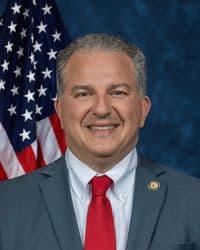
- Jimmy Patronis
- Cosponsors
- - 14 - 1
- Introduced
- In Committee
What this bill would do
This bill amends title 38, United States Code, to expand the Veterans Community Care Program so that certain veterans can access mental health or substance-use services outside of the Department of Veterans Affairs. It allows veterans to seek community care if the Department cannot accommodate their priority admission to a Mental Health Residential Rehabilitation Treatment Program or cannot provide the services within normal access standards. The legislation sets minimum licensing and accreditation standards for the community treatment programs and facilities providing these services. It ensures that referring a veteran to an alternative Department program cannot take precedence over timely community care unless the veteran requests it. Furthermore, the bill prohibits the Secretary from denying care eligibility solely because community providers cannot meet wait times or access standards, and it gives veterans the right to choose their preferred care option when multiple choices are available. Lastly, it requires the Department to track specific community care metrics and limits the Secretary's ability to modify community care access standards without a joint resolution of Congress.
Yes· 3 of 5
Does this make mental health care easier to get?+8
The bill expands access to community-based residential mental health and substance-use services when the VA cannot meet access standards.
Would veterans be better off under this, taking everything together?+8
The bill enhances veterans' ability to access timely mental health and substance-use residential treatment through community care.
Does this increase the pay, pensions or support veterans receive?+8
The act expands the Veterans Community Care Program to include more mental health and substance-use residential treatment options.
The opposite
No question was scored the opposite.
Who it would affect, and how
Potential Positive Impacts for People
-
Section 3 (Expanding Access to Community Care): This provision helps veterans get mental health or substance-use residential care faster by allowing them to use community providers if the Department cannot accommodate their priority admission or meet access standards. This is a positive step for individuals struggling to get timely help within the Department.
-
Section 3 (Protecting Veteran Choice on Referrals): Under section 3(a)(1)(B), the Secretary must ensure that referring a veteran to a different Department program does not delay timely community care unless the veteran actually requests that referral. This puts the veteran's timeline and choice ahead of internal Department routing.
-
Section 3 (Quality Standards for Facilities): This part ensures that community residential mental health and substance-use programs must be licensed and accredited by a State and accredited by organizations like the Joint Commission Behavioral Health Standards or the Commission on Accreditation of Rehabilitation Facilities. This helps protect people by making sure outside facilities meet basic quality rules.
-
Section 4 (Veteran Choice of Options): Section 4 adds a rule stating that if multiple care options are available, the Secretary must let the veteran pick the option they prefer. This gives the people we voted for accountability to respect individual veteran preferences in healthcare decisions.
Potential Negative Impacts for People
- Section 3 (Waivers of Facility Standards): Under section 3(a)(3), the Secretary is allowed to waive the required state licenses and accreditations for a treatment program or facility on an individual basis if no other alternate program is available or if it is deemed in the best interest of the veteran. This could potentially burden or negatively impact individuals by placing them in a facility that does not meet standard licensing or accreditation rules.
Groups and Interests Ranking
Every group the model scored this bill for, from -10 to +10. Hover a score for the reason it gave.
- Healthcare
- Improves Mental Health Access+8Improves Healthcare Access+6
- Demographic And Interest Groups
- Good For Veterans+8
- National Security And Foreign Policy
- Improves Veterans Benefits+8
- Governance And Ideology
- Improves Government Transparency+5
- 9/24/2026
- 1 Cosponsor added.
- 8/31/2026
- 1 Cosponsor added.
- 7/20/2026
- 1 Cosponsor added.
- 6/5/2026
- Referred to the Subcommittee on Health.
- 5/29/2026
- 1 Cosponsor added.
- 5/26/2026
- 1 Cosponsor added.
- 5/14/2026
- 1 Cosponsor added.
- 5/13/2026
- 2 Cosponsors added.
- 5/12/2026
- Referred to the House Committee on Veterans' Affairs.
- 7 Cosponsors added.
- Introduced in House
One bill Congress.gov lists as related to this one — companions in the other chamber, earlier versions, and bills this one absorbed or was folded into.
 Gus Bilirakis
Republican · Florida
 James Baird
Republican · Indiana
 Juan Ciscomani
Republican · Arizona
 Byron Donalds
Republican · Florida
 Donald Davis
Democrat · North Carolina
 Clay Fuller
Republican · Georgia
 Glenn Grothman
Republican · Wisconsin
 Michael Guest
Republican · Mississippi
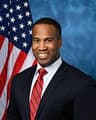 John James
Republican · Michigan
 Anna Paulina Luna
Republican · Florida
 Michael Lawler
Republican · New York
 Tracey Mann
Republican · Kansas
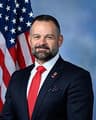 Cory Mills
Republican · Florida
 Derek Schmidt
Republican · Kansas
 Daniel Webster
Republican · Florida