Bill · H.R. 4311· House(119-HR-4311)
Delivering On Government Efficiency in Spending Act

- Introduced
- 7/10/2025
- Last activity
- 7/10/2025 — Referred to the Committee on Oversight and Government Reform, and in addition to the Committees on Ways and Means, and Financial Services, for a period to be subsequently determined by the Speaker, in each case for consideration of such provisions as fall within the jurisdiction of the committee concerned.
- Sponsored by
- Aaron Bean
- Cosponsors
- - 20 - 0
- Introduced
- In Committee
What this bill would do
The Delivering On Government Efficiency in Spending Act aims to amend the United States Code to require better information regarding Federal fund payments. It mandates that agency heads provide specific details about payments, such as the purpose and the account they are drawn from, to the Secretary of the Treasury. This information is to be made available on a public website, unless it involves sensitive operations like national security or law enforcement. The bill also expands the ability of the Secretary of the Treasury to access various data sets, including the National Directory of New Hires and Social Security information. These tools are intended to help identify, prevent, and recover improper or fraudulent payments.
Yes· 3 of 6
Does this make what the government does easier for the public to see?+5
The bill requires agencies to publish payment purpose and account details on a public website.
Does this make the government pay for what it commits to?+4
The mandate for better tracking and verification of federal payments promotes greater fiscal accountability.
Does this reduce what the federal government owes?+3
By enhancing the 'Do Not Pay' system to identify and recover improper payments, the bill helps reduce wasteful government spending.
The opposite
Does this protect people from being watched or searched?-5
The bill facilitates the disclosure of private tax and social security information to multiple entities.
Does this give people more control over their personal data?-4
The bill increases the sharing of sensitive personal, tax, and social security data across federal agencies and third parties.
Does this give the government more power to monitor people inside the country?-2
The bill expands the government's ability to access and share personal data including tax and Social Security information.
Who it would affect, and how
Potential Positive Impacts for People
-
Increased Transparency: The bill requires that for each payment, the agency head must provide a brief description of its purpose, the specific account it is drawn from, and the type of activity being reported (Sec. 2, subsection (b)). This information is then made available on a public website (Sec. 2, subsection (d)).
-
Improved Payment Accuracy: Agency officials are required to take necessary actions to ensure payments are accurate, which includes verifying bank account information and comparing it to other existing payment records (Sec. 3, subsection (b)(5)(e)).
-
Prevention of Fraud and Improper Payments: The Secretary of the Treasury is granted access to several data sources, such as the National Directory of New Hires and Social Security information, specifically to help identify, prevent, and recover improper or fraudulent payments (Sec. 3, subsection (a) and (e)).
Potential Negative Impacts for People
-
Reduced Transparency for Sensitive Operations: Information regarding payments for "sensitive operations"—which include domestic law enforcement or national security activities that could lead to death or serious bodily injury—will be exempted from the mandatory public reporting requirements (Sec. 2, subsection (e)).
-
Increased Data Sharing: The bill allows for the sharing of personal information, such as names, dates of birth, and Social Security numbers from the Social Security Administration, as well as various tax return details, with the Secretary of the Treasury, its agents, contractors, and other authorized Federal and State agencies (Sec. 3, subsections (d) and (e)).
-
Use of Consumer Reports for Disbursement Changes: The bill includes provisions that allow for changes to Federal disbursements, including terminations, that are based on consumer reports to improve disbursement accuracy (Sec. 3, subsection (c)(1)(A)(ii)).
Groups and Interests Ranking
Every group the model scored this bill for, from -10 to +10. Hover a score for the reason it gave.
- Economy And Finance
- Improves Fiscal Responsibility+4Reduces Government Spending+3Reduces National Debt+3
- Education And Technology
- Improves Data Privacy-4
- Governance And Ideology
- Improves Government Transparency+5Increases Federal Power+3Improves Privacy Rights-5
- National Security And Foreign Policy
- Increases Domestic Surveillance-2
- Social Issues And Justice
- Improves Social Security+2
- 5/13/2026
- 1 Cosponsor added.
- 3/18/2026
- 1 Cosponsor added.
- 10/3/2025
- 1 Cosponsor added.
- 9/17/2025
- 1 Cosponsor added.
- 8/22/2025
- 1 Cosponsor added.
- 8/8/2025
- 1 Cosponsor added.
- 7/23/2025
- 1 Cosponsor added.
- 7/21/2025
- 5 Cosponsors added.
- 7/17/2025
- 3 Cosponsors added.
- 7/10/2025
- Referred to the Committee on Oversight and Government Reform, and in addition to the Committees on Ways and Means, and Financial Services, for a period to be subsequently determined by the Speaker, in each case for consideration of such provisions as fall within the jurisdiction of the committee concerned.
- 5 Cosponsors added.
- Introduced in House
One bill Congress.gov lists as related to this one — companions in the other chamber, earlier versions, and bills this one absorbed or was folded into.
 Andy Barr
Republican · Kentucky
 Earl Carter
Republican · Georgia
 Ben Cline
Republican · Virginia
 Scott Franklin
Republican · Florida
 Russell Fry
Republican · South Carolina
 Ashley Hinson
Republican · Iowa
 Abraham Hamadeh
Republican · Arizona
 Mike Haridopolos
Republican · Florida
 Pat Harrigan
Republican · North Carolina
 Mike Kennedy
Republican · Utah
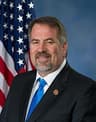 Doug LaMalfa
Republican · California
 Anna Paulina Luna
Republican · Florida
 Blake Moore
Republican · Utah
 Tim Moore
Republican · North Carolina
 Robert Onder
Republican · Missouri
 David Rouzer
Republican · North Carolina
 Pete Sessions
Republican · Texas
 Adrian Smith
Republican · Nebraska
 Joe Wilson
Republican · South Carolina
 Tony Wied
Republican · Wisconsin