
A Democratic bill with 3 Republican cosponsors · See all 7 cosponsors
Last activity — Referred to the House Committee on Foreign Affairs.
In committee
Introduced and handed to a committee in the chamber it started in.
The committee holds it, and most bills are never heard from again. A hearing or a committee vote would be news; silence is the usual outcome, and it kills the bill without anyone voting against it.
Its path through Congress
- Introduced
- In Committee
What this bill would do
The Global Alzheimer's Initiative Now Act authorizes the United States to participate in and contribute to the Davos Alzheimer's Collaborative (DAC). The goal is to advance international efforts to prevent, diagnose, and treat Alzheimer's disease and dementia. The President is empowered to designate a representative to serve on the DAC Advisory Council and potentially its Board of Directors. This representative must coordinate with various government officials to align DAC activities with existing United States programs. Contributions are to be made through specific parts of the Foreign Assistance Act of 1961. Additionally, the bill includes a matching requirement to ensure the United States does not provide more than one-third of the total funding.
Yes· 3 of 11
- Scored +7
Would people over 65 be better off under this?
The bill addresses the global surge in Alzheimer's cases among aging populations.
- Scored +7
Would retired people be better off under this?
The bill focuses on combating the long-term impacts of Alzheimer's and dementia in older populations.
- Scored +7
Does this make health care easier to get in general?
The bill aims to transform how healthcare systems prevent, diagnose, and treat Alzheimer's disease globally.
The opposite
No question was scored the opposite.
Who it would affect, and how
Potential Positive Impacts for People
-
Advancement of Medical Care: The bill aims to advance international efforts to prevent, diagnose, and treat Alzheimer's disease and dementia (Section 4(a)). This includes developing diagnostics and treatments for diverse populations both in the United States and globally (Section 3(2)(A)).
-
Benefits to Minority Populations: International Alzheimer's research across all races and ethnicities is noted to directly benefit minority populations in the United States (Section 2(9)).
-
Economic and Health System Stability: The bill addresses the challenge of aging populations which can impact health and social safety systems (Section 2(3)). By leading global cooperative efforts, the policy aims to promote international development cooperation (Section 3(2)(B)).
-
Investment Efficiency: The policy aims to provide substantial leverage and burden sharing for United States investments (Section 3(2)(C)).
Potential Negative Impacts for People
-
Financial Requirements: The bill authorizes the use of funds from the Foreign Assistance Act of 1961 to provide United States contributions to the DAC (Section 4(c)(1)).
-
Funding Constraints: United States contributions can only be used if the DAC secures funding from sources other than the United States, and total U.S. contributions cannot exceed 33 percent of the total funds contributed to the DAC (Section 4(c)(2)).
Groups and Interests Ranking
Every group the model scored this bill for, from -10 to +10. Tap or hover a score for the reason it gave.
- Demographic And Interest Groups
- Would retired people be better off under this? — The bill focuses on combating the long-term impacts of Alzheimer's and dementia in older populations. Would people over 65 be better off under this? — The bill addresses the global surge in Alzheimer's cases among aging populations. Would women be better off under this? — The bill acknowledges that women are disproportionately affected by Alzheimer's disease.
- Healthcare
- Does this make health care easier to get in general? — The bill aims to transform how healthcare systems prevent, diagnose, and treat Alzheimer's disease globally. Does this put more money into medical research? — The bill authorizes participation and contribution to global Alzheimer's research through the DAC.
- National Security And Foreign Policy
- Does this strengthen ties with allied countries? — The bill promotes international development cooperation through multilateral health initiatives. Does this send more money or help to other countries? — The bill utilizes the Foreign Assistance Act to fund the Davos Alzheimer's Collaborative.
- Social Issues And Justice
- Does this narrow racial gaps in how people are treated? — The bill notes that international research directly benefits minority populations in the United States. Does this narrow the gap between how men and women are treated? — The bill recognizes that women are disproportionately affected by Alzheimer's and provides care for many.
- Education And Technology
- Does this put more money into scientific research? — The bill funds global research efforts to advance Alzheimer's diagnostics and treatments.
- Governance And Ideology
- Does this make what the government does easier for the public to see? — The bill requires annual reports to congressional committees regarding financial contributions and participation.
- 11/9/2026
- 1 Cosponsor added.
- 7/20/2026
- 1 Cosponsor added.
- 6/30/2026
- 1 Cosponsor added.
- 12/1/2025
- 1 Cosponsor added.
- 7/2/2025
- 1 Cosponsor added.
- 6/3/2025
- Referred to the House Committee on Foreign Affairs.
- 2 Cosponsors added.
- Introduced in House
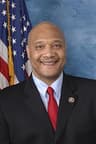 André Carson
Democrat · Indiana
 Brian Fitzpatrick
Republican · Pennsylvania
 Maggie Goodlander
Democrat · New Hampshire
 Young Kim
Republican · California
 Michael Lawler
Republican · New York
 Eleanor Norton
Democrat · District of Columbia
 Thomas Suozzi
Democrat · New York