Bill · H.R. 3593· House(119-HR-3593)
Title VIII Nursing Workforce Reauthorization Act of 2025
- Introduced
- 5/23/2025
- Last activity
- 9/10/2025 — Forwarded by Subcommittee to Full Committee by Voice Vote.
- Sponsored by
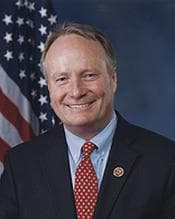
- David Joyce
- Cosponsors
- - 10 - 11
- Introduced
- In Committee
What this bill would do
This bill is called the Title VIII Nursing Workforce Reauthorization Act of 2025. It amends the Public Health Service Act to update and continue various nursing workforce development programs. Specifically, it expands Advanced Nursing Education Grants to include specific nursing programs and covers costs like clinical education and preceptors. The legislation also aims to strengthen the capacity for nurse education and practice by providing modern equipment, increasing faculty and students, and expanding clinical education partnerships. Finally, the bill updates the funding amounts authorized for these programs for fiscal years 2026 through 2030.
Yes· 3 of 7
Would students be better off under this?+5
The bill specifically enhances nursing education via grants, expanded resources, and support for clinical education costs.
Does this make health care easier to get in general?+5
By expanding nursing education and addressing shortages, the bill helps improve overall healthcare access and provider availability.
Does this make college cost less?+4
The bill expands educational grant scope and includes support for clinical education costs, which can reduce the financial burden on nursing students.
The opposite
No question was scored the opposite.
Who it would affect, and how
Potential Positive Impacts for People
-
Section 2: This section expands advanced nursing education grants to explicitly include individuals enrolled in nurse practitioner, nurse-midwifery, nurse anesthesia, and clinical nurse specialist programs. It also covers costs for clinical education and preceptors, which helps people training in these specialized fields.
-
Section 3: This section updates nurse education and practice programs to include audiovisual equipment, simulation and augmented reality resources, telehealth technologies, and virtual and physical laboratories. It also allows schools to increase the number of faculty and students to address shortages, and adds survivors of sexual assault to targeted care populations. These changes can improve training and healthcare access for the public.
-
Section 4: This section increases the authorized funding amounts for these programs to $184,337,000 and $121,135,000 for each of the fiscal years 2026 through 2030. This ensures continued financial support for nursing programs that benefit students and patients.
Potential Negative Impacts for People
- No Negative Impacts Identified: Based strictly on the provided text, there are no specific provisions that outline negative consequences or burdens for individuals or groups of people in the United States.
Groups and Interests Ranking
Every group the model scored this bill for, from -10 to +10. Hover a score for the reason it gave.
- Demographic And Interest Groups
- Good For Students+5Good For Women+3Good For Young Adults+3
- Healthcare
- Improves Healthcare Access+5Increases Research Funding+2
- Education And Technology
- Improves College Affordability+4
- Economy And Finance
- Increases Job Creation+3
- 9/24/2026
- 9 Cosponsors added.
- 9/1/2026
- 1 Cosponsor added.
- 6/2/2026
- 1 Cosponsor added.
- 5/20/2026
- 1 Cosponsor added.
- 5/19/2026
- 2 Cosponsors added.
- 4/29/2026
- 1 Cosponsor added.
- 4/14/2026
- 1 Cosponsor added.
- 1/13/2026
- 1 Cosponsor added.
- 9/10/2025
- Referred to the Subcommittee on Health.
- Subcommittee Consideration and Mark-up Session Held
- Forwarded by Subcommittee to Full Committee by Voice Vote.
- 6/5/2025
- 1 Cosponsor added.
- 5/23/2025
- Referred to the House Committee on Energy and Commerce.
- 3 Cosponsors added.
- Introduced in House
One bill Congress.gov lists as related to this one — companions in the other chamber, earlier versions, and bills this one absorbed or was folded into.
 Suzanne Bonamici
Democrat · Oregon
 Nikki Budzinski
Democrat · Illinois
 Christopher Deluzio
Democrat · Pennsylvania
 Troy Downing
Republican · Montana
 Brian Fitzpatrick
Republican · Pennsylvania
 Maggie Goodlander
Democrat · New Hampshire
 Jennifer Kiggans
Republican · Virginia
 Stephen Lynch
Democrat · Massachusetts
 Michael Lawler
Republican · New York
 Gwen Moore
Democrat · Wisconsin
 Eleanor Norton
Democrat · District of Columbia
 Zachary Nunn
Republican · Iowa
 Chris Pappas
Democrat · New Hampshire
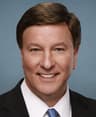 Mike Rogers
Republican · Alabama
 John Rutherford
Republican · Florida
 Darren Soto
Democrat · Florida
 Mike Thompson
Democrat · California
 Claudia Tenney
Republican · New York
 Lauren Underwood
Democrat · Illinois
 Derrick Van Orden
Republican · Wisconsin
 Robert Wittman
Republican · Virginia