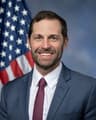
A Democratic bill with 6 Republican cosponsors · See all 42 cosponsors
Last activity — Referred to the House Committee on Small Business.
In committee
Introduced and handed to a committee in the chamber it started in.
The committee holds it, and most bills are never heard from again. A hearing or a committee vote would be news; silence is the usual outcome, and it kills the bill without anyone voting against it.
Its path through Congress
- Introduced
- In Committee
What this bill would do
This bill is known as the Small Business Energy Loan Enhancement Act. It was introduced in the House of Representatives on April 10, 2025. The main purpose of the bill is to amend the Small Business Investment Act of 1958. It increases the maximum loan amount for certain loans from $5,500,000 to $10,000,000. Additionally, it requires the Administrator of the Small Business Administration to submit annual reports to Congress regarding these loans. These reports must detail the industries and geographic areas receiving the loans.
Yes· 3 of 15
- Scored +8
Does this make it easier to run a small business?
The legislation directly increases the maximum loan amount from $5.5 million to $10 million for certain small business loans, significantly enhancing funding access.
- Scored +8
Would business owners be better off under this?
Directly benefits small business owners by doubling the maximum loan limit available for qualifying projects.
- Scored +6
Does this make what the government does easier for the public to see?
Requires the SBA to submit annual reports to Congress detailing industries and geographic areas receiving the enhanced loans.
The opposite
No question was scored the opposite.
Who it would affect, and how
Potential Positive Impacts for People
-
Section 2: This section increases the maximum loan amount from $5,500,000 to $10,000,000 under clauses (iv) and (v) of section 502(2)(A) of the Small Business Investment Act of 1958. This is a positive change because it provides qualifying small businesses with access to larger amounts of funding to support their needs.
-
Section 2: This section requires the Administrator of the Small Business Administration to submit a report to Congress not later than 1 year after the date of enactment, and annually thereafter. This holds officials accountable by detailing the specific industries and geographic areas that receive these loans.
Potential Negative Impacts for People
- Based on the provided text, there are no specific sections or provisions identified that create negative consequences or burdens for individuals or groups of people in the United States.
Groups and Interests Ranking
Every group the model scored this bill for, from -10 to +10. Tap or hover a score for the reason it gave.
- Economy And Finance
- Does this make it easier to run a small business? — The legislation directly increases the maximum loan amount from $5.5 million to $10 million for certain small business loans, significantly enhancing funding access. Is this likely to grow the economy? — Increasing the limit on small business loans helps stimulate investment and economic growth across qualifying industries. Is this likely to create jobs? — By increasing the maximum loan amounts for small businesses, the bill provides greater capital access that can facilitate business expansion and hiring. Does this make the government pay for what it commits to? — The bill mandates annual reporting by the SBA on loan distribution, promoting transparency and oversight.
- Demographic And Interest Groups
- Would business owners be better off under this? — Directly benefits small business owners by doubling the maximum loan limit available for qualifying projects. Would people in middle age be better off under this? — Middle-aged business owners comprise a significant portion of those utilizing SBA commercial loan programs. Would middle-income households be better off under this? — Stronger small businesses can support middle-class job stability and local community employment. Would people in rural areas be better off under this? — Rural small businesses also gain access to higher loan thresholds, supported by geographic reporting transparency. Would people in cities be better off under this? — Urban small businesses benefit from increased access to larger loan amounts. Would people in their twenties and thirties be better off under this? — Young entrepreneurs and early-career professionals starting businesses may benefit from expanded capital access.
- Governance And Ideology
- Does this make what the government does easier for the public to see? — Requires the SBA to submit annual reports to Congress detailing industries and geographic areas receiving the enhanced loans. Does this make it easier to do business across state lines? — Expanding business loan caps supports commercial activity and enterprise across state lines. Does this give the federal government more power? — Imposes new federal reporting requirements on the Small Business Administration.
- Environment Energy And Infrastructure
- Does this put more money into wind, solar and other renewable power? — The bill focuses on enhancing energy loan programs, which can support investments in energy-related business initiatives. Does this invest in rural communities? — Reporting requirements detail geographic areas receiving loans, which can include rural communities benefiting from SBA financing.
- 12/18/2025
- 1 Cosponsor added.
- 12/9/2025
- 1 Cosponsor added.
- 11/18/2025
- 1 Cosponsor added.
- 11/7/2025
- 2 Cosponsors added.
- 10/10/2025
- 1 Cosponsor added.
- 5/21/2025
- 2 Cosponsors added.
- 4/30/2025
- 1 Cosponsor added.
- 4/29/2025
- 5 Cosponsors added.
- 4/10/2025
- Referred to the House Committee on Small Business.
- 28 Cosponsors added.
- Introduced in House
2 bills Congress.gov lists as related to this one — companions in the other chamber, earlier versions, and bills this one absorbed or was folded into.
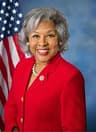 Joyce Beatty
Democrat · Ohio
 Don Bacon
Republican · Nebraska
 Robert Bresnahan
Republican · Pennsylvania
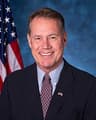 Ed Case
Democrat · Hawaii
 Kathy Castor
Democrat · Florida
 André Carson
Democrat · Indiana
 Sean Casten
Democrat · Illinois
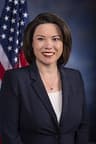 Angie Craig
Democrat · Minnesota
 Donald Davis
Democrat · North Carolina
 Sharice Davids
Democrat · Kansas
 Dwight Evans
Democrat · Pennsylvania
 Bill Foster
Democrat · Illinois
 Brian Fitzpatrick
Republican · Pennsylvania
 Josh Gottheimer
Democrat · New Jersey
 Andrew Garbarino
Republican · New York
 Chrissy Houlahan
Democrat · Pennsylvania
 Julie Johnson
Democrat · Texas
 Young Kim
Republican · California
 Ted Lieu
Democrat · California
 Greg Landsman
Democrat · Ohio
 George Latimer
Democrat · New York
 Seth Moulton
Democrat · Massachusetts
 Joseph Morelle
Democrat · New York
 Frank Mrvan
Democrat · Indiana
 Kevin Mullin
Democrat · California
 Sarah McBride
Democrat · Delaware
 Eleanor Norton
Democrat · District of Columbia
 Jay Obernolte
Republican · California
 Scott Peters
Democrat · California
 Jimmy Panetta
Democrat · California
 Brittany Pettersen
Democrat · Colorado
 Deborah Ross
Democrat · North Carolina
 Josh Riley
Democrat · New York
 Adam Smith
Democrat · Washington
 Bradley Schneider
Democrat · Illinois
 Thomas Suozzi
Democrat · New York
 Kim Schrier
Democrat · Washington
 Hillary Scholten
Democrat · Michigan
 Eric Sorensen
Democrat · Illinois
 Andrea Salinas
Democrat · Oregon
 Jill Tokuda
Democrat · Hawaii
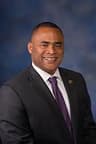 Marc Veasey
Democrat · Texas