Bill · H.R. 139· House(119-HR-139)
Sunshine Protection Act of 2025
- Introduced
- 1/3/2025
- Last activity
- 7/15/2026 — Received in the Senate and Read twice and referred to the Committee on Commerce, Science, and Transportation.
- Sponsored by
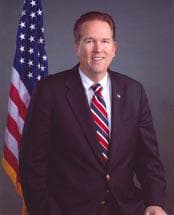
- Vern Buchanan
- Cosponsors
- - 32 - 3
- Introduced
- Passed House
- In Senate committee
What this bill would do
This bill is called the Sunshine Protection Act of 2025. It aims to make daylight savings time permanent across the United States. To do this, the bill repeals the temporary period for daylight savings time found in the Uniform Time Act of 1966. It also advances standard time by changing the hour differences listed in the Calder Act. Additionally, the bill allows certain states and areas that previously exempted themselves to choose their standard time. The bill was passed by the House of Representatives and referred to the Senate Committee on Commerce, Science, and Transportation.
Yes
Would people in their twenties and thirties be better off under this?+3
Young adults may enjoy having more daylight in the evenings for social activities and recreation.
Would people in middle age be better off under this?+2
Middle-aged individuals may appreciate the extended daylight hours for work-life balance and outdoor pursuits.
Would people in cities be better off under this?+1
Urban residents who work or engage in activities after standard business hours may find the extra daylight in the evening beneficial.
The opposite· 3 of 5
Would children be better off under this?-3
Permanent daylight savings could negatively affect children's sleep schedules, especially during the winter months when they may have to travel to school in darkness.
Would people over 65 be better off under this?-2
Seniors might find the shift to permanent daylight saving time disruptive to their routines and potentially impacting their health.
Would students be better off under this?-2
Students may experience difficulties adjusting to permanent daylight saving time, particularly with regards to sleep and concentration in the mornings.
What Congress actually voted on
One recorded vote has been taken on this bill.
- The House: the vote on whether to pass the billPassed 308–117
This is the real decision in this chamber. Passing here sends the bill to the other chamber, which must pass it too before it can go to the President.
07/14/2026 · Roll call 238 · recorded as “On Passage”
Who it would affect, and how
Potential Positive Impacts for People
-
Section 2(a) repeals the temporary period for daylight savings time from the Uniform Time Act of 1966, and Section 2(b) advances standard time, which together make daylight savings time permanent. This might be considered positive because it stops the twice-yearly clock changing.
-
Section 2(b)(2) allows a State or an area of a State that previously exempted itself from daylight savings time to choose its standard time as the State considers appropriate. This might be considered positive because it gives certain states and areas the flexibility to choose their preferred time system.
Potential Negative Impacts for People
- The provided text does not contain any specific sections or provisions that explicitly outline negative consequences or burdens for individuals or groups of people in the United States.
Groups and Interests Ranking
Every group the model scored this bill for, from -10 to +10. Hover a score for the reason it gave.
- Demographic And Interest Groups
- Good For Young Adults+3Good For Middle Aged+2Good For Urban Residents+1Good For Children-3Good For Retirees-2Good For Seniors-2Good For Students-2Good For Rural Residents-1
- 7/15/2026
- Received in the Senate and Read twice and referred to the Committee on Commerce, Science, and Transportation.
- 7/14/2026
- Motion to reconsider laid on the table Agreed to without objection.
- Passed/agreed to in House: On passage Passed by the Yeas and Nays: 308 - 117 (Roll no. 238).
- On passage Passed by the Yeas and Nays: 308 - 117 (Roll no. 238). (consideration: CR H4445-4446)
- The previous question was ordered pursuant to the rule.
- DEBATE - The House proceeded with one hour of debate on H.R. 139.
- Rule provides for consideration of H.R. 139, H.R. 8595, H.R. 9237 and H.R. 1181. The resolution provides for consideration of H.R. 139, H.R. 9237, and H.R. 1181 under a closed rule, and H.R. 8595 under a structured rule with one hour of debate and one motion to reconsider on each bill.
- Considered under the provisions of rule H. Res. 1423. (consideration: CR H4445-4452)
- 1 Cosponsor added.
- 7/13/2026
- Rules Committee Resolution H. Res. 1423 Reported to House. Rule provides for consideration of H.R. 139, H.R. 8595, H.R. 9237 and H.R. 1181. The resolution provides for consideration of H.R. 139, H.R. 9237, and H.R. 1181 under a closed rule, and H.R. 8595 under a structured rule with one hour of debate and one motion to reconsider on each bill.
- 6/10/2026
- 1 Cosponsor added.
- 6/8/2026
- 1 Cosponsor added.
- 3/27/2026
- 1 Cosponsor added.
- 12/15/2025
- 1 Cosponsor added.
- 11/19/2025
- 1 Cosponsor added.
- 10/14/2025
- 1 Cosponsor added.
- 10/3/2025
- 1 Cosponsor added.
- 9/23/2025
- 1 Cosponsor added.
- 8/26/2025
- 1 Cosponsor added.
- 7/14/2025
- 1 Cosponsor added.
- 4/24/2025
- 1 Cosponsor added.
- 4/17/2025
- 2 Cosponsors added.
- 3/18/2025
- 1 Cosponsor added.
- 3/5/2025
- 4 Cosponsors added.
- 2/25/2025
- 2 Cosponsors added.
- 2/14/2025
- 1 Cosponsor added.
- 2/5/2025
- 2 Cosponsors added.
- 2/4/2025
- 7 Cosponsors added.
- 1/9/2025
- 4 Cosponsors added.
- 1/3/2025
- Referred to the House Committee on Energy and Commerce.
- Introduced in House
6 bills Congress.gov lists as related to this one — companions in the other chamber, earlier versions, and bills this one absorbed or was folded into.
- 119-S-29: Sunshine Protection Act of 2025
- 119-HRES-1423: Providing for consideration of the bill (H.R. 139) to make daylight savings time permanent, and for other purposes; providing for consideration of the bill (H.R. 8595) making appropriations for national security, Department of State, and related programs for the fiscal year ending September 30, 2027, and for other purposes; providing for consideration of the bill (H.R. 9237) to amend titles 10 and 38, United States Code, and other Federal laws, to improve benefits for veterans and the administration of the Department of Veterans Affairs; providing for consideration of the bill (H.R. 1181) to prohibit payment card networks and covered entities from requiring the use of or assigning merchant category codes that distinguish a firearms retailer from general-merchandise retailer or sporting-goods retailer, and for other purposes; and for other purposes.
- 118-HR-1279 (not yet synced)
- 118-S-582 (not yet synced)
- 117-HR-69 (not yet synced)
- 117-S-623 (not yet synced)
 Stephanie Bice
Republican · Oklahoma
 Lauren Boebert
Republican · Colorado
 Aaron Bean
Republican · Florida
 Eric Burlison
Republican · Missouri
 Tom Barrett
Republican · Michigan
 Ken Calvert
Republican · California
 Earl Carter
Republican · Georgia
 Warren Davidson
Republican · Ohio
 Mike Ezell
Republican · Mississippi
 Brian Fitzpatrick
Republican · Pennsylvania
 Jared Golden
Democrat · Maine
 Erin Houchin
Republican · Indiana
 Abraham Hamadeh
Republican · Arizona
 Mike Haridopolos
Republican · Florida
 Young Kim
Republican · California
 Barry Loudermilk
Republican · Georgia
 Anna Paulina Luna
Republican · Florida
 Laurel Lee
Republican · Florida
 Nancy Mace
Republican · South Carolina
 Daniel Meuser
Republican · Pennsylvania
 Barry Moore
Republican · Alabama
 Cory Mills
Republican · Florida
 Richard McCormick
Republican · Georgia
 Ryan Mackenzie
Republican · Pennsylvania
 Dan Newhouse
Republican · Washington
 Jay Obernolte
Republican · California
 Jimmy Patronis
Republican · Florida
 David Rouzer
Republican · North Carolina
 John Rutherford
Republican · Florida
 Maria Salazar
Republican · Florida
 Pete Sessions
Republican · Texas
 Darren Soto
Democrat · Florida
 Thomas Suozzi
Democrat · New York
 Dale Strong
Republican · Alabama
 Daniel Webster
Republican · Florida