Bill · H.R. 1031· House(119-HR-1031)
Fort Ontario Holocaust Refugee Shelter National Historical Park Establishment Act
- Introduced
- 2/5/2025
- Last activity
- 9/10/2026 — Referred to the Subcommittee on Federal Lands.
- Sponsored by
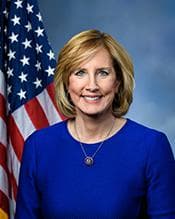
- Claudia Tenney
- Cosponsors
- - 6 - 2
- Introduced
- In Committee
What this bill would do
This bill aims to establish the Fort Ontario Holocaust Refugee Shelter National Historical Park in New York as part of the National Park System. The purpose is to preserve and interpret the history of 982 World War II refugees who stayed at Fort Ontario from August 1944 to February 1946. The park will be established once the Secretary of the Interior determines enough land has been acquired to make it manageable. The Secretary will manage the park and may enter into agreements with public or private entities for education and restoration. Land can be acquired through donation, exchange, or purchase, though State-owned land can only be acquired via donation.
Yes· 3 of 16
Would immigrants be better off under this?+3
Honors the history and sanctuary provided to refugees and immigrants during WWII.
Would students be better off under this?+3
Creates a primary source educational resource for students studying the Holocaust and WWII.
Would children be better off under this?+2
Provides educational opportunities and historical sites for children to visit and learn.
The opposite
Does this reduce what the federal government spends?-1
The bill authorizes the purchase of land and ongoing administrative costs for a new park unit.
Who it would affect, and how
Potential Positive Impacts for People
-
Preservation of History: The bill preserves and protects resources related to the stories of 982 World War II refugees for present and future generations (Section 3(a)(2)).
-
Educational Opportunities: The Secretary can make cooperative agreements with the State or private entities to provide educational and interpretive services (Section 3(b)(2)(A)).
-
Resource Restoration: The bill allows for agreements to identify, interpret, and restore historic or cultural resources, even those on non-Federal land near the park (Section 3(b)(2)(B)).
-
Public Access: Agreements involving non-Federal land must ensure there is reasonable public access (Section 3(b)(2)(C)).
Potential Negative Impacts for People
- No negative impacts for individuals or groups are explicitly mentioned in the provided text.
Groups and Interests Ranking
Every group the model scored this bill for, from -10 to +10. Hover a score for the reason it gave.
- Demographic And Interest Groups
- Good For Immigrants+3Good For Students+3Good For Business Owners+2Good For Children+2Good For Rural Residents+2Good For Young Adults+2Good For Middle Aged+1Good For Seniors+1
- Environment Energy And Infrastructure
- Improves Public Land Management+2Improves Environmental Protections+1Improves Rural Development+1
- Economy And Finance
- Improves Economic Growth+1Improves Small Business Support+1Increases Job Creation+1Reduces Government Spending-1
- Social Issues And Justice
- Improves Racial Equity+2
- Governance And Ideology
- Increases Federal Power+1
- 10/1/2026
- 1 Cosponsor added.
- 9/10/2026
- Referred to the Subcommittee on Federal Lands.
- 1 Cosponsor added.
- 9/8/2026
- 1 Cosponsor added.
- 8/24/2026
- 1 Cosponsor added.
- 2/12/2025
- 1 Cosponsor added.
- 2/7/2025
- 1 Cosponsor added.
- 2/6/2025
- 1 Cosponsor added.
- 2/5/2025
- Referred to the House Committee on Natural Resources.
- 1 Cosponsor added.
- Introduced in House
One bill Congress.gov lists as related to this one — companions in the other chamber, earlier versions, and bills this one absorbed or was folded into.
 Lauren Boebert
Republican · Colorado
 Don Bacon
Republican · Nebraska
 Andrew Garbarino
Republican · New York
 Thomas Kean
Republican · New Jersey
 Michael Lawler
Republican · New York
 Nicholas Langworthy
Republican · New York
 Seth Magaziner
Democrat · Rhode Island
 Thomas Suozzi
Democrat · New York