Bill · H.R. 10280· House(119-HR-10280)
9–8–8 Implementation Act of 2026

- Introduced
- 9/3/2026
- Last activity
- 9/16/2026 — Referred to the Subcommittee on Health.
- Sponsored by
- Doris Matsui
- Cosponsors
- - 25 - 1
- Introduced
- In Committee
What this bill would do
This bill aims to improve the implementation and operation of the 9-8-8 suicide prevention lifeline and expand behavioral health crisis services across the nation. It provides federal funding to upgrade call centers, train behavioral health workers, and launch targeted media campaigns to raise awareness about suicide prevention. Additionally, the legislation mandates coverage for crisis response services under federal healthcare programs like Medicare, Medicaid, and TRICARE, as well as private group health plans. It also establishes a panel to issue recommendations for 9-1-1 dispatchers and updates Medicaid rules regarding certain mental health facilities. Overall, the bill seeks to make mental health crisis care more accessible and better integrated with emergency dispatch systems.
Yes· 3 of 42
Does this make mental health care easier to get?+10
Significantly expands access to crisis call centers, stabilization facilities, and urgent care.
Would households on low incomes be better off under this?+9
Expands Medicaid coverage and mandates sliding scale payments at facilities.
Would veterans be better off under this, taking everything together?+9
Provides targeted coverage through TRICARE and VA reimbursement.
The opposite· 3 of 6
Does this reduce what the federal government spends?-5
Increases government expenditures through grants and expanded Medicare/Medicaid coverage.
Does this lower what people pay for private health insurance?-3
Adding mandatory coverage requirements for insurers may lead to increased premiums.
Does this leave more decisions to the states?-3
Reduces state flexibility by mandating specific coverage and reporting standards.
Who it would affect, and how
Potential Positive Impacts for People
-
Section 101: This section provides $441,000,000 for fiscal year 2027 to award grants to regional and local call centers. This funding helps purchase or upgrade technology, hire and train staff, and improve overall operations, which means people in crisis can get quicker and more reliable help when they call the lifeline.
-
Section 103: This section establishes a national suicide prevention media campaign to educate families, friends, and communities on how to address suicide and increase awareness of available resources. This is a positive step because it helps reduce stigma and ensures more people know where to turn for help in their local areas.
-
Section 201: This section provides $1,000,000,000 in capital grants for health centers, crisis receiving and stabilization facilities, and call centers. This funding supports facility expansion and new construction, improving the physical infrastructure available to treat individuals experiencing mental health or substance use crises.
-
Section 202: This section expands behavioral health workforce training programs and fellowships for professionals specializing in crisis management services. Training more workers helps address shortages in mental health professionals, ensuring communities have enough trained staff to handle crisis calls and mobile team responses.
-
Section 301: This section mandates coverage of crisis response services across Medicare, Medicaid, CHIP, TRICARE, veterans' benefits, and private health insurance plans. This ensures that individuals will not be denied necessary crisis care due to a lack of insurance coverage or restrictive financial requirements.
-
Section 402: This section revises the Medicaid IMD exclusion so that certified community behavioral health clinics, community mental health centers, and crisis stabilization facilities are no longer excluded from receiving Medicaid payments. This allows low-income individuals to receive vital short-term crisis care in these specialized facilities with the help of Medicaid.
Potential Negative Impacts for People
-
Section 301(c): This section requires group health plans and health insurance issuers to provide benefits for crisis response services and prohibits separate cost-sharing requirements. While helpful for consumers seeking care, this mandate could potentially lead to higher overall health insurance premiums for everyday people as insurers pass down the cost of compliance.
-
Section 101 and Section 201: These sections authorize billions of dollars in new federal spending, including $441,000,000 for call centers and $1,000,000,000 for capital grants. For taxpayers concerned about the national debt and government spending, pumping large amounts of new money into these programs without immediate offsets could be viewed as a negative financial burden.
Groups and Interests Ranking
Every group the model scored this bill for, from -10 to +10. Hover a score for the reason it gave.
- Demographic And Interest Groups
- Good For Low Income Households+9Good For Veterans+9Good For Rural Residents+8Good For Children+7Good For Middle Aged+7Good For Native Americans+7Good For People With Disabilities+7Good For Retirees+7Good For Seniors+7Good For Young Adults+7Good For African Americans+6Good For Asian Americans+6Good For Hispanic Americans+6Good For Middle Class Households+6Good For Students+6Good For Urban Residents+6Good For Farmers+5Good For L G B T Q Community+5Good For Men+5Good For White Americans+5Good For Women+5Good For High Income Households+4Good For Immigrants+4Good For Business Owners-2
- Healthcare
- Improves Mental Health Access+10Improves Healthcare Access+9Improves Veterans Healthcare+8Improves Opioid Crisis Response+7Increases Medicaid Funding+7Increases Medicare Funding+7Reduces Hospital Costs+6Increases Affordable Care Act Support+5Reduces Private Insurance Premiums-3
- Social Issues And Justice
- Improves Policing Reform+7Improves Disability Rights+5Improves Racial Equity+4Improves Poverty Reduction+3Reduces Homelessness+2
- Governance And Ideology
- Improves Privacy Rights+4Increases Federal Power+4Improves Government Transparency+3Increase States Rights-3
- National Security And Foreign Policy
- Improves Veterans Benefits+8
- Environment Energy And Infrastructure
- Improves Rural Development+5
- Economy And Finance
- Increases Job Creation+5Reduces Government Spending-5Improves Fiscal Responsibility-2Reduces National Debt-2
- 10/1/2026
- 2 Cosponsors added.
- 9/16/2026
- Referred to the Subcommittee on Health.
- 9/15/2026
- 1 Cosponsor added.
- 9/14/2026
- 4 Cosponsors added.
- 9/8/2026
- 4 Cosponsors added.
- 9/3/2026
- Referred to the Committee on Energy and Commerce, and in addition to the Committees on Ways and Means, Armed Services, Veterans' Affairs, Oversight and Government Reform, and Education and Workforce, for a period to be subsequently determined by the Speaker, in each case for consideration of such provisions as fall within the jurisdiction of the committee concerned.
- 15 Cosponsors added.
- Introduced in House
5 bills Congress.gov lists as related to this one — companions in the other chamber, earlier versions, and bills this one absorbed or was folded into.
 Donald Beyer
Democrat · Virginia
 Nanette Barragán
Democrat · California
 Nikki Budzinski
Democrat · Illinois
 Becca Balint
Democrat · Vermont
 Janelle Bynum
Democrat · Oregon
 Ed Case
Democrat · Hawaii
 Salud Carbajal
Democrat · California
 Troy Carter
Democrat · Louisiana
 Debbie Dingell
Democrat · Michigan
 Brian Fitzpatrick
Republican · Pennsylvania
 Daniel Goldman
Democrat · New York
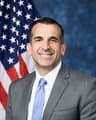 Sam Liccardo
Democrat · California
 Grace Meng
Democrat · New York
 Seth Moulton
Democrat · Massachusetts
 Jennifer McClellan
Democrat · Virginia
 Eleanor Norton
Democrat · District of Columbia
 Joe Neguse
Democrat · Colorado
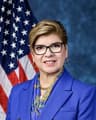 Nellie Pou
Democrat · New Jersey
 Jamie Raskin
Democrat · Maryland
 Adam Smith
Democrat · Washington
 Kim Schrier
Democrat · Washington
 Andrea Salinas
Democrat · Oregon
 Lori Trahan
Democrat · Massachusetts
 Jill Tokuda
Democrat · Hawaii
 Bonnie Watson Coleman
Democrat · New Jersey
 George Whitesides
Democrat · California