Bill · H.Con.Res. 8· House(119-HCONRES-8)
Expressing the sense of Congress that the United States should resume normal diplomatic relations with Taiwan, negotiate a bilateral free trade agreement with Taiwan, and support Taiwans membership in international organizations.
- Introduced
- 2/6/2025
- Last activity
- 2/6/2025 — Referred to the Committee on Foreign Affairs, and in addition to the Committee on Ways and Means, for a period to be subsequently determined by the Speaker, in each case for consideration of such provisions as fall within the jurisdiction of the committee concerned.
- Sponsored by
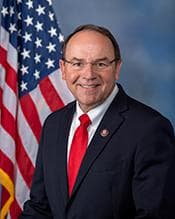
- Thomas Tiffany
- Cosponsors
- - 38 - 0
- Introduced
- In Committee
A concurrent resolution is how the House and the Senate settle something they do together, such as a budget plan or a joint session. It is adopted once both chambers agree to it, and that puts it into effect; it is not a law, so it does not go to the President.
What this bill would do
This resolution expresses the view of Congress that the United States should change how it deals with Taiwan. It states that the President should abandon the current One China Policy and recognize Taiwan as an independent country. The text suggests normalizing diplomatic relations by exchanging ambassadors and removing restrictions on communication between U.S. and Taiwanese officials. Additionally, it calls for the United States Trade Representative to start talks on a free trade agreement with Taiwan. Finally, the resolution advises U.S. officials to support Taiwan's membership in the United Nations and other international groups.
Yes· 3 of 4
Does this strengthen ties with allied countries?+7
The bill seeks to normalize diplomatic relations and exchange ambassadors with Taiwan, a steadfast ally.
Does this make trade with other countries easier?+6
The bill directs the U.S. Trade Representative to initiate negotiations for a bilateral free trade agreement with Taiwan.
Would business owners be better off under this?+5
The proposed free trade agreement could create new market access and economic opportunities for businesses.
The opposite
No question was scored the opposite.
Who it would affect, and how
Potential Positive Impacts for People
-
Recognition of Democracy: Under section (2)(A), Congress states that the President should adopt a policy recognizing Taiwan as an independent country, and section (1) commends the people of Taiwan for their commitment to democracy, civil liberties, and human rights. This could be viewed as positive because it supports a democratic society.
-
Diplomatic Relations: Under section (2)(B) and section (2)(C), the text recommends normalizing diplomatic relations, exchanging ambassadors, and removing agency guidelines that restrict communication between U.S. and Taiwanese officials. This could be considered positive as it encourages open communication and official ties between the two governments.
-
Trade Opportunities: Under section (2)(D), the resolution suggests that the United States Trade Representative should start formal negotiations for a Free Trade Agreement with Taiwan. This might be seen as positive for individuals and businesses by potentially opening up economic opportunities.
-
International Inclusion: Under section (2)(E), the text advises U.S. officials to advocate for Taiwan's full membership in the United Nations and other international organizations. This could be considered positive by giving Taiwan a voice in global organizations.
Potential Negative Impacts for People
- Burden Identification: The provided text of the resolution does not contain any specific sections or provisions that outline negative consequences or burdens for individuals or groups of people in the United States.
Groups and Interests Ranking
Every group the model scored this bill for, from -10 to +10. Hover a score for the reason it gave.
- National Security And Foreign Policy
- Improves International Alliances+7Improves International Trade+6
- Demographic And Interest Groups
- Good For Business Owners+5
- Social Issues And Justice
- Improves Racial Equity+1
- 2/11/2026
- 2 Cosponsors added.
- 12/2/2025
- 1 Cosponsor added.
- 6/23/2025
- 1 Cosponsor added.
- 6/12/2025
- 1 Cosponsor added.
- 6/10/2025
- 1 Cosponsor added.
- 5/19/2025
- 1 Cosponsor added.
- 5/15/2025
- 1 Cosponsor added.
- 4/28/2025
- 1 Cosponsor added.
- 4/8/2025
- 2 Cosponsors added.
- 3/11/2025
- 1 Cosponsor added.
- 3/5/2025
- 1 Cosponsor added.
- 2/25/2025
- 2 Cosponsors added.
- 2/6/2025
- Submitted in House
- Referred to the Committee on Foreign Affairs, and in addition to the Committee on Ways and Means, for a period to be subsequently determined by the Speaker, in each case for consideration of such provisions as fall within the jurisdiction of the committee concerned.
- 23 Cosponsors added.
 Robert Aderholt
Republican · Alabama
 Lauren Boebert
Republican · Colorado
 James Baird
Republican · Indiana
 Tim Burchett
Republican · Tennessee
 Nicholas Begich
Republican · Alaska
 Kat Cammack
Republican · Florida
 Earl Carter
Republican · Georgia
 Byron Donalds
Republican · Florida
 Jake Ellzey
Republican · Texas
 Randy Feenstra
Republican · Iowa
 Charles Fleischmann
Republican · Tennessee
 Scott Fitzgerald
Republican · Wisconsin
 Glenn Grothman
Republican · Wisconsin
 Lance Gooden
Republican · Texas
 Carlos Gimenez
Republican · Florida
 Andrew Garbarino
Republican · New York
 Diana Harshbarger
Republican · Tennessee
 Ashley Hinson
Republican · Iowa
 Michael Lawler
Republican · New York
 Nicole Malliotakis
Republican · New York
 Tracey Mann
Republican · Kansas
 Daniel Meuser
Republican · Pennsylvania
 Carol Miller
Republican · West Virginia
 Richard McCormick
Republican · Georgia
 Addison McDowell
Republican · North Carolina
 Zachary Nunn
Republican · Iowa
 Burgess Owens
Republican · Utah
 Andrew Ogles
Republican · Tennessee
 August Pfluger
Republican · Texas
 Scott Perry
Republican · Pennsylvania
 John Rose
Republican · Tennessee
 Christopher Smith
Republican · New Jersey
 Pete Stauber
Republican · Minnesota
 Keith Self
Republican · Texas
 Jefferson Shreve
Republican · Indiana
 Randy Weber
Republican · Texas
 Roger Williams
Republican · Texas
 Tony Wied
Republican · Wisconsin