
Brian Schatz (D-HI)
A resolution expressing concern about the growing problem of book banning, and the proliferation of threats to freedom of expression in the United States.
A Democratic resolution with 17 Democratic cosponsors · See all 19 cosponsors
Last activity — Referred to the Committee on the Judiciary.
In committee
Introduced and handed to a committee in the chamber it started in.
The committee holds it, and most bills are never heard from again. A hearing or a committee vote would be news; silence is the usual outcome, and it kills the bill without anyone voting against it.
Its path through Congress
- Introduced
- In Committee
A Senate resolution is the Senate speaking for itself: stating a position, honouring someone, or setting its own rules. Adopting it is the whole process. Once the Senate agrees to it, it is officially the Senate's word; it is not a law, so the House and the President have no part in it.
What this bill would do
This resolution expresses deep concern regarding the increasing problem of book banning and threats to freedom of expression in the United States. It highlights how various books, particularly those regarding race, LGBTQ+ themes, and diversity, are being targeted and removed. The text notes that these bans impact students, educators, and community members while occurring across many states. The resolution aims to reaffirm the constitutional right to freedom of speech and the freedom to read. Finally, it calls for the return of books removed from Department of Defense schools and the repeal of specific executive orders and directives.
Yes· 3 of 14
- Scored +8
Does this protect what people are allowed to say in public life?
The resolution reaffirms the First Amendment right to freedom of speech and the freedom to read without censorship.
- Scored +8
Does this protect the individual right to speak freely?
The resolution explicitly calls for protecting the constitutional right to freedom of expression and the freedom to read.
- Scored +6
Would students be better off under this?
The resolution aims to protect the educational rights and curiosity of students in public schools.
The opposite
No question was scored the opposite.
Who it would affect, and how
Potential Positive Impacts for People
-
Protection of Constitutional Rights: The resolution reaffirms the commitment to freedom of expression protected by the First Amendment, which protects the freedom to read and write. (Resolution Section 2)
-
Access to Diverse Perspectives for Students: It calls for protecting the rights of students to have access to a wide array of books that reflect a full breadth of viewpoints and perspectives. (Resolution Section 4)
-
Support for Educators and Librarians: The resolution seeks to protect the ability of educators and librarians to teach without being subjected to punitive or surveillance-oriented environments. (Resolution Section 4)
-
Restoration of Materials: The resolution calls for the return of all books removed from Department of Defense schools and libraries under executive orders issued since January 2025. (Resolution Section 5)
-
Reduction of Censorship: By calling for the repeal of executive orders and directives that enact content-based or viewpoint-based restrictions, the resolution seeks to end the censorship of classroom instruction and student activities. (Resolution Section 6)
Potential Negative Impacts for People
- No negative impacts are explicitly identified within the text.
Groups and Interests Ranking
Every group the model scored this bill for, from -10 to +10. Tap or hover a score for the reason it gave.
- Demographic And Interest Groups
- Would students be better off under this? — The resolution aims to protect the educational rights and curiosity of students in public schools. Would Black Americans be better off under this? — The resolution seeks to protect access to books about the civil rights movement and Black history. Would children be better off under this? — The resolution supports students' rights to access a diverse range of stories and perspectives in schools. Would LGBTQ people be better off under this? — The resolution advocates for the return of books with LGBTQ+ characters and themes. Would Native Americans be better off under this? — The resolution calls for the return of books regarding Native American history and family stories. Would people in their twenties and thirties be better off under this? — The resolution protects access to literature often targeted in young adult categories. Would Asian Americans be better off under this? — The resolution protects books addressing Anti-Asian bias. Would Hispanic Americans be better off under this? — The resolution supports the availability of diverse historical narratives. Would women be better off under this? — The resolution protects access to literature that explores various gendered perspectives.
- Social Issues And Justice
- Does this protect what people are allowed to say in public life? — The resolution reaffirms the First Amendment right to freedom of speech and the freedom to read without censorship. Does this expand the rights of LGBTQ people? — The resolution calls for the return of books containing LGBTQ+ themes that were removed due to censorship. Does this narrow racial gaps in how people are treated? — The resolution seeks to protect access to books regarding the history and experiences of marginalized racial groups.
- Governance And Ideology
- Does this protect the individual right to speak freely? — The resolution explicitly calls for protecting the constitutional right to freedom of expression and the freedom to read. Does this make what the government does easier for the public to see? — The resolution highlights the need for transparency regarding book removals in school districts.
- 10/9/2025
- 1 Cosponsor added.
- 10/8/2025
- Referred to the Committee on the Judiciary.
- 18 Cosponsors added.
- Introduced in Senate
One bill Congress.gov lists as related to this one — companions in the other chamber, earlier versions, and bills this one absorbed or was folded into.
 Angela Alsobrooks
Democrat · Maryland
 Richard Blumenthal
Democrat · Connecticut
 Cory Booker
Democrat · New Jersey
 Richard Durbin
Democrat · Illinois
 John Fetterman
Democrat · Pennsylvania
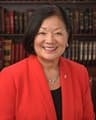 Mazie Hirono
Democrat · Hawaii
 Martin Heinrich
Democrat · New Mexico
 Angus King
Independent · Maine
 Edward Markey
Democrat · Massachusetts
 Christopher Murphy
Democrat · Connecticut
 Jeff Merkley
Democrat · Oregon
 Alex Padilla
Democrat · California
 John Reed
Democrat · Rhode Island
 Bernie Sanders
Independent · Vermont
 Chris Van Hollen
Democrat · Maryland
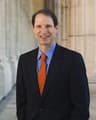 Ron Wyden
Democrat · Oregon
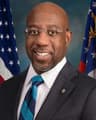 Raphael Warnock
Democrat · Georgia
 Peter Welch
Democrat · Vermont
 Sheldon Whitehouse
Democrat · Rhode Island