
Brian Schatz (D-HI)
A resolution designating April 2025 as "Preserving and Protecting Local News Month" and recognizing the importance and significance of local news.
A Democratic resolution with 14 Democratic cosponsors · See all 15 cosponsors
Last activity — Referred to the Committee on the Judiciary. (text: CR S2098-2099)
In committee
Introduced and handed to a committee in the chamber it started in.
The committee holds it, and most bills are never heard from again. A hearing or a committee vote would be news; silence is the usual outcome, and it kills the bill without anyone voting against it.
Its path through Congress
- Introduced
- In Committee
A Senate resolution is the Senate speaking for itself: stating a position, honouring someone, or setting its own rules. Adopting it is the whole process. Once the Senate agrees to it, it is officially the Senate's word; it is not a law, so the House and the President have no part in it.
What this bill would do
This Senate resolution designates April 2025 as "Preserving and Protecting Local News Month." The measure recognizes local news as a public good that serves an essential function in United States democracy. It aims to highlight the importance of local news in maintaining healthy and vibrant communities. The text provides context regarding the significant decline of local news outlets and journalism jobs across the country. It also notes the impact of these closures on various communities and the necessity of local reporting for an informed citizenry.
Yes· 3 of 14
- Scored +1
Would households on low incomes be better off under this?
The resolution notes that news deserts disproportionately impact high-poverty areas.
- Scored +1
Would Black Americans be better off under this?
The resolution highlights how the loss of news disproportionately affects Black constituencies.
- Scored +1
Would Native Americans be better off under this?
The resolution notes the dramatic shrinkage of media sources for Native American readers.
The opposite
No question was scored the opposite.
Who it would affect, and how
Potential Positive Impacts for People
-
Civic Engagement and Democracy: The resolution affirms that local news is a public good that helps sustain democratic norms and practices (Resolution clauses 2 and 3).
-
Informed Citizenry: Local news provides vital information regarding national, State, and local elections, which helps citizens execute their civic responsibilities (Whereas clauses).
-
Accountability: Local news and investigative reporting help ensure that local government corruption and corporate malfeasance are checked (Whereas clauses).
-
Combatting Misinformation: Local journalists use community knowledge and connections to help debunk misleading or fraudulent content (Whereas clauses).
-
Public Access Information: Local cable franchises provide programming that informs communities and offers news and information that may not be available on other broadcast or cable channels (Whereas clauses).
Potential Negative Impacts for People
- No negative impacts are identified in the text: The provided resolution is a ceremonial designation and an affirmation of the value of local news; it does not establish new laws, taxes, or regulations that would impose burdens on individuals or groups.
Groups and Interests Ranking
Every group the model scored this bill for, from -10 to +10. Tap or hover a score for the reason it gave.
- Demographic And Interest Groups
- Would Black Americans be better off under this? — The resolution highlights how the loss of news disproportionately affects Black constituencies. Would households on low incomes be better off under this? — The resolution notes that news deserts disproportionately impact high-poverty areas. Would Native Americans be better off under this? — The resolution notes the dramatic shrinkage of media sources for Native American readers. Would people in rural areas be better off under this? — The resolution highlights that rural counties are heavily impacted by the loss of local news. Would students be better off under this? — The resolution highlights the role and importance of student journalists. Would women be better off under this? — The resolution mentions the gender disparity and harassment faced by women in newsrooms.
- Social Issues And Justice
- Does this protect what people are allowed to say in public life? — The resolution affirms the essential function of a free press in a democracy. Does this narrow the gap between how men and women are treated? — The resolution notes the significant gender disparity in newsroom employment and harassment of women journalists. Does this narrow racial gaps in how people are treated? — The resolution highlights the disproportionate impact of news loss on Black, Latino, and Native American communities. Does this protect the right to vote? — The resolution emphasizes that local news is vital for providing information regarding elections.
- Governance And Ideology
- Does this make elections run better? — The resolution states that local news provides vital information regarding local and national elections. Does this protect the individual right to speak freely? — The resolution emphasizes the importance of the freedom of the press. Does this make what the government does easier for the public to see? — The resolution notes that local news helps check local government corruption.
- Environment Energy And Infrastructure
- Does this invest in rural communities? — The resolution notes that rural counties are among the most deeply impacted by the loss of local reporting.
- 4/1/2025
- Referred to the Committee on the Judiciary. (text: CR S2098-2099)
- 15 Cosponsors added.
- Introduced in Senate
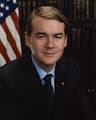 Michael Bennet
Democrat · Colorado
 Richard Blumenthal
Democrat · Connecticut
 Maria Cantwell
Democrat · Washington
 Richard Durbin
Democrat · Illinois
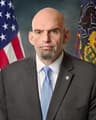 John Fetterman
Democrat · Pennsylvania
 Amy Klobuchar
Democrat · Minnesota
 Mark Kelly
Democrat · Arizona
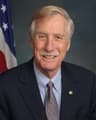 Angus King
Independent · Maine
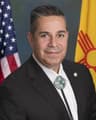 Ben Luján
Democrat · New Mexico
 Alex Padilla
Democrat · California
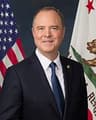 Adam Schiff
Democrat · California
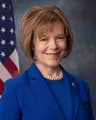 Tina Smith
Democrat · Minnesota
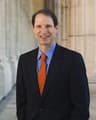 Ron Wyden
Democrat · Oregon
 Peter Welch
Democrat · Vermont
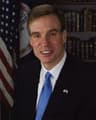 Mark Warner
Democrat · Virginia