Bill · S.J.Res. 124· Senate(119-SJRES-124)
A joint resolution to direct the removal of United States Armed Forces from hostilities within or against the Republic of Cuba that have not been authorized by Congress.
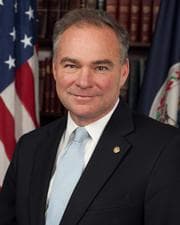
- Introduced
- 3/12/2026
- Last activity
- 4/28/2026 — The motion to discharge fell when the point of order was well taken.
- Sponsored by
- Timothy Kaine
- Cosponsors
- - 12 - 0
- Introduced
What this bill would do
S.J. Res. 124 directs the President to remove United States Armed Forces from any hostilities within or against the Republic of Cuba. This action is required unless there is a specific authorization for use of military force or a declaration of war. The resolution notes that Congress has the sole power to declare war. It also specifies that the U.S. can still defend itself from armed attacks or threats of imminent attacks. Additionally, lawful counternarcotics operations are still permitted.
Yes· 3 of 10
Does this favour talking over confrontation abroad?+4
Moving away from hostilities toward authorized diplomacy shifts the focus to diplomatic engagement.
Does this make what the government does easier for the public to see?+3
Ensures military action requires clear congressional authorization and public record.
Does this reduce what is spent on the military?+2
Removing forces from unauthorized hostilities typically lowers defense costs.
The opposite
Does this give the federal government more power?-5
Specifically restricts the President's unilateral executive power to engage in hostilities.
What Congress actually voted on
One recorded vote has been taken on this bill.
None of them settled the bill — every vote so far has been about whether to keep going.
Who it would affect, and how
Potential Positive Impacts for People
-
Accountability of Military Action: By directing the removal of forces not authorized by Congress, the resolution ensures that military hostilities are subject to the constitutional power of Congress to declare war (Section 1).
-
Protection of Self-Defense: The bill allows the United States to continue defending itself from armed attacks or imminent threats, which protects the safety of the country (Section 2(b)).
-
Continuation of Drug Enforcement: The resolution ensures that lawful counternarcotics operations can still be executed, which may benefit public safety (Section 2(b)).
Potential Negative Impacts for People
- No negative impacts for people are explicitly mentioned in the provided text.
Groups and Interests Ranking
Every group the model scored this bill for, from -10 to +10. Hover a score for the reason it gave.
- National Security And Foreign Policy
- Improves Diplomatic Engagement+4Improves International Alliances+2Reduces Military Spending+2Improves International Trade+1
- Economy And Finance
- Improves Fiscal Responsibility+2Reduces Government Spending+1Reduces National Debt+1
- Demographic And Interest Groups
- Good For Hispanic Americans+2Good For Immigrants+1
- Governance And Ideology
- Improves Government Transparency+3Increases Federal Power-5
- 4/28/2026
- Motion to discharge Senate Committee on Foreign Relations made. (Pursuant to 50 U.S.C. 1546a, Department of State Authorization Act). (consideration: CR S2070-2071)
- Point of order that the measure is not entitled to expedited procedures under 50 U.S.C. 1546a raised against the measure agreed to in Senate by Yea-Nay Vote. 51 - 47. Record Vote Number: 108.
- The motion to discharge fell when the point of order was well taken.
- 1 Cosponsor added.
- 4/27/2026
- 10 Cosponsors added.
- 3/12/2026
- Read twice and referred to the Committee on Foreign Relations.
- 2 Cosponsors added.
- Introduced in Senate
2 bills Congress.gov lists as related to this one — companions in the other chamber, earlier versions, and bills this one absorbed or was folded into.
- 119-HJRES-153: To direct the removal of United States Armed Forces from hostilities within or against the Republic of Cuba that have not been authorized by Congress.
- 119-SJRES-193: A joint resolution to direct the removal of United States Armed Forces from hostilities within or against the Republic of Cuba that have not been authorized by Congress.
 Angela Alsobrooks
Democrat · Maryland
 Tammy Duckworth
Democrat · Illinois
 Ruben Gallego
Democrat · Arizona
 John Hickenlooper
Democrat · Colorado
 Amy Klobuchar
Democrat · Minnesota
 Jeff Merkley
Democrat · Oregon
 Alex Padilla
Democrat · California
 Bernie Sanders
Independent · Vermont
 Charles Schumer
Democrat · New York
 Adam Schiff
Democrat · California
 Chris Van Hollen
Democrat · Maryland
 Ron Wyden
Democrat · Oregon
 Peter Welch
Democrat · Vermont