Bill · S.J.Res. 193· Senate(119-SJRES-193)
A joint resolution to direct the removal of United States Armed Forces from hostilities within or against the Republic of Cuba that have not been authorized by Congress.
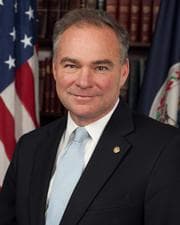
- Introduced
- 5/20/2026
- Last activity
- 5/20/2026 — Read twice and referred to the Committee on Foreign Relations.
- Sponsored by
- Timothy Kaine
- Cosponsors
- - 2 - 0
- Introduced
- In Committee
What this bill would do
This joint resolution directs the President to remove the United States Armed Forces from hostilities within or against the Republic of Cuba. It states that Congress has not declared war on Cuba nor provided specific statutory authorization for such military force. The resolution notes that actions like blockades or quarantades by the Armed Forces or Coast Guard constitute hostilities under the War Powers Resolution. Consequently, the President is directed to end these hostilities unless they are explicitly authorized by a declaration of war or specific statutory authority. However, the resolution does not prevent the United States from defending itself from armed attacks or conducting counternarcotics operations.
Yes
Does this reduce what is spent on the military?+5
The bill directs the removal of United States Armed Forces from hostilities within or against Cuba.
Would veterans be better off under this, taking everything together?+3
The removal of forces from unauthorized hostilities potentially reduces the risk of combat exposure for service members.
The opposite
Does this give the federal government more power?-5
The bill limits the President's unilateral ability to maintain hostilities and blockades without explicit Congressional authorization.
Does this leave more decisions to the states?-5
The bill reasserts Congressional authority over the declaration of war, reducing unilateral executive power.
Who it would affect, and how
Potential Positive Impacts for People
-
Restoration of Constitutional Authority: By directing the removal of forces, the bill asserts that Congress holds the sole power to declare war under Article I, Section s 8, Clause 11 of the Constitution (Section 1, Finding 1).
-
Ending Unauthorized Hostilities: The bill aims to stop the use of force, including blockades or quarantines conducted by the Armed Forces or Coast Guard, because these have not been authorized by a declaration of war or specific statutory authority (Section 1, Finding 3 and 5; Section 2(a)).
Potential Negative Impacts for People
-
Limitations on Defensive Actions: While the bill directs the removal of forces, it includes a rule that ensures the United States is not prevented from defending itself from an armed attack or the threat of an imminent armed attack (Section 2(b)).
-
Impact on Law Enforcement: The bill notes that the removal of forces does not prevent the lawful execution of counternarcotics operations (Section 2(b)).
Groups and Interests Ranking
Every group the model scored this bill for, from -10 to +10. Hover a score for the reason it gave.
- Governance And Ideology
- Increase States Rights-5Increases Federal Power-5
- National Security And Foreign Policy
- Reduces Military Spending+5
- Demographic And Interest Groups
- Good For Veterans+3
- 5/20/2026
- Read twice and referred to the Committee on Foreign Relations.
- 2 Cosponsors added.
- Introduced in Senate
2 bills Congress.gov lists as related to this one — companions in the other chamber, earlier versions, and bills this one absorbed or was folded into.
- 119-HJRES-153: To direct the removal of United States Armed Forces from hostilities within or against the Republic of Cuba that have not been authorized by Congress.
- 119-SJRES-124: A joint resolution to direct the removal of United States Armed Forces from hostilities within or against the Republic of Cuba that have not been authorized by Congress.
 Ruben Gallego
Democrat · Arizona
 Adam Schiff
Democrat · California