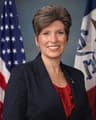
A Republican bill with 2 Democratic cosponsors · See all 4 cosponsors
Last activity — Read twice and referred to the Committee on Agriculture, Nutrition, and Forestry.
In committee
Introduced and handed to a committee in the chamber it started in.
The committee holds it, and most bills are never heard from again. A hearing or a committee vote would be news; silence is the usual outcome, and it kills the bill without anyone voting against it.
Its path through Congress
- Introduced
- In Committee
What this bill would do
The FARMLAND Act of 2025 aims to strengthen oversight of foreign investment in the United States agricultural industry. It seeks to amend the Agricultural Foreign Investment Disclosure Act of 1978 to address national security risks and intellectual property theft. The bill increases civil penalties for failing to report agricultural investments and requires due diligence from entities involved in land transfers. It also establishes a Chief of Operations of Investigative Actions to monitor compliance and investigate malign efforts. Furthermore, the Act empowers the Committee on Foreign Investment in the United States to review specific real estate transactions by foreign entities of concern. Finally, it prohibits foreign persons from participating in Farm Service Agency programs.
Yes· 3 of 9
- Scored +3
Would farmers be better off under this?
The bill protects American farmers from intellectual property theft and restricts foreign access to federal farm assistance.
- Scored +3
Does this make patent and copyright rules fairer?
The bill specifically addresses and aims to prevent the theft of agricultural intellectual property by foreign entities.
- Scored +2
Would business owners be better off under this?
The bill provides protections for domestic agricultural business owners against foreign competition and espionage.
The opposite
No question was scored the opposite.
Who it would affect, and how
Potential Positive Impacts for People
-
Strengthened National Security and Food Security: The bill identifies agriculture as vital for national security and aims to prevent agricultural espionage and the theft of intellectual property by foreign entities (Section 2(a)).
-
Increased Accountability for Foreign Investors: The Act implements civil penalties for those who fail to submit required reports or submit misleading information (Section 2(b)). It also requires the public disclosure of the names of persons who pay these penalties (Section 2(c)).
-
Enhanced Oversight through Dedicated Leadership: The bill creates a Chief of Operations of Investigative Actions to monitor compliance, conduct investigations, and perform annual audits (Section 4(a) and 4(d)).
-
Improved Transparency via Data Collection: The Secretary of Agriculture and the Secretary of Homeland Security are tasked with developing a database of agricultural land owned by foreign persons to track ownership (Section 6(b)).
-
Protection of Federal Program Funds: By prohibiting foreign persons from participating in Farm Service Agency programs, the bill ensures that federal benefits are not provided to these entities (Section 7(b)).
Potential Negative Impacts for People
-
Increased Compliance Burdens for Industry Entities: Any entity involved in the purchase or transfer of agricultural land, such as buyers, sellers, real estate agents, brokers, and title companies, must now conduct due diligence and certify their compliance with the Act (Section 2(e)).
-
Increased Financial Risk from Penalties: The bill sets minimum and maximum limits for civil penalties regarding reporting failures (Section 2(b)), and foreign persons participating in prohibited Farm Service Agency programs face penalties of up to 125 percent of the benefits received (Section 7(c)).
-
Public Disclosure of Noncompliance: Individuals or entities that pay civil penalties will have their names publicly disclosed by the Secretary (Section 2(c)).
Groups and Interests Ranking
Every group the model scored this bill for, from -10 to +10. Tap or hover a score for the reason it gave.
- Demographic And Interest Groups
- Would farmers be better off under this? — The bill protects American farmers from intellectual property theft and restricts foreign access to federal farm assistance. Would business owners be better off under this? — The bill provides protections for domestic agricultural business owners against foreign competition and espionage. Would people in rural areas be better off under this? — The bill aims to maintain local control over agricultural land and national security in rural areas.
- Education And Technology
- Does this make patent and copyright rules fairer? — The bill specifically addresses and aims to prevent the theft of agricultural intellectual property by foreign entities.
- Economy And Finance
- Does this make it easier to run a small business? — The bill protects domestic agricultural producers from being undercut by global competitors through intellectual property theft.
- Governance And Ideology
- Does this make what the government does easier for the public to see? — The bill requires the creation of a public database and annual reports regarding foreign land ownership.
- Environment Energy And Infrastructure
- Does this better protect air, water and wildlife? — The bill includes an analysis of potential threats to environmental protection posed by foreign ownership of land.
- National Security And Foreign Policy
- Does this better protect the country from computer attacks? — The bill seeks to prevent industrial espionage and intellectual property theft regarding agricultural technologies.
- Social Issues And Justice
- Is this likely to lift people out of poverty? — The bill aims to protect the stability of the domestic agricultural industry which supports rural livelihoods.
- 4/10/2025
- 1 Cosponsor added.
- 3/6/2025
- Read twice and referred to the Committee on Agriculture, Nutrition, and Forestry.
- 3 Cosponsors added.
- Introduced in Senate
3 bills Congress.gov lists as related to this one — companions in the other chamber, earlier versions, and bills this one absorbed or was folded into.
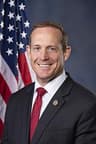 Ted Budd
Republican · North Carolina
 John Fetterman
Democrat · Pennsylvania
 Elissa Slotkin
Democrat · Michigan
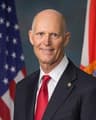 Rick Scott
Republican · Florida