Bill · S. 847· Senate(119-S-847)
Child Care Availability and Affordability Act
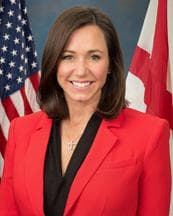
- Introduced
- 3/4/2025
- Last activity
- 3/4/2025 — Read twice and referred to the Committee on Finance. (Sponsor introductory remarks on measure: CR S1499-1500)
- Sponsored by
- Katie Britt
- Cosponsors
- - 10 - 10
- Introduced
- In Committee
What this bill would do
The "Child Care Availability and Affordability Act" aims to amend the Internal Revenue Code of 1986. It focuses on expanding the employer-provided child care credit and the dependent care assistance exclusion. The bill increases the percentage of qualified child care expenditures that can be taken into account and raises the maximum credit amount. It also includes special provisions for small businesses and jointly owned childcare facilities. Additionally, the bill increases the amount excludable for dependent care assistance programs. Finally, it establishes a new tax credit for household and dependent care services necessary for gainful employment.
Yes· 3 of 9
Does this make child care cost less?+7
The bill expands tax credits and increases the amount excludable for dependent care assistance programs.
Would business owners be better off under this?+6
Small businesses receive enhanced tax credits for providing childcare services.
Does this cut taxes for small businesses?+6
Small businesses receive a higher percentage of qualified childcare expenditures and a higher maximum credit amount.
The opposite
No question was scored the opposite.
Who it would affect, and how
Potential Positive Impacts for People
-
Increased Support for Employers: The bill increases the amount of qualified child care expenditures taken into account from 25 percent to 50 percent (Section 2(a)). It also raises the maximum credit amount from $150,000 to $500,000 (Section 2(b)).
-
Enhanced Benefits for Small Businesses: Small businesses receive even higher benefits, with the credit increasing to 60 percent and the maximum credit amount rising to $600,000 (Section 2(d)).
-
Flexibility for Shared Facilities: The bill clarifies that a childcare facility is still considered qualified even if it is jointly owned or operated by the taxpayer and others (Section 2(c)).
-
Increased Assistance for Dependent Care: The amount excludable for dependent care assistance programs is increased from $5,000 to $7,500 (Section 3(a)).
-
New Tax Credit for Individuals: A new credit is created for employment-related expenses, such as household services or the care of a qualifying individual (Section 4(a)). This credit is calculated at an applicable percentage of 50 percent, which decreases based on adjusted gross income (Section 4(a)(1)-(2)).
-
Support for Families with Multiple Dependents: The dollar limit for the new credit is higher for those with two or more qualifying individuals, allowing up to $8,000 (Section 4(c)).
Potential Negative Impacts for People
-
Income-Based Reductions in Credit: The tax credit for employment-related expenses is reduced as a taxpayer's adjusted gross income increases (Section 4(a)(2)).
-
Limits on Credit Amounts: There are specific dollar limits on the amount of employment-related expenses that can be used to claim the credit, capped at $5,000 for one qualifying individual or $8,000 for two or more (Section 4(c)).
-
Income Restrictions for Credit Eligibility: The credit is subject to an earned income limitation, meaning the amount cannot exceed the individual's (or a spouse's) earned income (Section 4(d)).
-
Strict Documentation Requirements: To receive the credit, taxpayers must include the name, address, and taxpayer identification number of the service provider, as well as the taxpayer identification number of the qualifying individual (Section 4(e)(9) and (10)).
-
Requirement for Joint Filing: Married couples are only eligible for the credit if they file a joint return (Section 4(e)(2)).
Groups and Interests Ranking
Every group the model scored this bill for, from -10 to +10. Hover a score for the reason it gave.
- Demographic And Interest Groups
- Good For Business Owners+6Good For Low Income Households+5Good For Middle Class Households+5Good For Children+4Good For Women+4
- Economy And Finance
- Reduces Small Business Taxes+6Reduces Middle Class Taxes+5Improves Economic Growth+3
- Social Issues And Justice
- Improves Childcare Affordability+7
- 2/24/2026
- 1 Cosponsor added.
- 7/21/2025
- 1 Cosponsor added.
- 6/11/2025
- 2 Cosponsors added.
- 6/3/2025
- 1 Cosponsor added.
- 6/2/2025
- 1 Cosponsor added.
- 5/7/2025
- 2 Cosponsors added.
- 4/10/2025
- 2 Cosponsors added.
- 4/8/2025
- 2 Cosponsors added.
- 3/6/2025
- 1 Cosponsor added.
- 3/4/2025
- Read twice and referred to the Committee on Finance. (Sponsor introductory remarks on measure: CR S1499-1500)
- 8 Cosponsors added.
- Introduced in Senate
One bill Congress.gov lists as related to this one — companions in the other chamber, earlier versions, and bills this one absorbed or was folded into.
 Susan Collins
Republican · Maine
 Shelley Capito
Republican · West Virginia
 Christopher Coons
Democrat · Delaware
 John Curtis
Republican · Utah
 Joni Ernst
Republican · Iowa
 Kirsten Gillibrand
Democrat · New York
 Ruben Gallego
Democrat · Arizona
 Maggie Hassan
Democrat · New Hampshire
 James Justice
Republican · West Virginia
 Amy Klobuchar
Democrat · Minnesota
 Mark Kelly
Democrat · Arizona
 Angus King
Independent · Maine
 Timothy Kaine
Democrat · Virginia
 David McCormick
Republican · Pennsylvania
 Pete Ricketts
Republican · Nebraska
 Jeanne Shaheen
Democrat · New Hampshire
 Dan Sullivan
Republican · Alaska
 Elissa Slotkin
Democrat · Michigan
 Tommy Tuberville
Republican · Alabama
 Thomas Tillis
Republican · North Carolina
 Mark Warner
Democrat · Virginia