Bill · S. 5190· Senate(119-S-5190)
Restoring Justice for Workers Act
- Introduced
- 7/30/2026
- Last activity
- 7/30/2026 — Read twice and referred to the Committee on Health, Education, Labor, and Pensions.
- Sponsored by
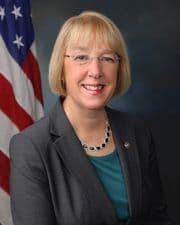
- Patty Murray
- Cosponsors
- - 15 - 0
- Introduced
- In Committee
What this bill would do
The Restoring Justice for Workers Act aims to prohibit forced arbitration in work disputes. It seeks to stop employers from requiring workers to sign agreements that prevent them from going to court or joining class actions before a dispute even happens. The bill also prohibits retaliation against workers who refuse to enter these arbitration agreements. For post-dispute situations, the bill sets specific requirements to ensure any agreement is truly voluntary and informed. Finally, it amends the National Labor Relations Act to protect employees' rights to engage in concerted activities regarding work disputes.
Yes· 3 of 6
Would union members be better off under this?+9
The bill strongly protects collective actions and protects workers from retaliation for exercising their rights.
Does this protect the right to fair treatment by the courts?+8
The bill preserves workers' rights to access the court system and ensures more robust due process in employment disputes.
Would households on low incomes be better off under this?+7
By prohibiting forced arbitration, the bill makes legal redress more accessible for workers who often rely on collective actions.
The opposite
Would business owners be better off under this?-6
The bill limits the ability of employers to use arbitration to resolve workplace disputes, potentially increasing litigation costs.
Who it would affect, and how
Potential Positive Impacts for People
-
Restoring Access to Courts: The bill prohibits "predispute arbitration agreements" that require arbitration of work disputes, which helps prevent workers from being forced to give up their right to seek recourse in court as a condition of employment (Section 5, Section 502(a)(1)).
-
Protection of Collective Action: The Act amends the National Labor Relations Act to prohibit agreements that prevent employees from joining together for "joint, class, or collective" claims, allowing workers to seek relief more affordably (Section 4; Section 5, Section 502(a)(3)).
-
Preventing Retaliation: The bill prohibits employers from retaliating against workers who refuse to enter into arbitration agreements, protecting them from adverse actions for exercising their rights (Section 3; Section 5, Section 502(a)(5)).
-
Ensuring Informed Consent: For post-dispute agreements, the bill requires that workers be informed in plain language of their right to refuse the agreement without retaliation, ensuring they understand what they are signing (Section 5, Section 502(a)(2)(B)).
-
Legal Redress for Wrongful Retaliation: Workers who are retaliated against for refusing arbitration can bring civil actions in federal court to seek relief, including reasonable attorney's fees and costs (Section 5, Section 502(c)).
Potential Negative Impacts for People
- Exceptions for Labor Organizations: The protections regarding concerted activity and the new arbitration rules do not apply to agreements embodied in contracts between an employer and a labor organization (Section 4, Section 5, Section 502(d)(2)(C)).
Groups and Interests Ranking
Every group the model scored this bill for, from -10 to +10. Hover a score for the reason it gave.
- Demographic And Interest Groups
- Good For Union Workers+9Good For Low Income Households+7Good For Middle Class Households+5Good For Business Owners-6
- Governance And Ideology
- Improves Due Process+8Increases Federal Power+5
- Economy And Finance
- Improves Union Protections+7
- 8/3/2026
- 1 Cosponsor added.
- 7/30/2026
- Read twice and referred to the Committee on Health, Education, Labor, and Pensions.
- 16 Cosponsors added.
- Introduced in Senate
One bill Congress.gov lists as related to this one — companions in the other chamber, earlier versions, and bills this one absorbed or was folded into.
 Tammy Baldwin
Democrat · Wisconsin
 Richard Blumenthal
Democrat · Connecticut
 Catherine Cortez Masto
Democrat · Nevada
 Richard Durbin
Democrat · Illinois
 Ruben Gallego
Democrat · Arizona
 Mazie Hirono
Democrat · Hawaii
 Amy Klobuchar
Democrat · Minnesota
 Angus King
Independent · Maine
 Edward Markey
Democrat · Massachusetts
 Christopher Murphy
Democrat · Connecticut
 Jeff Merkley
Democrat · Oregon
 Alex Padilla
Democrat · California
 Gary Peters
Democrat · Michigan
 John Reed
Democrat · Rhode Island
 Bernie Sanders
Independent · Vermont
 Jeanne Shaheen
Democrat · New Hampshire
 Elizabeth Warren
Democrat · Massachusetts