Bill · H.R. 9995· House(119-HR-9995)
Restoring Justice for Workers Act
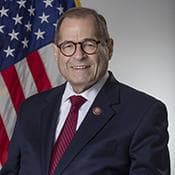
- Introduced
- 7/30/2026
- Last activity
- 7/30/2026 — Referred to the Committee on the Judiciary, and in addition to the Committee on Education and Workforce, for a period to be subsequently determined by the Speaker, in each case for consideration of such provisions as fall within the jurisdiction of the committee concerned.
- Sponsored by
- Jerrold Nadler
- Cosponsors
- - 7 - 0
- Introduced
- In Committee
What this bill would do
The Restoring Justice for Workers Act aims to prohibit forced arbitration in work disputes. It seeks to prevent employers from requiring workers to sign agreements that block access to courts or prevent them from joining class actions before a dispute occurs. The bill also prohibits retaliation against workers who refuse to enter into arbitration agreements. For agreements made after a dispute arises, the bill requires specific disclosures and a waiting period to ensure consent is voluntary. Finally, it amends the National Labor Relations Act to protect the rights of employees to engage in concerted activities regarding work disputes.
Yes· 3 of 6
Would union members be better off under this?+9
The bill significantly enhances the rights of workers to engage in concerted and collective activities.
Does this protect the right to fair treatment by the courts?+8
The bill enhances due process for workers by ensuring they can access the court system for disputes.
Would households on low incomes be better off under this?+7
Providing access to courts and collective actions benefits low-income workers seeking redress.
The opposite
Would business owners be better off under this?-6
The bill increases legal risks and potential litigation costs for employers.
Who it would affect, and how
Potential Positive Impacts for People
-
Access to Courts: The bill prohibits predispute arbitration agreements that require arbitration of work disputes, which could allow workers to seek redress in court rather than through private arbitration (Section 5, Subsection a, paragraph 1).
-
Protection from Retaliation: The Act prohibits covered entities from retaliating or threatening to retaliate against a worker for refusing to enter into an arbitration agreement (Section 5, Subsection a, paragraph 5). It also prohibits retaliation against employees for refusing to promise not to pursue collective claims (Section 4, Subsection a, paragraph 6, sub-paragraph C).
-
Empowerment of Collective Action: The bill prohibits agreements that prevent workers from joining together for joint, class, or collective claims, which helps workers who may need to act together to afford seeking relief (Section 2, Finding 5; Section 4, Subsection a, paragraph 6, sub-paragraph A).
-
Informed Consent for Postdispute Arbitration: For arbitration agreements made after a dispute has already occurred, the bill requires that workers be informed in writing using plain language about their rights and the ability to refuse the agreement without retaliation (Section 5, Subsection a, paragraph s-paragraph B). It also mandates a 45-day waiting period to ensure the agreement is truly voluntary (Section 5, Subsection a, paragraph 2, sub-paragraph C).
-
Right to Legal Redress for Retaliation: Workers injured by retaliation for refusing arbitration can bring a civil action in district court to seek relief, including reasonable attorney's fees and costs (Section 5, Subsection c).
Potential Negative Impacts for People
- Limitations on Collective Bargaining Agreements: The protections provided in this chapter do not apply to any arbitration provision in a contract between a covered entity and a labor organization, except for specific rights regarding judicial enforcement (Section 5, Subsection d, paragraph 2, sub-paragraph C).
Groups and Interests Ranking
Every group the model scored this bill for, from -10 to +10. Hover a score for the reason it gave.
- Demographic And Interest Groups
- Good For Union Workers+9Good For Low Income Households+7Good For Middle Class Households+5Good For Business Owners-6
- Governance And Ideology
- Improves Due Process+8Increases Federal Power+5
- Economy And Finance
- Improves Union Protections+7
- 8/17/2026
- 1 Cosponsor added.
- 7/30/2026
- Referred to the Committee on the Judiciary, and in addition to the Committee on Education and Workforce, for a period to be subsequently determined by the Speaker, in each case for consideration of such provisions as fall within the jurisdiction of the committee concerned.
- 6 Cosponsors added.
- Introduced in House
One bill Congress.gov lists as related to this one — companions in the other chamber, earlier versions, and bills this one absorbed or was folded into.
 Suzanne Bonamici
Democrat · Oregon
 Julia Brownley
Democrat · California
 Mark DeSaulnier
Democrat · California
 Henry Johnson
Democrat · Georgia
 Eleanor Norton
Democrat · District of Columbia
 Robert Scott
Democrat · Virginia
 Janice Schakowsky
Democrat · Illinois