Bill · S. 5127· Senate(119-S-5127)
Harley Jacobsen Clinical Trial Participant Income Exemption Act of 2026
- Introduced
- 7/23/2026
- Last activity
- 7/23/2026 — Read twice and referred to the Committee on Finance.
- Sponsored by
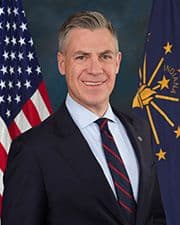
- Jim Banks
- Cosponsors
- - 1 - 1
- Introduced
- In Committee
What this bill would do
This bill, titled the ``Harley Jacobsen Clinical Trial Participant Income Exemption Act of 2026'', aims to amend the Internal Revenue Code of 1986. It proposes to exclude certain compensation received by clinical trial participants from their gross income. This includes payments for participation or for reasonable and necessary expenses for the individual or a dependent. Additionally, these payments would not be considered when determining eligibility for various federal, state, or local assistance programs. The changes would apply to amounts paid after December 31, 2025.
Yes· 3 of 6
Would households on low incomes be better off under this?+5
The bill ensures that clinical trial payments do not disqualify households from receiving federal or state assistance programs.
Does this cut taxes for middle-income families?+5
The bill excludes clinical trial compensation and necessary expense reimbursements from gross income, providing tax relief to those participating in trials.
Does this put more money into medical research?+4
The bill incentivizes participation in clinical trials by ensuring compensation does not jeopardize access to social assistance.
The opposite
No question was scored the opposite.
Who it would affect, and how
Potential Positive Impacts for People
-
Tax Relief for Participants: Under Section 2(a), gross income would not include ``qualified clinical trial payments.'' This means payments received as compensation for participation in an approved clinical trial, or to reimburse necessary expenses for the individual or a dependent, would not be taxed as income.
-
Protection of Benefits: According to Section 3(a), these payments would not be counted as income or resources when determining if an individual is eligible for benefits or assistance. This applies to any Federal program or any State or local program that is financed in whole or in part with Federal funds.
Potential Negative Impacts for People
- No negative impacts are explicitly stated in the provided text.
Groups and Interests Ranking
Every group the model scored this bill for, from -10 to +10. Hover a score for the reason it gave.
- Demographic And Interest Groups
- Good For Low Income Households+5Good For Middle Class Households+3
- Healthcare
- Increases Research Funding+4Improves Healthcare Access+3
- Economy And Finance
- Reduces Middle Class Taxes+5
- Social Issues And Justice
- Improves Poverty Reduction+2
- 9/29/2026
- 1 Cosponsor added.
- 7/23/2026
- Read twice and referred to the Committee on Finance.
- 1 Cosponsor added.
- Introduced in Senate
One bill Congress.gov lists as related to this one — companions in the other chamber, earlier versions, and bills this one absorbed or was folded into.
 Catherine Cortez Masto
Democrat · Nevada
 Roger Marshall
Republican · Kansas