Bill · S. 4919· Senate(119-S-4919)
Wage Theft Prevention and Wage Recovery Act
- Introduced
- 6/24/2026
- Last activity
- 6/24/2026 — Read twice and referred to the Committee on Health, Education, Labor, and Pensions.
- Sponsored by
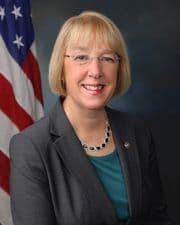
- Patty Murray
- Cosponsors
- - 25 - 0
- Introduced
- In Committee
What this bill would do
The Wage Theft Prevention and Wage Recovery Act aims to amend the Fair Labor Standards Act of 1938 and the Portal-to-Portal Act of 1947. This bill seeks to prevent wage theft and help workers recover unpaid earnings through stricter penalties and better enforcement. It requires employers to provide specific disclosures, regular paystubs, and timely final payments. The legislation also increases civil and criminal penalties for violations. Additionally, it authorizes the Secretary of Labor to administer grants to support community partnerships and enforcement efforts.
Yes· 3 of 13
Would households on low incomes be better off under this?+7
The bill specifically protects low-wage workers who are at the highest risk of wage theft.
Would Black Americans be better off under this?+7
The bill addresses wage theft which the text notes disproportionately affects African Americans.
Would immigrants be better off under this?+6
The bill provides enhanced legal protections and recovery tools for foreign-born workers.
The opposite
Would business owners be better off under this?-6
Employers face substantially increased civil fines, criminal penalties, and strict administrative requirements.
Does this make it easier to run a small business?-4
The bill imposes significant new administrative obligations and high financial penalties on employers.
Who it would affect, and how
Potential Positive Impacts for People
-
Improved Transparency for Workers: Employers must provide initial disclosures regarding pay rates and classification, as well as regular paystubs containing detailed information, which helps workers understand their compensation (Section 101).
-
Timely Receipt of Final Pay: The bill requires employers to provide final payments, including all compensation and benefits, within 14 days of termination or on the next regular payday, whichever is earlier (Section 101).
-
Enhanced Recovery of Wages: The Act increases liquidated damages to twice or three times the amount of unpaid wages and includes interest to help workers recover what they are owed (Section 103).
-
Better Legal Tools for Employees: The bill increases the statute of limitations for filing claims and allows the running of such periods to be suspended while a Department of Labor investigation is active (Section 201).
-
Stronger Enforcement through Partnerships: The Secretary of Labor can provide grants to help community-based organizations educate workers on their rights and assist them in filing claims (Section 302).
-
Increased Accountability for Employers: By increasing civil fines and criminal penalties, the bill aims to deter employers from engaging in repeated or willful wage theft (Section 103).
Potential Negative Impacts for People
-
Increased Employer Obligations: Employers are now required to provide specific written or digital disclosures and detailed paystubs, which includes providing information in an employee's primary language (Section 101).
-
Higher Financial Penalties for Employers: Employers face significant civil fines for violations, which can reach up to $250,150 per employee for repeated or willful violations (Section 103).
-
Increased Criminal Liability: The bill expands criminal penalties, allowing for fines up to $100,000 per employee affected, and requires the Secretary to refer certain offenders to the Department of Justice (Section 103).
-
New Requirements for Final Payments: Employers must ensure all compensation and benefits are paid out within a strict 14-day window following an employee's termination (Section 101).
Groups and Interests Ranking
Every group the model scored this bill for, from -10 to +10. Hover a score for the reason it gave.
- Demographic And Interest Groups
- Good For African Americans+7Good For Low Income Households+7Good For Immigrants+6Good For Hispanic Americans+5Good For Women+5Good For Union Workers+4Good For Middle Class Households+3Good For Business Owners-6
- Social Issues And Justice
- Improves Racial Equity+6Improves Poverty Reduction+4Improves Pathway To Citizenship+3
- Governance And Ideology
- Improves Government Transparency+5
- Economy And Finance
- Increases Minimum Wage+5Improves Economic Growth+2Improves Small Business Support-4
- 9/28/2026
- 1 Cosponsor added.
- 6/24/2026
- Read twice and referred to the Committee on Health, Education, Labor, and Pensions.
- 25 Cosponsors added.
- Introduced in Senate
One bill Congress.gov lists as related to this one — companions in the other chamber, earlier versions, and bills this one absorbed or was folded into.
 Angela Alsobrooks
Democrat · Maryland
 Tammy Baldwin
Democrat · Wisconsin
 Richard Blumenthal
Democrat · Connecticut
 Cory Booker
Democrat · New Jersey
 Maria Cantwell
Democrat · Washington
 Richard Durbin
Democrat · Illinois
 Tammy Duckworth
Democrat · Illinois
 John Fetterman
Democrat · Pennsylvania
 John Hickenlooper
Democrat · Colorado
 Mazie Hirono
Democrat · Hawaii
 Amy Klobuchar
Democrat · Minnesota
 Timothy Kaine
Democrat · Virginia
 Edward Markey
Democrat · Massachusetts
 Christopher Murphy
Democrat · Connecticut
 Jeff Merkley
Democrat · Oregon
 Alex Padilla
Democrat · California
 Gary Peters
Democrat · Michigan
 John Reed
Democrat · Rhode Island
 Bernie Sanders
Independent · Vermont
 Adam Schiff
Democrat · California
 Brian Schatz
Democrat · Hawaii
 Tina Smith
Democrat · Minnesota
 Chris Van Hollen
Democrat · Maryland
 Ron Wyden
Democrat · Oregon
 Sheldon Whitehouse
Democrat · Rhode Island
 Elizabeth Warren
Democrat · Massachusetts