Bill · S. 4632· Senate(119-S-4632)
Prevent Government Shutdowns Act of 2026
- Introduced
- 5/21/2026
- Last activity
- 6/1/2026 — Read the second time. Placed on Senate Legislative Calendar under General Orders. Calendar No. 424.
- Sponsored by
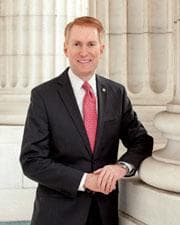
- James Lankford
- Cosponsors
- - 18 - 6
- Introduced
- On Calendar
What this bill would do
The "Prevent Government Shutdowns Act of 2026" aims to establish automatic continuing appropriations if a lapse in funding occurs. It creates a system where funds are automatically provided for 14-day periods to keep programs running under previous funding levels. The bill also establishes specific consequences for officials during these periods, such as limits on official travel. Furthermore, it imposes strict procedural rules on the Senate and House of Representatives to encourage timely budget enactments. These procedures include restrictions on which matters can be considered and limits on recesses.
Yes
Would households on low incomes be better off under this?+3
The bill protects the funding levels of food and nutrition activities during periods of legislative impasse.
Is this likely to lift people out of poverty?+3
The bill ensures funding for food and nutrition activities is maintained at current levels during a lapse in appropriations.
Does this make what the government does easier for the public to see?+2
The bill imposes procedural constraints on the House and Senate to encourage timely budget enactments.
The opposite
Does this send more money or help to other countries?-3
The bill prohibits high initial rates of operation or complete distributions for programs that distribute funding to foreign countries during a lapse.
Does this reduce what the federal government spends?-2
The bill restricts travel expenditures and prohibits high initial rates of operation for certain programs during funding lapses.
Who it would affect, and how
Potential Positive Impacts for People
-
Maintenance of Essential Services: The bill provides for automatic appropriations to keep programs, projects, and activities running at previous rates during a lapse in funding (Section 2(b)(1)). This could ensure that essential government functions continue without interruption.
-
Protection of Entitlements: For entitlements and certain food and nutrition activities, the bill ensures funding is provided at a rate necessary to maintain current program levels (Section 2(b)(3)). This could provide stability for individuals relying on these specific programs.
-
Accountability for Official Travel: The bill restricts "covered officers or employees" from using funds for official travel during a covered period, except for specific return trips or national security events (Section 3(b)(1)). This places a financial restriction on official movements during budget impasses.
-
Restrictions on Campaign Fund Use: The act limits the use of campaign contributions for official travel during a covered period (Section 3(b)(2)). This establishes a new restriction on how such funds can be utilized by federal officeholders.
Potential Negative Impacts for People
-
Restrictions on Funding Distribution: The bill stipulates that for programs with high initial rates of operation, such as those involving distributions to States or foreign countries, high initial rates or complete distributions shall not be made (Section 2(b)(f)). This could prevent the timely delivery of funds intended for such recipients.
-
Limitations on Government Personnel Movement: By prohibiting most official travel for covered employees during a covered period, the bill could limit the ability of officials to conduct necessary business (Section 3(b)(1)).
-
Legislative Restrictions: The bill limits the types of business that can be conducted in the House and Senate during a covered period, such as restricting motions to proceed to most matters except those specifically listed (Section 3(c)(1)). This could prevent the legislative body from addressing other important national issues.
Groups and Interests Ranking
Every group the model scored this bill for, from -10 to +10. Hover a score for the reason it gave.
- Demographic And Interest Groups
- Good For Low Income Households+3
- National Security And Foreign Policy
- Increases Foreign Aid-3
- Social Issues And Justice
- Improves Poverty Reduction+3
- Economy And Finance
- Reduces Government Spending-2
- Governance And Ideology
- Improves Government Transparency+2
- 7/20/2026
- 4 Cosponsors added.
- 6/1/2026
- Read the second time. Placed on Senate Legislative Calendar under General Orders. Calendar No. 424.
- 5/21/2026
- Introduced in the Senate. Read the first time. Placed on Senate Legislative Calendar under Read the First Time.
- 20 Cosponsors added.
- Introduced in Senate
3 bills Congress.gov lists as related to this one — companions in the other chamber, earlier versions, and bills this one absorbed or was folded into.
- Alan Armstrong
Republican · Oklahoma
 Marsha Blackburn
Republican · Tennessee
 John Barrasso
Republican · Wyoming
 Katie Britt
Republican · Alabama
 Mike Crapo
Republican · Idaho
 Shelley Capito
Republican · West Virginia
 John Cornyn
Republican · Texas
 Steve Daines
Republican · Montana
 Joni Ernst
Republican · Iowa
 Deb Fischer
Republican · Nebraska
 John Fetterman
Democrat · Pennsylvania
 Chuck Grassley
Republican · Iowa
 Maggie Hassan
Democrat · New Hampshire
 Mark Kelly
Democrat · Arizona
 Timothy Kaine
Democrat · Virginia
 John Kennedy
Republican · Louisiana
 David McCormick
Republican · Pennsylvania
 Jacky Rosen
Democrat · Nevada
 Pete Ricketts
Republican · Nebraska
 Tim Scott
Republican · South Carolina
 Dan Sullivan
Republican · Alaska
 Elissa Slotkin
Democrat · Michigan
 Tim Sheehy
Republican · Montana
 Thomas Tillis
Republican · North Carolina