Bill · S. 4582· Senate(119-S-4582)
Ensuring Access to General Surgery Act of 2026
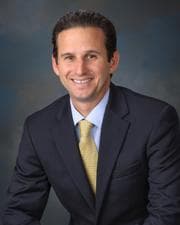
- Introduced
- 5/20/2026
- Last activity
- 5/20/2026 — Read twice and referred to the Committee on Health, Education, Labor, and Pensions.
- Sponsored by
- Brian Schatz
- Cosponsors
- - 2 - 2
- Introduced
- In Committee
What this bill would do
The Ensuring Access to General Surgery Act of 2026 aims to amend the Public Health Service Act regarding the designation of general surgery shortage areas. The bill addresses findings that the United States faces a physician shortage and that rural areas currently lack a sufficient number of general surgeons. To address this, the Secretary of Health and Human Services, through the Administrator of the Health Resources and Services Administration, is tasked with conducting a study on access to general surgeons. This study will examine current shortage designations and potential new methodologies, such as using surgery service areas and surgeon-to-population ratios. Following the study, the Secretary must submit a report to Congress within one year. The bill also allows for the potential designation of specific general surgery shortage areas based on the developed methodology.
Yes
Would people in rural areas be better off under this?+6
The bill specifically targets the assessment and designation of general surgery shortages in rural areas to improve their access to care.
Does this make health care easier to get in general?+6
The bill directs a study to improve the identification and designation of areas experiencing general surgery shortages to improve access for underserved populations.
Would households on low incomes be better off under this?+4
The bill aims to improve healthcare access for underserved populations which often include low-income households.
The opposite
No question was scored the opposite.
Who it would affect, and how
Potential Positive Impacts for People
-
Improved assessment of surgical needs: The bill directs a study to determine if current shortage designations accurately reflect the needs of underserved populations in urban, suburban, or rural areas (Section 3, subsection b(1)(A)).
-
More accurate shortage identification: The study will look at whether new measures, such as basing access on surgeons practicing within hospital service areas, would better identify shortages (Section 3, subsection b(1)(B)).
-
Comprehensive data collection: The Secretary is required to develop a methodology that considers specific factors like wait times, health outcomes, and ground transportation time to the nearest health care center (Section 3, subsection b(2)(ii)).
-
Increased transparency: The Secretary will periodically collect and publish data in the Federal Register comparing the availability and need of general surgery services across the country (Section 3, subsection b(5)(A)).
-
Targeted designations: If a methodology is established, the Secretary can designate specific general surgery shortage areas and provide a descriptive list of those areas (Section 3, subsection c(2)(A)).
Potential Negative Impacts for People
- No specific negative impacts are explicitly detailed in the provided text.
Groups and Interests Ranking
Every group the model scored this bill for, from -10 to +10. Hover a score for the reason it gave.
- Demographic And Interest Groups
- Good For Rural Residents+6Good For Low Income Households+4
- Healthcare
- Improves Healthcare Access+6
- 5/20/2026
- Read twice and referred to the Committee on Health, Education, Labor, and Pensions.
- 4 Cosponsors added.
- Introduced in Senate
One bill Congress.gov lists as related to this one — companions in the other chamber, earlier versions, and bills this one absorbed or was folded into.
 John Barrasso
Republican · Wyoming
 Maria Cantwell
Democrat · Washington
 Amy Klobuchar
Democrat · Minnesota
 Roger Marshall
Republican · Kansas