
Alex Padilla (D-CA)
Wildfire Intelligence Collaboration and Coordination Act of 2025
A Democratic bill with 2 Republican cosponsors · See all 5 cosponsors
Last activity — Read twice and referred to the Committee on Agriculture, Nutrition, and Forestry. (Sponsor introductory remarks on measure: CR S794-795)
In committee
Introduced and handed to a committee in the chamber it started in.
The committee holds it, and most bills are never heard from again. A hearing or a committee vote would be news; silence is the usual outcome, and it kills the bill without anyone voting against it.
Its path through Congress
- Introduced
- In Committee
What this bill would do
This bill proposes the establishment of the Wildfire Intelligence Center as a joint office within the Departments of Agriculture, Commerce, and the Interior. The Center is tasked with studying, planning, and coordinating wildfire-related issues to improve decision support and predictive services. It will focus on various stages of fire, from prevention and active management to post-fire recovery. To oversee this mission, a 14-member Board will be created to provide governance. The Center also aims to facilitate better information sharing between Federal, State, Tribal, and private sector entities. Ultimately, the goal is to create a more coordinated approach to managing the complex and changing landscape of wildfire risks.
Yes· 3 of 11
- Scored +6
Would people in rural areas be better off under this?
The center's focus on wildfire intelligence provides essential protection and preparedness tools for people living in rural, fire-prone areas.
- Scored +6
Does this better protect air, water and wildlife?
The bill establishes a center to better manage, monitor, and predict wildfire behavior and its ecological impacts.
- Scored +5
Would Native Americans be better off under this?
The bill emphasizes nation-to-nation partnerships and coordination with Tribal governments in wildfire management.
The opposite
No question was scored the opposite.
Who it would affect, and how
Potential Positive Impacts for People
-
Improved Fire Prediction and Management: The Center will provide real-time, science-based analytical and predictive services to help manage fires before, during, and after they occur. This can assist in land management and emergency response (Section 4(a)(1), 4(c)(1)).
-
Enhanced Community Safety: The bill directs the Center to assist in creating evacuation plans for at-sisk communities and public safety power shutoff plans (Section 4(c)(4)).
-
Public Health Protections: By consolidating air quality monitoring and forecasting data, the Center can provide information to help protect the public from smoke impacts associated with wildland fires (Section 4(c)(5)).
-
Improved Response Tools: The Center will develop accessible tools and a data interface to provide real-time information to firefighters and first responders (Section 4(c)(6)).
-
Coordinated Resource Information: The Center aims to develop tools that help State, local, and Tribal governments understand available resources for improving wildfire preparedness (Section 4(c)(9)).
Potential Negative Impacts for People
- No specific negative impacts or burdens are explicitly identified within the provided text.
Groups and Interests Ranking
Every group the model scored this bill for, from -10 to +10. Tap or hover a score for the reason it gave.
- Demographic And Interest Groups
- Would people in rural areas be better off under this? — The center's focus on wildfire intelligence provides essential protection and preparedness tools for people living in rural, fire-prone areas. Would Native Americans be better off under this? — The bill emphasizes nation-to-nation partnerships and coordination with Tribal governments in wildfire management. Would households on low incomes be better off under this? — Better wildfire management and air quality forecasting can protect the health and property of lower-income residents in at-risk areas. Would veterans be better off under this, taking everything together? — The integration of the Department of Defense ensures veterans in specialized roles are part of the coordinated wildfire response infrastructure.
- Environment Energy And Infrastructure
- Does this better protect air, water and wildlife? — The bill establishes a center to better manage, monitor, and predict wildfire behavior and its ecological impacts. Does this invest in rural communities? — The center's focus on wildfire risk reduction provides critical support for rural communities frequently threatened by wildfires.
- Education And Technology
- Does this put more money into scientific research? — The bill creates a dedicated fund for science-based decision support, data aggregation, and predictive modeling related to wildfires.
- Economy And Finance
- Is this likely to grow the economy? — The establishment of a coordinated intelligence center may reduce economic losses caused by wildfires through better prevention and response.
- Healthcare
- Does this do more about addiction and overdose deaths? — The bill provides air quality monitoring and forecasting to protect the public from smoke impacts, which has broad public health benefits.
- National Security And Foreign Policy
- Does this increase the pay, pensions or support veterans receive? — The bill includes the Department of Defense on its oversight board, ensuring better coordination of defense resources for wildfire intelligence.
- Social Issues And Justice
- Is this likely to lift people out of poverty? — Improved wildfire risk management can help protect the assets and livelihoods of vulnerable communities.
- 7/9/2025
- 1 Cosponsor added.
- 6/25/2025
- 1 Cosponsor added.
- 2/6/2025
- Read twice and referred to the Committee on Agriculture, Nutrition, and Forestry. (Sponsor introductory remarks on measure: CR S794-795)
- 3 Cosponsors added.
- Introduced in Senate
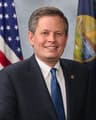 Steve Daines
Republican · Montana
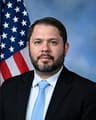 Ruben Gallego
Democrat · Arizona
 John Hickenlooper
Democrat · Colorado
 Jacky Rosen
Democrat · Nevada
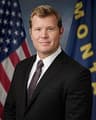 Tim Sheehy
Republican · Montana