Bill · S. 382· Senate(119-S-382)
Dismantle DEI Act of 2025
- Introduced
- 2/4/2025
- Last activity
- 2/4/2025 — Read twice and referred to the Committee on Homeland Security and Governmental Affairs.
- Sponsored by
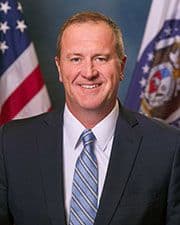
- Eric Schmitt
- Cosponsors
- - 20 - 0
- Introduced
- In Committee
What this bill would do
The Dismantle DEI Act of 2025 aims to ensure equal protection of the law and prevent racism within the Federal Government. It defines "prohibited diversity, equity or inclusion practice" as discrimination based on race, color, ethnicity, religion, biological sex, or national origin, or requiring training that asserts certain groups are superior or inferior. The bill rescinds various Executive Orders and memoranda related to racial equity and gender policy. It mandates the closure of DEI offices across federal agencies and prohibits the use of federal funds for such offices or specific diversity-related trainings. Additionally, it imposes new standards for federal contracting, grants, and educational accreditation. Finally, the Act provides for enforcement through private civil actions.
Yes· 3 of 5
Does this protect the freedom to practise a religion?+4
The bill protects the ability of institutions of higher education to maintain a religious mission and prevents accreditation standards from discouraging religious activity.
Would business owners be better off under this?+3
The bill reduces regulatory requirements and personnel mandates related to diversity and inclusion for federal contractors.
Does this give people more protection from unfair business practices?+1
The bill expands consumer protections by allowing private civil actions to enforce non-discrimination in federal contracting.
The opposite· 3 of 10
Would LGBTQ people be better off under this?-7
The bill rescinds executive orders and training prohibitions that protect against discrimination based on sexual orientation and gender identity.
Would Black Americans be better off under this?-6
The bill terminates federal offices and programs specifically aimed at supporting underserved communities and racial equity.
Would Hispanic Americans be better off under this?-6
The bill eliminates federal diversity programs and offices that support racial and ethnic equity.
Who it would affect, and how
Potential Positive Impacts for People
-
Protection Against Discriminatory Training: The bill prohibits requiring employees to undergo training or coursework that asserts a particular race, color, ethnicity, religion, biological sex, or national origin is inherently superior or inferior, oppressive or unprivileged (Sec. 3).
-
Protection of Employment Terms: It prevents employers from making the signing of statements or codes of conduct that require assent to specific views on race or gender a condition of employment or promotion (Sec. 3).
-
Preservation of Religious Freedom in Education: The bill ensures that accreditation standards do not prohibit or discourage institutions of higher education from engaging in activities protected by the Constitution, such as having a religious mission or being controlled by a religious organization (Sec. 601).
-
Maintaining Essential Offices: The Act explicitly ensures that Equal Employment Opportunity offices and offices enforcing the Americans with Disabilities Act of 1990 are not impacted by these changes (Sec. 104, Sec. 105, Sec. 303, Sec. 401, Sec. 602).
-
Empowerment through Legal Action: The bill allows individuals to bring civil actions in federal court if they allege a violation of the Act, with the potential for awards including attorney's fees and compensatory damages (Sec. 501, Sec. 801).
Potential Negative Impacts for People
-
Job Losses through Reductions in Force: The bill requires the closure of federal DEI offices and the Office of Diversity, Equity, Inclusion, and Accessibility, mandating "an appropriate reduction in force" rather than allowing for reassignments or transfers (Sec. 101, Sec. 102, Sec. 105).
-
Restrictions on Federal Training: Federal employees may be prohibited from accessing training related to diversity, equity, inclusion, or intersectionality (Sec. 104, Sec. 201, Sec. 202).
-
Impact on Federal Contractors and Grant Recipients: Federal contractors and grant recipients are prohibited from using federal funds to maintain diversity offices or implement certain diversity-related trainings, which may impact how these organizations operate (Sec. 303, Sec. 401, Sec. 402).
-
Potential Termination of Advisory Committees: Federal advisory committees may be forced to terminate within 30 days if an Administrator or Inspector General finds they implemented a prohibited diversity practice (Sec. 501).
Groups and Interests Ranking
Every group the model scored this bill for, from -10 to +10. Hover a score for the reason it gave.
- Demographic And Interest Groups
- Good For Business Owners+3Good For L G B T Q Community-7Good For African Americans-6Good For Asian Americans-6Good For Hispanic Americans-6Good For Native Americans-6Good For Women-4Good For Union Workers-3
- Social Issues And Justice
- Improves Religious Freedom+4Improves Gender Equality-5Improves Racial Equity-5
- Governance And Ideology
- Improves Government Transparency-2
- Economy And Finance
- Improves Consumer Protection+1
- Education And Technology
- Improves School Choice+1
- National Security And Foreign Policy
- Reduces Military Spending+1
- 6/10/2026
- 1 Cosponsor added.
- 2/4/2025
- Read twice and referred to the Committee on Homeland Security and Governmental Affairs.
- 19 Cosponsors added.
- Introduced in Senate
One bill Congress.gov lists as related to this one — companions in the other chamber, earlier versions, and bills this one absorbed or was folded into.
 Marsha Blackburn
Republican · Tennessee
 Jim Banks
Republican · Indiana
 Ted Budd
Republican · North Carolina
 Mike Crapo
Republican · Idaho
 Bill Cassidy
Republican · Louisiana
 Tom Cotton
Republican · Arkansas
 Kevin Cramer
Republican · North Dakota
 Steve Daines
Republican · Montana
 Cindy Hyde-Smith
Republican · Mississippi
 Josh Hawley
Republican · Missouri
 Ron Johnson
Republican · Wisconsin
 Cynthia Lummis
Republican · Wyoming
 James Lankford
Republican · Oklahoma
 Mike Lee
Republican · Utah
 Roger Marshall
Republican · Kansas
 Bernie Moreno
Republican · Ohio
 James Risch
Republican · Idaho
 Rick Scott
Republican · Florida
 Tim Sheehy
Republican · Montana
 Tommy Tuberville
Republican · Alabama