Bill · S. 3723· Senate(119-S-3723)
Western South Dakota Water Supply Project Feasibility Study Act
- Introduced
- 1/29/2026
- Last activity
- 9/17/2026 — Placed on Senate Legislative Calendar under General Orders. Calendar No. 648.
- Sponsored by
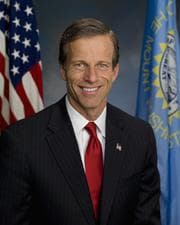
- John Thune
- Cosponsors
- - 1 - 0
- Introduced
- On Calendar
What this bill would do
This bill is called the Western South Dakota Water Supply Project Feasibility Study Act. It requires the Secretary of the Interior to study whether it is feasible to build a project that supplies municipal, rural, and industrial water from the Missouri River to the Western Dakota Regional Water System. The Secretary must complete this study in coordination with the Western Dakota Regional Water System, Inc. After finishing the study, the Secretary must write a report with recommendations on whether the project should be built and what the non-Federal share of construction costs should be. This report must be sent to specific committees in the Senate and the House of Representatives and made available to the public. The Federal government will pay for up to 50 percent of the study costs, with a limit of $10,000,000 in Federal funds.
Yes· 3 of 10
Would people in rural areas be better off under this?+8
The bill specifically targets the provision of water to rural systems in Western South Dakota.
Does this invest in rural communities?+7
The project specifically aims to supply rural water from the Missouri River to Western South Dakota.
Would farmers be better off under this?+6
Water supply projects are critical for agricultural productivity and rural farming operations.
The opposite
Does this reduce what the federal government owes?-1
The bill authorizes the expenditure of up to $10 million in federal funds.
Does this reduce what the federal government spends?-1
The bill authorizes new federal spending for a feasibility study.
Who it would affect, and how
Potential Positive Impacts for People
-
Under Section 3(a)(3), the Secretary must consult and cooperate with appropriate Federal, State, Tribal, regional, and local authorities during the study and report development, which ensures local voices and governments are included in the process.
-
Under Section 3(a)(2)(C), the Secretary is required to make the feasibility report and associated documents publicly available, ensuring transparency for the people.
Potential Negative Impacts for People
-
Under Section 3(c)(1)(A) and Section 3(d), the bill authorizes up to $10,000,000 of Federal funds to be spent on the feasibility study, which places a financial burden on taxpayers.
-
Under Section 3(a)(2)(A)(iii), the non-Federal share of construction costs is required to be at least 25 percent of the total construction costs, which could create a heavy financial obligation for local entities and individuals if the project moves forward.
Groups and Interests Ranking
Every group the model scored this bill for, from -10 to +10. Hover a score for the reason it gave.
- Demographic And Interest Groups
- Good For Rural Residents+8Good For Farmers+6Good For Business Owners+3Good For Native Americans+2
- Environment Energy And Infrastructure
- Improves Rural Development+7
- Economy And Finance
- Improves Economic Growth+3Improves Small Business Support+2Increases Job Creation+2Reduces Government Spending-1Reduces National Debt-1
- Governance And Ideology
- Improves Government Transparency+2Increases Federal Power+1
- 9/17/2026
- Committee on Energy and Natural Resources. Reported by Senator Lee with an amendment in the nature of a substitute. Without written report.
- Placed on Senate Legislative Calendar under General Orders. Calendar No. 648.
- 6/10/2026
- Committee on Energy and Natural Resources. Ordered to be reported with an amendment in the nature of a substitute favorably.
- 3/17/2026
- Committee on Energy and Natural Resources Subcommittee on Water and Power. Hearings held.
- 1/29/2026
- Read twice and referred to the Committee on Energy and Natural Resources. (text: CR S379)
- 1 Cosponsor added.
- Introduced in Senate
2 bills Congress.gov lists as related to this one — companions in the other chamber, earlier versions, and bills this one absorbed or was folded into.
 Mike Rounds
Republican · South Dakota