Bill · S. 3736· Senate(119-S-3736)
Dakota Mainstem Water Supply Project Feasibility Study Act
- Introduced
- 1/29/2026
- Last activity
- 9/17/2026 — Placed on Senate Legislative Calendar under General Orders. Calendar No. 651.
- Sponsored by
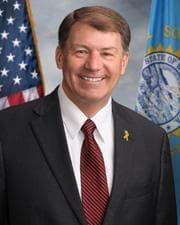
- Mike Rounds
- Cosponsors
- - 1 - 0
- Introduced
- On Calendar
What this bill would do
This bill is known as the Dakota Mainstem Water Supply Project Feasibility Study Act. It requires the Secretary of the Interior to carry out a study to figure out if it is feasible to build a water supply project for municipal, rural, and industrial uses. The service area for this potential project covers parts of South Dakota, Iowa, Nebraska, and Minnesota. The Secretary must work with a non-federal project entity and consult with various authorities during the study. Once the study is done, a feasibility report must be developed, submitted to specific congressional committees, and made available to the public. The federal government's share of the study costs is capped at 50 percent, with a total federal funding limit of $10,000,000.
Who it would affect, and how
Potential Positive Impacts for People
-
Water Supply Study for Multiple States: Under Section 3(a)(1), the Secretary of the Interior is required to carry out a study to determine the feasibility of constructing the Dakota Mainstem Water Supply Project to supply municipal, rural, and industrial water to the service area in South Dakota, Iowa, Nebraska, and Minnesota. This could be seen as positive because it explores potential solutions for water supply needs in these regions.
-
Public Transparency: Under Section 3(a)(2)(C), the Secretary must make the feasibility report publicly available, along with associated feasibility study documents. This ensures that the people and interested groups can see the results and findings of the study.
-
Defined Cost Limits for Taxpayers: Under Section 3(d), the bill sets a strict limit stating that not more than $10,000,000 of federal funds may be expended to carry out the feasibility study. Furthermore, Section 3(c)(1)(A) notes that the federal share of the total study costs shall not exceed 50 percent, ensuring non-federal partners share the financial load.
Potential Negative Impacts for People
- Government Spending of Tax Dollars: Under Section 3(c)(1)(B) and Section 3(d), the bill authorizes the expenditure of federal funds—up to $10,000,000—to pay for the federal share of the feasibility study. For taxpayers who prefer less federal spending, allocating millions of dollars toward a study can be viewed as a negative burden.
- 9/17/2026
- Committee on Energy and Natural Resources. Reported by Senator Lee with an amendment in the nature of a substitute. Without written report.
- Placed on Senate Legislative Calendar under General Orders. Calendar No. 651.
- 6/10/2026
- Committee on Energy and Natural Resources. Ordered to be reported with an amendment in the nature of a substitute favorably.
- 3/17/2026
- Committee on Energy and Natural Resources Subcommittee on Water and Power. Hearings held.
- 1/29/2026
- Read twice and referred to the Committee on Energy and Natural Resources.
- 1 Cosponsor added.
- Introduced in Senate
2 bills Congress.gov lists as related to this one — companions in the other chamber, earlier versions, and bills this one absorbed or was folded into.
 John Thune
Republican · South Dakota