Bill · S. 3339· Senate(119-S-3339)
AI Workforce PREPARE Act
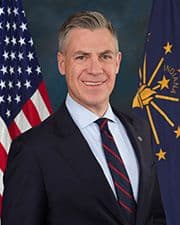
- Introduced
- 12/3/2025
- Last activity
- 12/3/2025 — Read twice and referred to the Committee on Health, Education, Labor, and Pensions.
- Sponsored by
- Jim Banks
- Cosponsors
- - 2 - 2
- Introduced
- In Committee
What this bill would do
The AI Workforce PREPARE Act aims to better forecast and plan for how artificial intelligence impacts the United States workforce. It focuses on collecting data regarding AI adoption and related layoffs to help mitigate worker dislocation and shortages. The bill establishes a Research Hub and authorizes the recruitment of technical experts to the Department of Labor. It also includes provisions for prize competitions to develop benchmarks that measure how AI automates or augments tasks. Additionally, the Act seeks to modernize access to labor market data and inform future training and assistance programs.
Yes· 3 of 10
Does this put more money into scientific research?+5
The bill authorizes significant funding for a Research Hub and prize competitions to advance AI and workforce research.
Does this make what the government does easier for the public to see?+3
The bill mandates the publication of various reports, workshops, and statistical series on a public website.
Would households on low incomes be better off under this?+2
The bill explores assistance programs to help workers dislocated by technological changes.
The opposite
Does this protect people from being watched or searched?-2
The act expands the ability for researchers to access more detailed individual-level datasets.
Does this give people more control over their personal data?-1
The bill increases researcher access to individual-level data which may create new privacy risks.
Does this make it easier to run a small business?-1
The bill imposes new, detailed disclosure requirements on employers during mass layoffs that may increase administrative burdens.
Who it would affect, and how
Potential Positive Impacts for People
-
Improved Workforce Planning: By measuring how AI automates or augments tasks, the bill helps policymakers and educators better prepare the workforce for technological changes (Section 2(a)(1) and 2(b)(1)).
-
Enhanced Job Training: The act provides data to improve training programs for in-demand industry sectors and occupations (Section 2, Title Page).
-
Expert Recruitment: The Department of Labor is authorized to rapidly recruit highly qualified experts in artificial intelligence and data science to support the act's goals (Section 102(a)).
-
Resource for Dislocated Workers: The bill mandates a study to explore the design of a "Rapid AI Adjustment Assistance Program" to help workers whose jobs are impacted by artificial intelligence (Section 402(a)).
-
Better Data for Researchers: The act seeks to increase researcher access to federal data in a secure manner to promote academic and other research (Section 101(a)(3)(B) and Section 104(b)).
Potential Negative Impacts for People
-
Increased Burden on Employers During Layoffs: Employers facing mass layoffs due to artificial intelligence will be required to provide specific, detailed disclosures in their official notices, including the type of AI used and the percentage of job loss attributable to it (Section 204).
-
Potential for Data Privacy Risks: While the bill discusses protecting privacy, it seeks to increase researcher access to data at the individual unit or record level (Section 101(a)(3)(B)).
Groups and Interests Ranking
Every group the model scored this bill for, from -10 to +10. Hover a score for the reason it gave.
- Demographic And Interest Groups
- Good For Low Income Households+2Good For Students+2Good For Union Workers+2Good For Middle Class Households+1
- Education And Technology
- Increases Scientific Research Funding+5Improves College Affordability+1Improves Data Privacy-1
- Social Issues And Justice
- Improves Poverty Reduction+2
- Economy And Finance
- Improves Union Protections+2Improves Small Business Support-1
- Governance And Ideology
- Improves Government Transparency+3Improves Privacy Rights-2
- National Security And Foreign Policy
- Improves Cybersecurity Defense+1
- 3/10/2026
- 1 Cosponsor added.
- 12/3/2025
- Read twice and referred to the Committee on Health, Education, Labor, and Pensions.
- 3 Cosponsors added.
- Introduced in Senate
 John Hickenlooper
Democrat · Colorado
 Maggie Hassan
Democrat · New Hampshire
 Jon Husted
Republican · Ohio
 Roger Marshall
Republican · Kansas