
A Democratic bill with 13 Democratic cosponsors · See all 14 cosponsors
Last activity — Read twice and referred to the Committee on Health, Education, Labor, and Pensions.
In committee
Introduced and handed to a committee in the chamber it started in.
The committee holds it, and most bills are never heard from again. A hearing or a committee vote would be news; silence is the usual outcome, and it kills the bill without anyone voting against it.
Its path through Congress
- Introduced
- In Committee
What this bill would do
The Healthy Maternity and Obstetric Medicine Act aims to protect the health of women and newborns by ensuring access to affordable health coverage during pregnancy. It establishes a special enrollment period for pregnant individuals to join various health insurance plans. The bill mandates that group health plans include maternity care for all dependents, regardless of age. It also adjusts Medicaid income eligibility standards and requires continuous 12-month coverage for pregnant and postpartum individuals under Medicaid and CHIP. Additionally, it treats pregnancy as a qualifying life event for Federal Employee Health Benefit plans.
Yes· 3 of 11
- Scored +9
Would women be better off under this?
The bill provides critical maternity, labor, and postpartum coverage for pregnant individuals.
- Scored +8
Does this make health care easier to get in general?
The bill improves healthcare access by guaranteeing maternity coverage for dependents and providing special enrollment periods for pregnant individuals.
- Scored +7
Would Black Americans be better off under this?
The bill addresses the disproportionately high maternal mortality rate among African-American women by improving access to care.
The opposite
No question was scored the opposite.
Who it would affect, and how
Potential Positive Impacts for People
-
Increased Access to Coverage: By establishing a special enrollment period, the bill allows pregnant individuals to enroll in health insurance plans upon reporting their pregnancy or receiving confirmation from a provider. (Section 3)
-
Guaranteed Maternity Care for Dependents: The bill ensures that group health plans and insurance issuers provide coverage for maternity care, including labor and delivery, for all pregnant dependents regardless of their age. (Section 4)
-
Improved Federal Employee Benefits: Pregnancy will be considered a change in family status and a qualifying life event for those eligible to enroll in Federal Employee Health Benefit plans. (Section 5)
-
Stable Medicaid/CHIP Coverage: The Act requires states to provide continuous 12-month coverage for pregnant and postpartum individuals under Medicaid and CHIP, rather than letting coverage lapse after 60 days. (Section 7)
-
Addressing Health Disparities: The bill notes that improving access to care can help reduce the high maternal mortality rates seen in certain communities of color, such as African-American, Black, and American Indian/Alaska Native women. (Section 2)
Potential Negative Impacts for People
- No specific negative impacts or burdens are explicitly listed within the provided text.
Groups and Interests Ranking
Every group the model scored this bill for, from -10 to +10. Tap or hover a score for the reason it gave.
- Demographic And Interest Groups
- Would women be better off under this? — The bill provides critical maternity, labor, and postpartum coverage for pregnant individuals. Would Black Americans be better off under this? — The bill addresses the disproportionately high maternal mortality rate among African-American women by improving access to care. Would Native Americans be better off under this? — The bill aims to mitigate higher maternal mortality rates among American Indian and Alaska Native women. Would households on low incomes be better off under this? — The bill expands Medicaid and CHIP coverage for low-income pregnant and postpartum individuals. Would people in their twenties and thirties be better off under this? — The bill provides special enrollment periods specifically aimed at young adults who are at high risk for unintended pregnancies.
- Healthcare
- Does this make health care easier to get in general? — The bill improves healthcare access by guaranteeing maternity coverage for dependents and providing special enrollment periods for pregnant individuals. Does this strengthen the Affordable Care Act? — The bill creates a special enrollment period for pregnant individuals within the ACA Exchange framework. Does this put more money into Medicaid, the health coverage for people on low incomes? — The bill extends continuous Medicaid coverage for pregnant and postpartum individuals for a full 12 months.
- Social Issues And Justice
- Does this narrow the gap between how men and women are treated? — The bill protects pregnant individuals from sex-based discrimination regarding maternity coverage for dependents. Does this narrow racial gaps in how people are treated? — The bill aims to reduce high maternal mortality rates that disproportionately affect Black and American Indian/Alaska Native women. Is this likely to lift people out of poverty? — The bill increases Medicaid income eligibility standards for pregnant individuals to improve coverage access.
- 12/16/2025
- 1 Cosponsor added.
- 11/20/2025
- Read twice and referred to the Committee on Health, Education, Labor, and Pensions.
- 13 Cosponsors added.
- Introduced in Senate
One bill Congress.gov lists as related to this one — companions in the other chamber, earlier versions, and bills this one absorbed or was folded into.
 Tammy Baldwin
Democrat · Wisconsin
 Richard Blumenthal
Democrat · Connecticut
 Cory Booker
Democrat · New Jersey
 Catherine Cortez Masto
Democrat · Nevada
 Tammy Duckworth
Democrat · Illinois
 John Fetterman
Democrat · Pennsylvania
 Kirsten Gillibrand
Democrat · New York
 Amy Klobuchar
Democrat · Minnesota
 Angus King
Independent · Maine
 Timothy Kaine
Democrat · Virginia
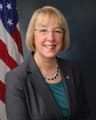 Patty Murray
Democrat · Washington
 Jeff Merkley
Democrat · Oregon
 Jeanne Shaheen
Democrat · New Hampshire
 Chris Van Hollen
Democrat · Maryland