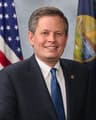
Steve Daines (R-MT)
A bill to authorize the extension of nondiscriminatory treatment (normal trade relations treatment) to products of certain countries.
A Republican bill with 4 Democratic cosponsors · See all 7 cosponsors
Last activity — Read twice and referred to the Committee on Finance.
In committee
Introduced and handed to a committee in the chamber it started in.
The committee holds it, and most bills are never heard from again. A hearing or a committee vote would be news; silence is the usual outcome, and it kills the bill without anyone voting against it.
Its path through Congress
- Introduced
- In Committee
What this bill would do
This bill gives the President the power to extend normal trade relations treatment to products from certain countries. It does this by allowing the President to decide that title IV of the Trade Act of 1974 should no longer apply to a covered country. Once this determination is made, the President can proclaim the extension of nondiscriminatory treatment to that country's products. After this takes effect, title IV of the Trade Act of 1974 will stop applying to the covered country. A covered country is defined as any country except Belarus, Cuba, and North Korea.
Yes· 3 of 7
- Scored +5
Does this make trade with other countries easier?
The bill directly authorizes the extension of normal trade relations to products from covered countries.
- Scored +3
Does this strengthen ties with allied countries?
Streamlining trade relations policy can improve diplomatic and commercial engagement with eligible countries.
- Scored +3
Does this favour talking over confrontation abroad?
Granting the President authority to normalize trade relations fosters diplomatic and economic ties.
The opposite
No question was scored the opposite.
Who it would affect, and how
Potential Positive Impacts for People
- Section 1(a): This section allows the President to extend normal trade relations treatment to products from covered countries. This might be considered positive because it can normalize trade with these nations, excluding Belarus, Cuba, and North Korea.
Potential Negative Impacts for People
- Section 1(c): This section defines a covered country as any country except Belarus, Cuba, and North Korea. This might be considered a negative burden or limitation because it explicitly excludes those specific nations from receiving the trade benefits outlined in the bill.
Groups and Interests Ranking
Every group the model scored this bill for, from -10 to +10. Tap or hover a score for the reason it gave.
- National Security And Foreign Policy
- Does this make trade with other countries easier? — The bill directly authorizes the extension of normal trade relations to products from covered countries. Does this favour talking over confrontation abroad? — Granting the President authority to normalize trade relations fosters diplomatic and economic ties. Does this strengthen ties with allied countries? — Streamlining trade relations policy can improve diplomatic and commercial engagement with eligible countries.
- Demographic And Interest Groups
- Would business owners be better off under this? — Expanded normal trade relations can provide businesses with broader international market opportunities. Would farmers be better off under this? — Increased international trade potential can create new export markets for agricultural goods.
- Economy And Finance
- Is this likely to grow the economy? — Facilitating normal trade relations can help expand international commerce and economic activity.
- Governance And Ideology
- Does this give the federal government more power? — The legislation delegates additional authority to the President to determine trade relations status.
- 7/23/2026
- 2 Cosponsors added.
- 1/30/2026
- 2 Cosponsors added.
- 11/5/2025
- 1 Cosponsor added.
- 11/4/2025
- Read twice and referred to the Committee on Finance.
- 2 Cosponsors added.
- Introduced in Senate
One bill Congress.gov lists as related to this one — companions in the other chamber, earlier versions, and bills this one absorbed or was folded into.
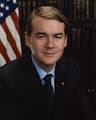 Michael Bennet
Democrat · Colorado
 Christopher Murphy
Democrat · Connecticut
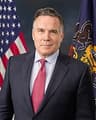 David McCormick
Republican · Pennsylvania
 Gary Peters
Democrat · Michigan
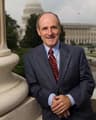 James Risch
Republican · Idaho
 Jeanne Shaheen
Democrat · New Hampshire
 Tim Scott
Republican · South Carolina