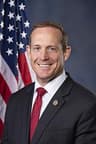
A Republican bill with 2 Democratic cosponsors · See all 3 cosponsors
Last activity — Read twice and referred to the Committee on Agriculture, Nutrition, and Forestry.
In committee
Introduced and handed to a committee in the chamber it started in.
The committee holds it, and most bills are never heard from again. A hearing or a committee vote would be news; silence is the usual outcome, and it kills the bill without anyone voting against it.
Its path through Congress
- Introduced
- In Committee
What this bill would do
The Cybersecurity in Agriculture Act of 2025 directs the Secretary of Agriculture to create a program for Agriculture Cybersecurity Centers. This program will award grants or cooperative agreements to eligible land-grant colleges or universities to establish five regional centers. These centers will focus on research, development, and education regarding cybersecurity for the agriculture supply chain, animal agriculture, horticulture, and seed agriculture. The bill also establishes a national network of these centers and authorizes $25,000,000 in funding annually from 2026 through 2030.
Yes· 3 of 17
- Scored +8
Would farmers be better off under this?
Provides direct benefits through improved cybersecurity tools and infrastructure protection.
- Scored +8
Does this better protect the country from computer attacks?
Directly establishes regional centers to defend agriculture from state-sponsored cyberattacks.
- Scored +7
Would people in rural areas be better off under this?
Focused on protecting rural agricultural networks and supporting rural universities.
The opposite
- Scored -2
Does this reduce what the federal government spends?
It increases government spending by establishing new grant programs.
- Scored -1
Does this reduce what the federal government owes?
The bill authorizes new federal spending of $25 million annually.
Who it would affect, and how
Potential Positive Impacts for People
-
Improved Agricultural Security: The bill directs the development of cybersecurity technologies, tools, and situational awareness systems to monitor and mitigate threats to the agriculture sector (SEC. 2, (b)(1)-(3)).
-
Workforce Development: The program aims to develop a skilled workforce capable of protecting agricultural systems and provides for the creation of cybersecurity education and training programs for stakeholders (SEC. 2, (b)(6) and (c)(2)(C)).
-
Support for Local Operations: The bill focuses on bolstering the resiliency of cybersecurity infrastructure for agricultural networks that are locally owned, operated, independent, and noncentralized (SEC. 2, (c)(2)(B)).
-
Targeted Defense: The research and tools developed are specifically designed to prevent cyberattacks from countries such as the People's Republic of China, the Russian Federation, the Democratic People's Republic of Korea, and the Islamic Republic of Iran (SEC. 2, (b)(9)).
Potential Negative Impacts for People
- Limited Eligibility: Only land-grant colleges or universities that meet specific program and coordination criteria are considered eligible entities to receive grants (SEC. 2, (c)).
Groups and Interests Ranking
Every group the model scored this bill for, from -10 to +10. Tap or hover a score for the reason it gave.
- Demographic And Interest Groups
- Would farmers be better off under this? — Provides direct benefits through improved cybersecurity tools and infrastructure protection. Would people in rural areas be better off under this? — Focused on protecting rural agricultural networks and supporting rural universities. Would business owners be better off under this? — Provides security resources for independent and locally owned agricultural businesses. Would students be better off under this? — Benefits students at land-grant universities through research and education programs. Would people in their twenties and thirties be better off under this? — Creates educational opportunities and high-tech career paths in agricultural cybersecurity.
- Education And Technology
- Does this put more money into scientific research? — Allocates funding for R&D in agriculture cybersecurity at land-grant universities. Does this give people more control over their personal data? — Develops tools to strengthen the privacy and resiliency of agricultural systems.
- National Security And Foreign Policy
- Does this better protect the country from computer attacks? — Directly establishes regional centers to defend agriculture from state-sponsored cyberattacks. Does this make trade with other countries easier? — Protects the supply chain, which stabilizes agricultural trade.
- Economy And Finance
- Does this make it easier to run a small business? — Explicitly aims to bolster resiliency for locally owned and independent agricultural networks. Is this likely to create jobs? — The bill focuses on developing a skilled cybersecurity workforce for the agriculture sector. Does this give people more protection from unfair business practices? — Increases the security and stability of the food and agriculture supply chain. Is this likely to grow the economy? — Protects the agriculture supply chain from cyber threats, promoting stability. Does this reduce what the federal government spends? — It increases government spending by establishing new grant programs. Does this reduce what the federal government owes? — The bill authorizes new federal spending of $25 million annually.
- Governance And Ideology
- Does this protect people from being watched or searched? — Aims to strengthen the privacy of agricultural systems. Does this make it easier to do business across state lines? — Secures the national agriculture supply chain, aiding interstate commerce. Does this give the federal government more power? — Expands the Secretary of Agriculture's role in managing cybersecurity grants.
- Environment Energy And Infrastructure
- Does this invest in rural communities? — Enhances the technological infrastructure and security of rural agricultural operations.
- 12/15/2025
- 2 Cosponsors added.
- 9/18/2025
- Read twice and referred to the Committee on Agriculture, Nutrition, and Forestry.
- 1 Cosponsor added.
- Introduced in Senate
 Jim Banks
Republican · Indiana
 Catherine Cortez Masto
Democrat · Nevada
 Adam Schiff
Democrat · California