 Bill · S. 2819· Senate(119-S-2819)
Head Start for America's Children Act
- Introduced
- 9/16/2025
- Last activity
- 9/16/2025 — Read twice and referred to the Committee on Health, Education, Labor, and Pensions.
- Sponsored by
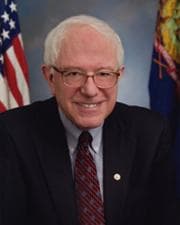
- Bernie Sanders
- Cosponsors
- - 0 - 16
- Introduced
- In Committee
What this bill would do
The Head Start for America's Children Act amends the Head Start Act to improve services for infants, toddlers, and children across the United States. It authorizes significant funding increases for Head Start and Early Head Start programs, focusing heavily on staff compensation, mental health support, and extended operating hours. The bill establishes new grant programs for facilities, workforce development, community eligibility pilots, and higher education partnerships. It also expands eligibility pathways for vulnerable children, including those experiencing homelessness, in foster care, or with disabilities. Additionally, the legislation provides specific protections and culturally responsive frameworks for Native American and migrant and seasonal Head Start programs.
Yes· 3 of 38
Would children be better off under this?+9
The bill vastly increases funding, program hours, and health and mental health supports for infants, toddlers, and young children.
Would households on low incomes be better off under this?+8
The bill expands eligibility pathways for low-income and vulnerable families and increases access to comprehensive child care.
Would students be better off under this?+8
Children participating in Head Start receive expanded operating hours, better-trained staff, and enhanced developmental support.
The opposite
Does this reduce what the federal government spends?-6
The bill significantly increases federal spending and appropriations for various Head Start programs and grants.
Does this reduce what the federal government owes?-3
The legislation authorizes substantial mandatory and discretionary appropriations for Head Start programs and grants.
Does this make the government pay for what it commits to?-2
The large funding increases expand federal outlays without corresponding offsets.
Who it would affect, and how
Potential Positive Impacts for People
-
Higher Staff Pay and Better Benefits: Section 23 updates section 653 of the Head Start Act to ensure that educational staff receive competitive compensation with an annual base salary starting at $60,000 for fiscal year 2026, alongside access to affordable health coverage and paid leave. This helps attract and retain quality workers.
-
Expanded Program Hours: Section 10 adds section 642(j) to the Head Start Act, requiring center-based services to operate on a full calendar year schedule by September 30, 2027. This provides reliable, consistent child care that better matches the work schedules of working families.
-
Broader Access for Vulnerable Children: Section 15 updates section 645 of the Head Start Act to explicitly include children experiencing homelessness, children in foster or kinship care, children with disabilities, and children receiving various public assistance benefits as eligible for the program. This ensures support reaches families facing severe hardships.
-
Improved Mental Health Services: Section 20 adds section 649 to the Head Start Act, requiring agencies to support adult and child mental health, provide mental health screenings, facilitate access to trained consultants, and ensure lead teachers receive infant and early childhood mental health training. This addresses the emotional well-being of both staff and students.
-
Support for Native American and Farmworker Communities: Section 7 adds section 640(p) and Section 15 adds section 645(e), allowing Native American and migrant and seasonal Head Start programs to use culturally responsive curricula, native language preservation methods, and tailored selection criteria. This respects and preserves the unique cultural needs of these populations.
Potential Negative Impacts for People
-
Increased Regulatory Burdens and Administrative Requirements: Section 6 and Section 10 impose strict operational standards, such as mandatory full calendar year operations and complex new reporting metrics, which could burden local agencies and staff who already face operational challenges.
-
Potential Eligibility Restrictions for Working Families Outside Specific Thresholds: Section 15 alters eligibility and priority rules to strictly focus on specific low-income thresholds and vulnerable groups, which may inadvertently exclude working-class families who fall just outside these narrow definitions from accessing Head Start programs.
Groups and Interests Ranking
Every group the model scored this bill for, from -10 to +10. Hover a score for the reason it gave.
- Demographic And Interest Groups
- Good For Children+9Good For Low Income Households+8Good For Students+8Good For Native Americans+7Good For People With Disabilities+7Good For Women+6Good For Farmers+5Good For Middle Aged+5Good For African Americans+4Good For Hispanic Americans+4Good For Immigrants+4Good For Rural Residents+4Good For Young Adults+4Good For Asian Americans+3Good For Middle Class Households+3Good For Urban Residents+3Good For Business Owners+2Good For Men+2Good For White Americans+2
- Social Issues And Justice
- Improves Childcare Affordability+8Improves Poverty Reduction+6Improves Disability Rights+5Improves Racial Equity+4Improves Gender Equality+3Reduces Homelessness+2
- Healthcare
- Improves Mental Health Access+7Improves Healthcare Access+4Increases Research Funding+3
- Education And Technology
- Improves College Affordability+4Increases Scientific Research Funding+3Improves Student Loan Relief+2
- Governance And Ideology
- Improves Government Transparency+3Increases Federal Power+3
- Environment Energy And Infrastructure
- Improves Rural Development+3Improves Disaster Relief And F E M A+2
- Economy And Finance
- Increases Job Creation+6Improves Economic Growth+3Improves Small Business Support+2Reduces Government Spending-6Reduces National Debt-3Improves Fiscal Responsibility-2
- 12/15/2025
- 1 Cosponsor added.
- 9/16/2025
- Read twice and referred to the Committee on Health, Education, Labor, and Pensions.
- 15 Cosponsors added.
- Introduced in Senate
One bill Congress.gov lists as related to this one — companions in the other chamber, earlier versions, and bills this one absorbed or was folded into.
 Richard Blumenthal
Democrat · Connecticut
 John Fetterman
Democrat · Pennsylvania
 Kirsten Gillibrand
Democrat · New York
 Mazie Hirono
Democrat · Hawaii
 Timothy Kaine
Democrat · Virginia
 Andy Kim
Democrat · New Jersey
 Ben Luján
Democrat · New Mexico
 Edward Markey
Democrat · Massachusetts
 Jeff Merkley
Democrat · Oregon
 Alex Padilla
Democrat · California
 Adam Schiff
Democrat · California
 Tina Smith
Democrat · Minnesota
 Chris Van Hollen
Democrat · Maryland
 Ron Wyden
Democrat · Oregon
 Peter Welch
Democrat · Vermont
 Elizabeth Warren
Democrat · Massachusetts