Bill · H.R. 7637· House(119-HR-7637)
Head Start for America’s Children Act
- Introduced
- 2/20/2026
- Last activity
- 2/20/2026 — Referred to the House Committee on Education and Workforce.
- Sponsored by
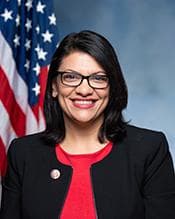
- Rashida Tlaib
- Cosponsors
- - 43 - 0
- Introduced
- In Committee
What this bill would do
The "Head Start for America's Children Act" seeks to amend the Head Start Act to improve its effectiveness and update definitions to include infants, toddlers, and mental health. The legislation authorizes significant funding for Head Start and Early Head Start programs, covering facilities, transportation, and workforce rebuilding. It introduces new requirements for mental health support, staff compensation, and the prevention of certain types of student restraint. The bill also establishes several new grant and pilot programs, including partnerships to support student parents and extended operation grants for full-working-day services and summer coverage. Additionally, it creates a community eligibility pilot program to assist high-poverty areas and promotes partnerships between Head Start agencies and child care providers.
Yes· 3 of 25
Would children be better off under this?+8.5
The bill significantly increases funding and expands services for infants, toddlers, and children.
Would Native Americans be better off under this?+8
The bill includes significant reservations of funds and specific support for Native American Head Start agencies.
Would households on low incomes be better off under this?+7
The bill enhances accessibility and services for low-income families through expanded eligibility and increased funding.
The opposite
No question was scored the opposite.
Who it would affect, and how
Potential Positive Impacts for People
-
Increased Support for Mental Health: The bill adds mental health to the statement of purpose and mandates that agencies support the mental health and well-being of staff, parents, and children (Section 2, Section 20, Section 649).
-
Improved Staff Compensation: The act requires that educational staff receive compensation comparable to local elementary school educators or a minimum base salary of $60,000 for fiscal year 2026, with annual increases (Section 23, Section 653).
-
Expanded Services for Infants and Toddlers: By updating the definition of growth and educational focus, the bill ensures these groups are explicitly addressed (Section 2, Section 19).
-
Enhanced Support for Native American and Native Hawaiian Communities: The bill provides for the preservation of languages and cultures through specific curricula and instructional materials (Section 8, Section 640(p)).
-
Improved Access through Transportation: Funding is authorized to help children access services through age-appropriate transportation, including vehicle purchases (Section 4, Section 637A(b)(1)(B)).
-
Support for Children with Disabilities: The Secretary is tasked with ensuring financial assistance sufficiently accounts for the costs of serving children with disabilities and coordinating with the Secretary of Education (Section 5, Section 638(b), Section 7, Section 640(c)(1)).
-
Help for High-Poverty Communities: A community eligibility pilot program is created to allow agencies in high-poverty areas to enroll all children in their age range regardless of standard eligibility criteria (Section 26, Section 657C).
-
Support for Student Parents: Partnerships between Head Start agencies and higher education institutions aim to support the participation of student parents through campus-based programs (Section 27, subsection b).
-
Expanded Child Care Hours: Extended operation grants allow agencies to provide full-working-day services, which can help match the work schedules of local families (Section 28, subsection b and d).
-
Summer Coverage: The bill allows for the continuation of high-quality programs and services during the summer months (Section 28, subsection d).
-
Improved Child Care Quality: Partnerships between Head Start agencies and child care providers are intended to improve the quality of child care through professional development and financial support (Section 29, subsection c).
-
Targeted Support for Underserved Communities: Priority is given to programs serving underserved populations, rural communities, and areas of persistent poverty (Section 28, subsection d; Section 27, subsection e).
-
Resource Connection: The evaluation process aims to connect families with services that support health, mental health, educational, nutritional, and social needs (Section 26, subsection f).
Potential Negative Impacts for People
-
Increased Requirements for Operation Hours: The bill mandates that center-based agencies provide services on a full calendar year schedule, which could create a burden unless the agency meets specific exemption criteria (Section 11, Section 642(j)).
-
Potential Reductions in Enrollment: The bill notes that moving to a full calendar year schedule could cause significant reductions in enrollment for some agencies (Section 11, Section 642(j)(2)(A)).
-
Limited Capacity: If the capacity of a covered agency or program is limited, it may impact the ability to meet the needs of children in the local community (Section 26, subsection a).
-
Strict Application Requirements: Agencies seeking grants must provide significant documentation, including demographics, income, waiting lists, and specific timelines, which requires substantial planning (Section 27, subsection d).
Groups and Interests Ranking
Every group the model scored this bill for, from -10 to +10. Hover a score for the reason it gave.
- Demographic And Interest Groups
- Good For Children+8.5Good For Native Americans+8Good For Low Income Households+7Good For People With Disabilities+6.5Good For African Americans+5Good For Hispanic Americans+5Good For Students+5Good For Rural Residents+4Good For Women+4Good For Young Adults+4Good For Immigrants+3
- Social Issues And Justice
- Improves Childcare Affordability+7Improves Disability Rights+6.5Improves Racial Equity+6.5Improves Poverty Reduction+6Reduces Homelessness+3
- Education And Technology
- Increases Public School Funding+7Improves Student Loan Relief+4Improves College Affordability+3
- Healthcare
- Improves Mental Health Access+6.5Improves Healthcare Access+4
- Economy And Finance
- Increases Minimum Wage+5Increases Job Creation+3
- Environment Energy And Infrastructure
- Improves Rural Development+4Improves Public Transit+3
- 9/15/2026
- 1 Cosponsor added.
- 9/3/2026
- 1 Cosponsor added.
- 8/31/2026
- 2 Cosponsors added.
- 8/17/2026
- 5 Cosponsors added.
- 7/22/2026
- 1 Cosponsor added.
- 6/18/2026
- 1 Cosponsor added.
- 2/20/2026
- Referred to the House Committee on Education and Workforce.
- 32 Cosponsors added.
- Introduced in House
One bill Congress.gov lists as related to this one — companions in the other chamber, earlier versions, and bills this one absorbed or was folded into.
 Alma Adams
Democrat · North Carolina
 Yassamin Ansari
Democrat · Arizona
 Joyce Beatty
Democrat · Ohio
 Nanette Barragán
Democrat · California
 Becca Balint
Democrat · Vermont
 Yvette Clarke
Democrat · New York
 André Carson
Democrat · Indiana
 Judy Chu
Democrat · California
 Salud Carbajal
Democrat · California
 Gilbert Cisneros
Democrat · California
 Greg Casar
Democrat · Texas
 Danny Davis
Democrat · Illinois
 Debbie Dingell
Democrat · Michigan
 Maxine Dexter
Democrat · Oregon
 Dwight Evans
Democrat · Pennsylvania
 Adriano Espaillat
Democrat · New York
 Veronica Escobar
Democrat · Texas
 Sarah Elfreth
Democrat · Maryland
 Maxwell Frost
Democrat · Florida
 John Garamendi
Democrat · California
 Jimmy Gomez
Democrat · California
 Jesús García
Democrat · Illinois
 Adelita Grijalva
Democrat · Arizona
 Val Hoyle
Democrat · Oregon
 Pramila Jayapal
Democrat · Washington
 William Keating
Democrat · Massachusetts
 Timothy Kennedy
Democrat · New York
 Ted Lieu
Democrat · California
 Summer Lee
Democrat · Pennsylvania
 Gwen Moore
Democrat · Wisconsin
 Morgan McGarvey
Democrat · Kentucky
 Jennifer McClellan
Democrat · Virginia
 LaMonica McIver
Democrat · New Jersey
 Eleanor Norton
Democrat · District of Columbia
 Ilhan Omar
Democrat · Minnesota
 Chellie Pingree
Democrat · Maine
 Mark Pocan
Democrat · Wisconsin
 Deborah Ross
Democrat · North Carolina
 Emily Randall
Democrat · Washington
 Lateefah Simon
Democrat · California
 Jill Tokuda
Democrat · Hawaii
 Frederica Wilson
Democrat · Florida
 Bonnie Watson Coleman
Democrat · New Jersey