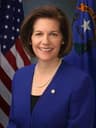
Catherine Cortez Masto (D-NV)
MORE DOT Grants Act
A Democratic bill with 1 Republican cosponsor · See all 2 cosponsors
Last activity — Read twice and referred to the Committee on Commerce, Science, and Transportation.
In committee
Introduced and handed to a committee in the chamber it started in.
The committee holds it, and most bills are never heard from again. A hearing or a committee vote would be news; silence is the usual outcome, and it kills the bill without anyone voting against it.
Its path through Congress
- Introduced
- In Committee
What this bill would do
The MORE DOT Grants Act aims to improve how Department of Transportation grants are awarded to specific counties and local governments. This includes counties where more than 50 percent of the land is owned or managed by the Federal Government and has a population of 100,000 or fewer. The bill targets various qualifying grant programs to assist these specific jurisdictions. It introduces reduced local matching requirements and provides for additional technical assistance. Furthermore, the act establishes priority and special consideration for these areas during the application process.
Yes· 3 of 9
- Scored +6
Would people in rural areas be better off under this?
The bill specifically targets rural, low-population counties to improve their access to federal transportation and infrastructure funding.
- Scored +5
Would Native Americans be better off under this?
The bill provides special consideration and technical assistance specifically for Tribal governments within high-density public land counties.
- Scored +5
Does this repair or build roads and bridges?
The bill provides easier access to various Department of Transportation grant programs for rural infrastructure projects.
The opposite
No question was scored the opposite.
Who it would affect, and how
Potential Positive Impacts for People
-
Reduced Financial Burden: Local governments in high-density public land counties will see their local matching fund requirements reduced by 50 percent for qualifying grant programs (Section 3(a)).
-
Increased Support and Guidance: The Secretary of Transportation is required to provide additional technical assistance to high-density public land counties and their local or Tribal governments before and during the annual application period (Section 3(b)).
-
Priority in Funding: Application approval will prioritize high-density public land counties, local governments, or Tribal governments that have not received support from a qualifying grant program in the previous 10 years (Section 3(c)(1)).
-
Access to Rural Set-Asides: The Secretary must give special consideration to applications from these areas regarding any rural set-asides established by Congress (Section 3(d)(1)).
-
Removal of Barriers: The Secretary may offer flexibility regarding requirements that might disadvantage small communities, such as scoring based on large numerical size or impact, requirements to partner with outside institutions, or overly complicated application processes (Section 3(e)).
Potential Negative Impacts for People
- No negative impacts are explicitly stated in the provided text.
Groups and Interests Ranking
Every group the model scored this bill for, from -10 to +10. Tap or hover a score for the reason it gave.
- Demographic And Interest Groups
- Would people in rural areas be better off under this? — The bill specifically targets rural, low-population counties to improve their access to federal transportation and infrastructure funding. Would Native Americans be better off under this? — The bill provides special consideration and technical assistance specifically for Tribal governments within high-density public land counties. Would households on low incomes be better off under this? — Improved rural infrastructure can support better access to economic opportunities for low-income residents.
- Environment Energy And Infrastructure
- Does this repair or build roads and bridges? — The bill provides easier access to various Department of Transportation grant programs for rural infrastructure projects. Does this improve buses, trains and other public transport? — The bill includes several qualifying grant programs specifically for bus and public transportation improvements.
- Economy And Finance
- Is this likely to grow the economy? — The bill facilitates economic development in rural counties by easing access to federal transportation infrastructure funding. Is this likely to create jobs? — The bill aims to support economic opportunities in rural areas through improved access to transportation grants.
- Governance And Ideology
- Does this make what the government does easier for the public to see? — The bill includes provisions for technical assistance to help local governments navigate federal grant processes.
- Social Issues And Justice
- Is this likely to lift people out of poverty? — By improving transportation infrastructure in rural areas, the bill helps support local economic stability.
- 7/31/2025
- Read twice and referred to the Committee on Commerce, Science, and Transportation.
- 2 Cosponsors added.
- Introduced in Senate
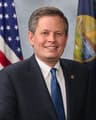 Steve Daines
Republican · Montana
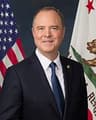 Adam Schiff
Democrat · California