
A Democratic bill with 6 Democratic cosponsors · See all 7 cosponsors
Last activity — Read twice and referred to the Committee on Finance.
In committee
Introduced and handed to a committee in the chamber it started in.
The committee holds it, and most bills are never heard from again. A hearing or a committee vote would be news; silence is the usual outcome, and it kills the bill without anyone voting against it.
Its path through Congress
- Introduced
- In Committee
What this bill would do
This bill, titled the "Repealing the Trump Sick Tax Act," aims to reverse specific legislative changes. It seeks to repeal changes made to Medicaid cost sharing requirements. Additionally, the bill targets the exclusion for orphan drugs under the Medicare Drug Price Negotiation Program. To achieve this, it repeals specific sections of Public Law 119-21. The legislation also includes a provision to rescind certain appropriated amounts.
Yes· 3 of 6
- Scored +6
Does this lower the price of prescription medicines?
The bill repeals the exclusion for orphan drugs under the Medicare Drug Price Negotiation Program to allow more drugs to be subject to price negotiation.
- Scored +5
Does this put more money into Medicaid, the health coverage for people on low incomes?
The bill repeals changes to Medicaid cost sharing requirements to restore previous protections.
- Scored +5
Would people over 65 be better off under this?
The bill expands the Medicare Drug Price Negotiation Program by removing the orphan drug exclusion.
The opposite
- Scored -5
Does this reduce what the federal government spends?
The bill rescinds certain appropriated amounts previously authorized under Public Law 119-21.
Who it would affect, and how
Potential Positive Impacts for People
-
Medicaid Stability: By repealing changes to Medicaid cost sharing requirements, the bill restores the Social Security Act as it existed prior to those changes (Section 2(a)).
-
Medicare Drug Price Negotiation: The bill repeals the exclusion for orphan drugs, which would change how the Medicare Drug Price Negotiation Program applies to those drugs (Section 3).
Potential Negative Impacts for People
- Loss of Funding: The bill rescinds amounts that were previously appropriated under section 71120(c) of Public Law 119-21 (Section 2(b)).
Groups and Interests Ranking
Every group the model scored this bill for, from -10 to +10. Tap or hover a score for the reason it gave.
- Healthcare
- Does this lower the price of prescription medicines? — The bill repeals the exclusion for orphan drugs under the Medicare Drug Price Negotiation Program to allow more drugs to be subject to price negotiation. Does this put more money into Medicaid, the health coverage for people on low incomes? — The bill repeals changes to Medicaid cost sharing requirements to restore previous protections. Does this make health care easier to get in general? — By repealing changes to Medicaid cost sharing, the bill restores more stable coverage terms for beneficiaries.
- Demographic And Interest Groups
- Would households on low incomes be better off under this? — Restoring Medicaid cost sharing protections benefits low-income populations who rely on these services. Would people over 65 be better off under this? — The bill expands the Medicare Drug Price Negotiation Program by removing the orphan drug exclusion.
- Economy And Finance
- Does this reduce what the federal government spends? — The bill rescinds certain appropriated amounts previously authorized under Public Law 119-21.
- Social Issues And Justice
- Is this likely to lift people out of poverty? — Restoring Medicaid cost sharing requirements can reduce out-of-pocket expenses for low-income individuals.
- 9/9/2025
- 1 Cosponsor added.
- 9/3/2025
- 1 Cosponsor added.
- 9/2/2025
- 1 Cosponsor added.
- 7/30/2025
- 1 Cosponsor added.
- 7/29/2025
- 2 Cosponsors added.
- 7/24/2025
- Read twice and referred to the Committee on Finance.
- 1 Cosponsor added.
- Introduced in Senate
One bill Congress.gov lists as related to this one — companions in the other chamber, earlier versions, and bills this one absorbed or was folded into.
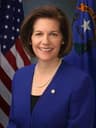 Catherine Cortez Masto
Democrat · Nevada
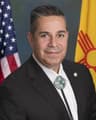 Ben Luján
Democrat · New Mexico
 Jeff Merkley
Democrat · Oregon
 Bernie Sanders
Independent · Vermont
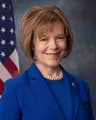 Tina Smith
Democrat · Minnesota
 Chris Van Hollen
Democrat · Maryland
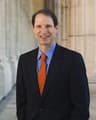 Ron Wyden
Democrat · Oregon