
A Democratic bill with 9 Democratic cosponsors · See all 9 cosponsors
Last activity — Read twice and referred to the Committee on Finance.
In committee
Introduced and handed to a committee in the chamber it started in.
The committee holds it, and most bills are never heard from again. A hearing or a committee vote would be news; silence is the usual outcome, and it kills the bill without anyone voting against it.
Its path through Congress
- Introduced
- In Committee
What this bill would do
The Disaster Relief Medicaid Act aims to provide medical assistance to individuals and families affected by major disasters, national emergencies, or public health emergencies. It amends the Social Security Act to ensure relief-eligible survivors receive coverage during a specific relief coverage period. The bill establishes streamlined application processes and provides for presumptive eligibility to ensure quick access to care. It also allows for extended coverage for specific groups, such as pregnant individuals and those with pending applications. Additionally, the Act provides for 100 percent federal matching for many of these medical expenses. Finally, it includes provisions for technical assistance to States and the establishment of an HCBS emergency response corps.
Yes· 3 of 13
- Scored +10
Does this put more money into Medicaid, the health coverage for people on low incomes?
The bill provides 100 percent federal matching for Medicaid services provided to disaster survivors.
- Scored +9
Would households on low incomes be better off under this?
The bill provides critical healthcare assistance to low-income individuals facing disaster-related instability.
- Scored +9
Does this make health care easier to get in general?
The bill streamlines application processes and implements presumptive eligibility to ensure quick access to care for survivors.
The opposite
No question was scored the opposite.
Who it would affect, and how
Potential Positive Impacts for People
-
Increased Access to Medical Assistance: Relief-eligible survivors can access medical assistance through simplified, streamlined application forms that do not require documentation of their survivor status (Section 2(c)(1)).
-
Immediate Coverage via Presumptive Eligibility: Individuals can receive medical assistance during a presumptive eligibility period before their full application is processed (Section 2(c)(2)).
-
Protection for Pregnant and Postpartum Individuals: Pregnant individuals who receive assistance as relief-eligible survivors can continue that coverage through the end of the month in which a 60-day period following the end of pregnancy ends (Section 2(b)(5)(C)(ii)).
-
Continuous Eligibility: Once determined eligible, survivors remain eligible for the duration of the relief coverage period without needing redetermination (Section 2(c)(3)).
-
Expanded Mental Health and Care Coordination: States have the option to provide extended mental health services, including coverage for medications and psychotherapy, and care coordination services (Section 2(d)(5)).
-
Support for Home and Community-Based Services: The bill allows States to provide home and community-based services to relief-eligible survivors, including those who are disabled or lost support from family caregivers (Section 2(d)(6)).
-
Protection Against Medicare Penalties: The disaster relief coverage period is excluded when computing Medicare Part B late enrollment periods, protecting survivors from certain enrollment delays (Section 6).
Potential Negative Impacts for People
-
Risk of Financial Recovery for Fraud: If an individual is determined through a fair hearing to have knowingly made a false attestation in their application, the State shall seek recovery of the full cost of the medical assistance provided (Section 2(g)(1)).
-
Limited Eligibility Window: An individual's status as a relief-eligible survivor is limited to the specific relief coverage period of the disaster (Section 2(b)(5)(C)(i)).
Groups and Interests Ranking
Every group the model scored this bill for, from -10 to +10. Tap or hover a score for the reason it gave.
- Demographic And Interest Groups
- Would households on low incomes be better off under this? — The bill provides critical healthcare assistance to low-income individuals facing disaster-related instability. Would people with disabilities be better off under this? — The bill emphasizes support for home and community-based services for disabled survivors. Would women be better off under this? — The bill provides extended postpartum coverage for pregnant individuals. Would children be better off under this? — The bill includes specific coverage protections for children born to disaster survivors. Would people over 65 be better off under this? — The bill includes provisions that support the continuity of care for older adults via HCBS.
- Healthcare
- Does this put more money into Medicaid, the health coverage for people on low incomes? — The bill provides 100 percent federal matching for Medicaid services provided to disaster survivors. Does this make health care easier to get in general? — The bill streamlines application processes and implements presumptive eligibility to ensure quick access to care for survivors. Does this make mental health care easier to get? — The bill allows for extended mental health services and care coordination for disaster survivors.
- Social Issues And Justice
- Does this expand the rights of people with disabilities? — The bill supports home and community-based services for individuals with disabilities during disasters. Is this likely to lift people out of poverty? — The bill provides a safety net for low-income survivors facing sudden economic disruption. Is this likely to reduce homelessness? — The bill includes provisions for those who are homeless to maintain healthcare access during disasters.
- Environment Energy And Infrastructure
- Does this improve help for people hit by a disaster? — The bill complements federal disaster relief by expanding Medicaid coverage for those impacted by disasters.
- Governance And Ideology
- Does this give the federal government more power? — The bill increases the federal government's role in funding and coordinating Medicaid during disasters.
- 7/29/2025
- 1 Cosponsor added.
- 6/12/2025
- Read twice and referred to the Committee on Finance.
- 8 Cosponsors added.
- Introduced in Senate
One bill Congress.gov lists as related to this one — companions in the other chamber, earlier versions, and bills this one absorbed or was folded into.
 Tammy Duckworth
Democrat · Illinois
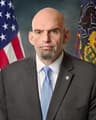 John Fetterman
Democrat · Pennsylvania
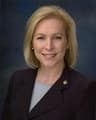 Kirsten Gillibrand
Democrat · New York
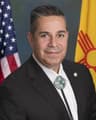 Ben Luján
Democrat · New Mexico
 Alex Padilla
Democrat · California
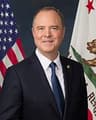 Adam Schiff
Democrat · California
 Brian Schatz
Democrat · Hawaii
 Peter Welch
Democrat · Vermont
 Elizabeth Warren
Democrat · Massachusetts