
A Republican bill with 2 Republican cosponsors · See all 2 cosponsors
Last activity — Read twice and referred to the Committee on Health, Education, Labor, and Pensions.
In committee
Introduced and handed to a committee in the chamber it started in.
The committee holds it, and most bills are never heard from again. A hearing or a committee vote would be news; silence is the usual outcome, and it kills the bill without anyone voting against it.
Its path through Congress
- Introduced
- In Committee
What this bill would do
This bill, titled the "College Admissions Accountability Act of 2025," seeks to establish the Office of the Special Inspector General for Unlawful Discrimination in Higher Education within the Department of Education. The new office would be tasked with investigating allegations of admissions decisions, policies, or academic programs that violate the Equal Protection Clause or Title VI of the Civil Rights Act of 1964. The Special Inspector General would have the authority to review Federal policies and make recommendations regarding remedial actions or the eligibility of institutions to receive Federal funds. The bill aims to ensure that higher education institutions comply with the Constitution and judicial interpretations following the Supreme Court's ruling in Students for Fair Admissions, Inc. v. President and Fellows of Harvard College. The office is authorized to receive $25,000,000 in funding and is scheduled to terminate 12 years after enactment.
Yes· 3 of 5
- Scored +6
Does this give the federal government more power?
The bill significantly expands federal oversight of higher education admissions through a new Inspector General.
- Scored +5
Does this make what the government does easier for the public to see?
The bill establishes reporting requirements to Congress regarding higher education admissions practices.
- Scored +3
Would Asian Americans be better off under this?
The bill's focus on preventing race-based admissions may benefit applicants who feel disadvantaged by current affirmative action policies.
The opposite
- Scored -4
Would Black Americans be better off under this?
The bill targets race-based admissions policies which may negatively impact diversity-driven opportunities.
- Scored -4
Would Hispanic Americans be better off under this?
The bill targets race-based admissions policies which may negatively impact diversity-driven opportunities.
- Scored -4
Would Native Americans be better off under this?
The bill targets race-based admissions policies which may negatively impact diversity-driven opportunities.
Who it would affect, and how
Potential Positive Impacts for People
-
Protection of Civil Rights: The bill establishes a duty for the government to protect the civil rights of citizens and enforce the Constitution and laws as interpreted by the judiciary (Section 2).
-
Investigative Oversight for Applicants: The Special Inspector General is tasked with receiving and reviewing allegations from "covered individuals," which includes anyone who files an application for admission or is enrolled as a student (Section 3(a)(2)).
-
Accountability for Institutions: The office can recommend disciplinary action against employees of covered institutions and evaluate their eligibility to receive Federal student assistance or institutional aid (Section 3(d)(1)(C)).
-
Confidentiality Protections: The Special Inspector General is required to maintain the confidentiality of the identity of any person submitting information to the office (Section 3(d)(4)).
Potential Negative Impacts for People
-
Financial Risk to Institutions: Institutions of higher education may lose eligibility to receive funds from Federal student assistance or Federal institutional aid if the Secretary determines they have engaged in prohibited discrimination (Section 3(c) and Section 3(a)(c)).
-
Increased Oversight and Potential Disciplinary Action: The Special Inspector General has the authority to recommend that employees of covered institutions face disciplinary action, including removal, following an investigation (Section 3(d)(1)(C)(ii)).
Groups and Interests Ranking
Every group the model scored this bill for, from -10 to +10. Tap or hover a score for the reason it gave.
- Governance And Ideology
- Does this give the federal government more power? — The bill significantly expands federal oversight of higher education admissions through a new Inspector General. Does this make what the government does easier for the public to see? — The bill establishes reporting requirements to Congress regarding higher education admissions practices.
- Demographic And Interest Groups
- Would Asian Americans be better off under this? — The bill's focus on preventing race-based admissions may benefit applicants who feel disadvantaged by current affirmative action policies. Would white Americans be better off under this? — The bill's focus on preventing race-based admissions may benefit applicants who feel disadvantaged by current affirmative action policies. Would students be better off under this? — The bill provides an avenue for students to report perceived discrimination in admissions. Would Black Americans be better off under this? — The bill targets race-based admissions policies which may negatively impact diversity-driven opportunities. Would Hispanic Americans be better off under this? — The bill targets race-based admissions policies which may negatively impact diversity-driven opportunities. Would Native Americans be better off under this? — The bill targets race-based admissions policies which may negatively impact diversity-driven opportunities.
- 9/29/2026
- 1 Cosponsor added.
- 4/2/2025
- Read twice and referred to the Committee on Health, Education, Labor, and Pensions.
- 1 Cosponsor added.
- Introduced in Senate
One bill Congress.gov lists as related to this one — companions in the other chamber, earlier versions, and bills this one absorbed or was folded into.
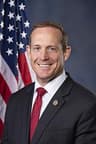 Ted Budd
Republican · North Carolina
 David McCormick
Republican · Pennsylvania