Bill · H.Res. 707· House(119-HRES-707)
Providing for consideration of the bill (H.R. 4922) to limit youth offender status in the District of Columbia to individuals 18 years of age or younger, to direct the Attorney General of the District of Columbia to establish and operate a publicly accessible website containing updated statistics on juvenile crime in the District of Columbia, to amend the District of Columbia Home Rule Act to prohibit the Council of the District of Columbia from enacting changes to existing criminal liability sentences, and for other purposes; providing for consideration of the bill (H.R. 5143) to establish standards for law enforcement officers in the District of Columbia to engage in vehicular pursuits of suspects, and for other purposes; providing for consideration of the bill (H.R. 5140) to lower the age at which a minor may be tried as an adult for certain criminal offenses in the District of Columbia to 14 years of age; providing for consideration of the bill (H.R. 5125) to amend the District of Columbia Home Rule Act to terminate the District of Columbia Judicial Nomination Commission, and for other purposes; providing for consideration of the bill (H.R. 1047) to require the Federal Energy Regulatory Commission to reform the interconnection queue process for the prioritization and approval of certain projects, and for other purposes; providing for consideration of the bill (H.R. 3015) to reestablish the National Coal Council in the Department of Energy to provide advice and recommendations to the Secretary of Energy on matters related to coal and the coal industry, and for other purposes; providing for consideration of the bill (H.R. 3062) to establish a more uniform, transparent, and modern process to authorize the construction, connection, operation, and maintenance of international border-crossing facilities for the import and export of oil and natural gas and the transmission of electricity; and for other purposes.
- Introduced
- 9/15/2025
- Last activity
- 3/25/2026 — Pursuant to the provisions of H.Res. 1131, H.Res. 707 is amended.
- Sponsored by
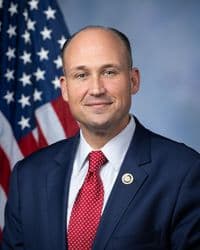
- Nicholas Langworthy
- Cosponsors
- None
- Introduced
- Adopted by the House
A House resolution is the House speaking for itself: stating a position, honouring someone, or setting its own rules. Adopting it is the whole process. Once the House agrees to it, it is officially the House's word; it is not a law, so the Senate and the President have no part in it.
What this bill would do
This resolution establishes rules for considering several different bills in the House of Representatives. It includes instructions for considering bills regarding District of Columbia crime, law enforcement, and judicial processes. It also addresses energy-related bills involving the Federal Energy Regulatory Commission, the National Coal Council, and international border-crossing facilities. Additionally, it provides for the engrossment of a bill regarding digital commodities and the Federal Reserve Act. Finally, the resolution extends certain dates and modifies the application of the National Emergencies Act regarding a specific national emergency.
Yes· 3 of 6
Would business owners be better off under this?+2
The energy infrastructure and interconnection reforms may aid business project approvals.
Does this make what the government does easier for the public to see?+2
The bill requires a public website for juvenile crime statistics in D.C.
Does this protect the right to vote?+1
Increased crime statistics transparency in D.C. provides better public information.
The opposite· 3 of 5
Does this shorten or soften prison sentences?-5
The bill restricts the D.C. Council's ability to change criminal liability sentences and lowers the age for being tried as an adult.
Would children be better off under this?-4
The bill lowers the age at which minors can be tried as adults in D.C.
Does this change how police departments operate?-2
The bill establishes standards for law enforcement vehicular pursuits in D.C.
What Congress actually voted on
2 recorded votes have been taken on this bill. One of them decided something; the rest moved it along.
- The House: the vote on whether to adopt the resolutionPassed 213–211
A resolution is one chamber speaking for itself — setting its own rules, taking a position, honouring someone — and it never goes to the President. Agreeing to it is the whole decision.
09/16/2025 · Roll call 268 · recorded as “On Agreeing to the Resolution”
Who it would affect, and how
Potential Positive Impacts for People
-
Increased Transparency in D.C. Crime: H.R. 4922 directs the Attorney General of the District of Columbia to operate a publicly accessible website with updated statistics on juvenile crime (Section 2(a)). This could provide the public with better access to information regarding crime trends.
-
Improved Energy Project Prioritization: H.R. 1047 seeks to reform the interconnection queue process for the prioritization and approval of certain projects (Section 4). This may impact the efficiency of project approvals.
-
Industry Advice: H.R. 3015 aims to reestablish the National Coal Council to provide advice and recommendations to the Secretary of Energy (Section 5). This could provide specialized guidance on matters related to coal and the coal industry.
-
Streamlined Energy Infrastructure: H.R. 3062 intends to establish a more uniform, transparent, and modern process for authorizing the construction and operation of international border-crossing facilities for oil, natural gas, and electricity (Section 6).
Potential Negative Impacts for People
-
Changes to Criminal Liability in D.C.: H.R. 4922 includes provisions to amend the District of Columbia Home Rule Act to prohibit the Council of the District of Columbia from enacting changes to existing criminal liability sentences (Section 2(a)).
-
Earlier Prosecution of Minors in D.C.: H.R. 5140 aims to lower the age at which a minor may be tried as an adult for certain criminal offenses to 14 years of age (Section 2(c)).
-
Restrictions on Federal Reserve Services: H.R. 1919 (to be added to H.R. 3633) seeks to prohibit federal reserve banks from offering certain products or services directly to an individual and prohibits the use of central bank digital currency for monetary policy (Section 7(a)).
Groups and Interests Ranking
Every group the model scored this bill for, from -10 to +10. Hover a score for the reason it gave.
- Social Issues And Justice
- Improves Voting Rights+1Improves Criminal Sentencing Reform-5Improves Policing Reform-2
- Demographic And Interest Groups
- Good For Business Owners+2Good For Children-4Good For Urban Residents-2
- Governance And Ideology
- Improves Government Transparency+2
- Economy And Finance
- Improves Small Business Support+1
- Education And Technology
- Increases Big Tech Regulation+1
- Environment Energy And Infrastructure
- Improves Roads And Bridges+1Improves Environmental Protections-1
- 3/25/2026
- Pursuant to the provisions of H.Res. 1131, H.Res. 707 is amended.
- 9/17/2025
- Pursuant to the provisions of H.Res. 722, H.Res. 707 is amended.
- 9/16/2025
- Motion to reconsider laid on the table Agreed to without objection.
- Passed/agreed to in House: On agreeing to the resolution Agreed to by recorded vote: 213 - 211 (Roll no. 268). (text: CR H4321)
- On agreeing to the resolution Agreed to by recorded vote: 213 - 211 (Roll no. 268). (text: CR H4321)
- On ordering the previous question Agreed to by the Yeas and Nays: 213 - 207 (Roll no. 267). (consideration: CR H4329)
- Considered as unfinished business. (consideration: CR H4329)
- POSTPONED PROCEEDINGS - At the conclusion of debate on H.Res. 707, the Chair put the question on ordering the previous question and by voice vote announced the ayes had prevailed. Mr. McGovern demanded the yeas and nays and the Chair postponed further proceedings until a time to be announced.
- DEBATE - The House proceeded with one hour of debate on H. Res. 707.
- Considered as privileged matter. (consideration: CR H4321)
- 9/15/2025
- The House Committee on Rules reported an original measure, H. Rept. 119-298, by Mr. Langworthy.
- Placed on the House Calendar, Calendar No. 44.
- The resolution provides for consideration of H.R. 4922, H.R. 5143, H.R. 5140, H.R. 5125, H.R. 1047, H.R. 3015, and H.R. 3062 under a closed rule, and provides for a motion to recommit on each measure.
- Bill introduced.
13 bills Congress.gov lists as related to this one — companions in the other chamber, earlier versions, and bills this one absorbed or was folded into.
- 119-HR-1047: GRID Power Act
- 119-HR-3015: National Coal Council Reestablishment Act
- 119-HR-3062: Promoting Cross-border Energy Infrastructure Act
- 119-HR-3633: Digital Asset Market Clarity Act
- 119-HR-4922: D. C. Criminal Reforms to Immediately Make Everyone Safe Act of 2025
- 119-HR-5125: District of Columbia Judicial Nominations Reform Act of 2025
- 119-HR-5140: To lower the age at which a minor may be tried as an adult for certain criminal offenses in the District of Columbia to 14 years of age.
- 119-HR-5143: District of Columbia Policing Protection Act of 2025
- 119-HRES-211: Providing for consideration of the joint resolution (H.J. Res. 25) providing for congressional disapproval under chapter 8 of title 5, United States Code, of the rule submitted by the Internal Revenue Service relating to ‘‘Gross Proceeds Reporting by Brokers That Regularly Provide Services Effectuating Digital Asset Sales’’; providing for consideration of the bill (H.R. 1156) to amend the CARES Act to extend the statute of limitations for fraud under certain unemployment programs, and for other purposes; providing for consideration of the bill (H.R. 1968) making further continuing appropriations and other extensions for the fiscal year ending September 30, 2025, and for other purposes; and for other purposes.
- 119-HRES-313: Providing for consideration of the Senate amendment to the concurrent resolution (H. Con. Res. 14) establishing the congressional budget for the United States Government for fiscal year 2025 and setting forth the appropriate budgetary levels for fiscal years 2026 through 2034, and for other purposes.
- 119-HRES-354: Providing for consideration of the joint resolution (H.J. Res. 60) providing for congressional disapproval under chapter 8 of title 5, United States Code, of the rule submitted by the National Park Service relating to "Glen Canyon National Recreation Area: Motor Vehicles"; providing for consideration of the joint resolution (H.J. Res. 78) providing for congressional disapproval under chapter 8 of title 5, United States Code, of the rule submitted by the United States Fish and Wildlife Service relating to "Endangered and Threatened Wildlife and Plants; Endangered Species Status for the San Francisco Bay-Delta Distinct Population Segment of the Longfin Smelt"; providing for consideration of the joint resolution (H.J. Res. 87) providing congressional disapproval under chapter 8 of title 5, United States Code, of the rule submitted by the Environmental Protection Agency relating to "California State Motor Vehicle and Engine Pollution Control Standards; Heavy-Duty Vehicle and Engine Emission Warranty and Maintenance Provisions; Advanced Clean Trucks; Zero Emission Airport Shuttle; Zero-Emission Power Train Certification; Waiver of Preemption; Notice of Decision"; providing for consideration of the joint resolution (H.J. Res. 88) providing congressional disapproval under chapter 8 of title 5, United States Code, of the rule submitted by the Environmental Protection Agency relating to "California State Motor Vehicle and Engine Pollution Control Standards; Advanced Clean Cars II; Waiver of Preemption; Notice of Decision"; providing for consideration of the joint resolution (H.J. Res. 89) providing congressional disapproval under chapter 8 of title 5, United States Code, of the rule submitted by the Environmental Protection Agency relating to "California State Motor Vehicle and Engine and Nonroad Engine Pollution Control Standards; The "Omnibus" Low NOX Regulation; Waiver of Preemption; Notice of Decision"; and for other purposes.
- 119-HRES-722: Providing for consideration of the bill (H.R. 5371) making continuing appropriations and extensions for fiscal year 2026, and for other purposes; providing for consideration of the resolution (H. Res. 719) honoring the life and legacy of Charles Charlie James Kirk; and for other purposes.
- 119-HRES-1131: Providing for consideration of the bill (H.R. 8029) making appropriations for the Department of Homeland Security for the fiscal year ending September 30, 2026, and for other purposes; providing for consideration of the resolution (H. Res. 1128) expressing the support of the House of Representatives for the Department of Homeland Security; providing for consideration of the bill (H.R. 5103) to establish a program to Beautify the District of Columbia and establish the District of Columbia Safe and Beautiful Commission; providing for consideration of the bill (H.R. 7084) to amend title 46, United States Code, with respect to the types of vessels that may enter or operate in navigable waters of the United States or transfer cargo in any port or place under the jurisdiction of the United States, and for other purposes; and for other purposes.