Bill · H.Res. 211· House(119-HRES-211)
Providing for consideration of the joint resolution (H.J. Res. 25) providing for congressional disapproval under chapter 8 of title 5, United States Code, of the rule submitted by the Internal Revenue Service relating to ‘‘Gross Proceeds Reporting by Brokers That Regularly Provide Services Effectuating Digital Asset Sales’’; providing for consideration of the bill (H.R. 1156) to amend the CARES Act to extend the statute of limitations for fraud under certain unemployment programs, and for other purposes; providing for consideration of the bill (H.R. 1968) making further continuing appropriations and other extensions for the fiscal year ending September 30, 2025, and for other purposes; and for other purposes.
- Introduced
- 3/11/2025
- Last activity
- 9/16/2025 — Pursuant to the provisions of H.Res. 707, H.Res. 211 is amended.
- Sponsored by
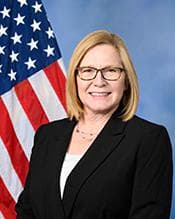
- Michelle Fischbach
- Cosponsors
- None
- Introduced
- Adopted by the House
A House resolution is the House speaking for itself: stating a position, honouring someone, or setting its own rules. Adopting it is the whole process. Once the House agrees to it, it is officially the House's word; it is not a law, so the Senate and the President have no part in it.
What this bill would do
This resolution provides for the consideration of several different legislative items in the House. It includes provisions for discussing a joint resolution regarding IRS gross proceeds reporting for digital asset sales. It also allows for the consideration of a bill to amend the CARES Act to extend the statute of limitations for unemployment program fraud. Additionally, the resolution covers a bill for continuing appropriations and extensions through September 30, 2025. Finally, it addresses adjustments to calendar day calculations regarding a national emergency declared on February 1, 2025.
Yes· 3 of 5
Would people with substantial wealth be better off under this?+2
Disapproving the IRS reporting rule for digital asset gross proceeds may benefit those with significant digital asset holdings.
Would households on low incomes be better off under this?+1
Extending the statute of limitations for unemployment fraud helps protect the integrity of unemployment program funds.
Would union members be better off under this?+1
The extension of the statute of limitations for unemployment fraud helps safeguard unemployment program resources.
The opposite
Does this make what the government does easier for the public to see?-2
The joint resolution seeks to disapprove an IRS rule that would have required brokers to report gross proceeds from digital asset sales.
Does this raise taxes on the highest earners?-2
The disapproval of the IRS rule regarding digital asset gross proceeds reporting reduces the reporting requirements for asset sales.
What Congress actually voted on
2 recorded votes have been taken on this bill. One of them decided something; the rest moved it along.
- The House: the vote on whether to adopt the resolutionPassed 216–214
A resolution is one chamber speaking for itself — setting its own rules, taking a position, honouring someone — and it never goes to the President. Agreeing to it is the whole decision.
03/11/2025 · Roll call 67 · recorded as “On Agreeing to the Resolution”
Who it would affect, and how
Potential Positive Impacts for People
-
Extension of fraud statute of limitations: H.R. 1156 seeks to amend the CARES Act to extend the statute of limitations for fraud under certain unemployment programs. (Sec. 2)
-
Continued funding and extensions: H.R. 1968 provides for further continuing appropriations and other extensions for the fiscal year ending September 30, 2025. (Sec. 3)
Potential Negative Impacts for People
- IRS reporting requirements: H.J. Res. 25 involves the congressional disapproval of a rule submitted by the Internal Revenue Service regarding gross proceeds reporting by brokers that regularly provide services effectuating digital asset sales. (Sec. 1)
Groups and Interests Ranking
Every group the model scored this bill for, from -10 to +10. Hover a score for the reason it gave.
- Demographic And Interest Groups
- Good For High Net Worth Individuals+2Good For Low Income Households+1Good For Union Workers+1
- Governance And Ideology
- Improves Government Transparency-2
- Economy And Finance
- Increases Unemployment Benefits+1Reduces Government Spending+1Increases Wealthy Taxes-2
- 9/16/2025
- Pursuant to the provisions of H.Res. 707, H.Res. 211 is amended.
- 3/11/2025
- The House Committee on Rules reported an original measure, H. Rept. 119-15, by Mrs. Fischbach.
- Placed on the House Calendar, Calendar No. 8.
- Motion to reconsider laid on the table Agreed to without objection.
- Passed/agreed to in House: On agreeing to the resolution Agreed to by recorded vote: 216 - 214 (Roll no. 67). (text: CR H1083)
- On agreeing to the resolution Agreed to by recorded vote: 216 - 214 (Roll no. 67). (text: CR H1083)
- On ordering the previous question Agreed to by the Yeas and Nays: 216 - 212 (Roll no. 66).
- DEBATE - The House proceeded with one hour of debate on H. Res. 211.
- Considered as privileged matter. (consideration: CR H1083-1093)
- The resolution provides for consideration of H.J. Res. 25, H.R. 1156, and H.R. 1968 under a closed rule. Also, the resolution provides for one hour of general debate and one motion to recommit on each measure.
- Bill introduced.
4 bills Congress.gov lists as related to this one — companions in the other chamber, earlier versions, and bills this one absorbed or was folded into.
- 119-HR-1156: Pandemic Unemployment Fraud Enforcement Act
- 119-HR-1968: Full-Year Continuing Appropriations and Extensions Act, 2025
- 119-HJRES-25: Providing for congressional disapproval under chapter 8 of title 5, United States Code, of the rule submitted by the Internal Revenue Service relating to "Gross Proceeds Reporting by Brokers That Regularly Provide Services Effectuating Digital Asset Sales".
- 119-HRES-707: Providing for consideration of the bill (H.R. 4922) to limit youth offender status in the District of Columbia to individuals 18 years of age or younger, to direct the Attorney General of the District of Columbia to establish and operate a publicly accessible website containing updated statistics on juvenile crime in the District of Columbia, to amend the District of Columbia Home Rule Act to prohibit the Council of the District of Columbia from enacting changes to existing criminal liability sentences, and for other purposes; providing for consideration of the bill (H.R. 5143) to establish standards for law enforcement officers in the District of Columbia to engage in vehicular pursuits of suspects, and for other purposes; providing for consideration of the bill (H.R. 5140) to lower the age at which a minor may be tried as an adult for certain criminal offenses in the District of Columbia to 14 years of age; providing for consideration of the bill (H.R. 5125) to amend the District of Columbia Home Rule Act to terminate the District of Columbia Judicial Nomination Commission, and for other purposes; providing for consideration of the bill (H.R. 1047) to require the Federal Energy Regulatory Commission to reform the interconnection queue process for the prioritization and approval of certain projects, and for other purposes; providing for consideration of the bill (H.R. 3015) to reestablish the National Coal Council in the Department of Energy to provide advice and recommendations to the Secretary of Energy on matters related to coal and the coal industry, and for other purposes; providing for consideration of the bill (H.R. 3062) to establish a more uniform, transparent, and modern process to authorize the construction, connection, operation, and maintenance of international border-crossing facilities for the import and export of oil and natural gas and the transmission of electricity; and for other purposes.