Bill · H.R. 1968· House(119-HR-1968)
Full-Year Continuing Appropriations and Extensions Act, 2025
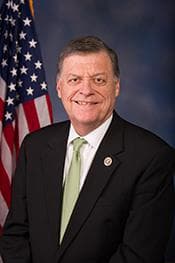
- Introduced
- 3/10/2025
- Last activity
- 3/15/2025 — Became Public Law No: 119-4.
- Sponsored by
- Tom Cole
- Cosponsors
- None
- Introduced
- Passed House
- Passed Senate
- To President
- Became Law
What this bill would do
The Full-Year Continuing Appropriations and Extensions Act, 2025, provides funding and extensions for various government agencies through September 30, 2025. It includes specific funding levels for departments such as Agriculture, Defense, Energy, Homeland Security, and Transportation. The legislation extends various public health and Medicare programs, including community health centers, telehealth flexibilities, and coverage for oral antiviral drugs. It also includes provisions for military construction, veterans' benefits, and legislative branch operations. Additionally, the act addresses specific agricultural, science, and energy-related programs while extending several human services and Medicaid provisions.
Yes· 3 of 34
Would veterans be better off under this, taking everything together?+7
The act provides significant funding for Veterans Affairs medical and community care.
Does this increase the pay, pensions or support veterans receive?+7
The act provides significant funding for VA Medical Services and the Cost of War Toxic Exposure Fund.
Does this help veterans get medical care?+6
Significant funding is provided for Veterans Affairs Medical Services and Community Care.
The opposite· 3 of 4
Does this put more money into scientific research?-3
The bill reduces funding for various research accounts including the NIH Innovation Account.
Does this reduce what the federal government owes?-2
The bill includes various permanent rescissions of previously allocated funds.
Does this reduce what the federal government spends?-2
The bill includes several rescissions across multiple departments.
What Congress actually voted on
4 recorded votes have been taken on this bill. 2 of them decided something; the rest moved it along.
- The House: the vote on whether to pass the billPassed 217–213
This is the real decision in this chamber. Passing here sends the bill to the other chamber, which must pass it too before it can go to the President.
03/11/2025 · Roll call 70 · recorded as “On Passage”
- The Senate: the vote on whether to pass the billBill Passed 54–46
This is the real decision in this chamber. Passing here sends the bill to the other chamber, which must pass it too before it can go to the President.
03/14/2025 · Roll call 133 · recorded as “On Passage of the Bill H.R. 1968”
Who it would affect, and how
Potential Positive Impacts for People
-
Health Care Access and Extensions: The bill extends funding for community health centers, the National Health Service Corps, and teaching health centers (Sec. 2101). It also extends special diabetes programs for Type I and for Indians (Sec. 2102).
-
Medicare Protections: The act extends increased inpatient hospital payments for certain low-volume hospitals (Sec. 2201) and the Medicare-dependent hospital program (Sec. 2202). It also extends add-on payments for ambulance services (Sec. 2203) and certain telehealth flexibilities (Sec. 2207).
-
Mental Health Access: The bill delays the requirement for in-person visits for mental health services provided via telehealth, rural health clinics, and federally qualified health centers, moving the deadline from April 1, 2025, to October 1, 2025 (Section (d)).
-
Telehealth Flexibility: It extends the ability to use audio-only telehealth services and the use of telehealth for hospice care face-to-face encounters through September 30, 2025 (Sections (e) and (f)).
-
Acute Care at Home: The authority for the acute hospital care at home waiver is extended through September 30, 2025 (Section 2208).
-
Prescription Drug Coverage: The temporary inclusion of authorized oral antiviral drugs as covered Part D drugs is extended through September 30, 2025 (Section 2209).
-
Increased Medicare Funding: The Medicare Improvement Fund is increased from $1,251,000,000 to $1,804,000,000 (Section 2210).
-
Support for Low-Income Programs: Funding is extended for outreach and assistance for low-income programs through State Health Insurance Assistance Programs, Area Agencies on Aging, and Aging and Disability Resource Centers (Sec. 2205).
-
Rural Development: The bill provides funding for rural water and waste disposal (Sec. 1201) and includes funding for distance learning, telemedicine, and broadband programs in rural areas (Sec. 1201).
-
Veterans Benefits: The act provides significant funding for Veterans Affairs Medical Services, Medical Community Care, and the Cost of War Toxic Exposure Fund (Sec. 11109 and Sec. 11110).
-
Human Services Extensions: The bill extends funding for sexual risk avoidance education, personal responsibility education, and doubles the funding for family-to-family health information centers to $6,000,000 (Sections 2301, 2302, and 2303).
-
Medicaid Stability: The bill delays reductions in Medicaid Disproportionate Share Hospital (DSH) payments through 2028 (Section 2401).
Potential Negative Impacts for People
-
Funding Reductions: Certain programs face reduced funding levels, such as the National Institutes of Health (NIH) Innovation Account, CURES Act (Sec. 1905) and the National Health Service Corps (Sec. 2101, via specific amount adjustments).
-
Rescissions: The bill includes various permanent rescissions of previously allocated funds across multiple departments, including the Department of Defense and the Department of Labor (Sec. 1416 and Sec. 1903).
-
Sequestration Adjustments: The bill alters the timing of Medicare sequestration, increasing the duration of one period to 10 months and decreasing another to 2 months (Section 2211).
Groups and Interests Ranking
Every group the model scored this bill for, from -10 to +10. Hover a score for the reason it gave.
- Demographic And Interest Groups
- Good For Veterans+7Good For Retirees+5Good For Rural Residents+5Good For Seniors+5Good For Low Income Households+4Good For Native Americans+4Good For Farmers+3Good For People With Disabilities+3Good For Women+3Good For Children+2
- Healthcare
- Improves Veterans Healthcare+6Improves Healthcare Access+5Increases Medicare Funding+5Improves Mental Health Access+4Increases Medicaid Funding+4Increases Research Funding+4Improves Opioid Crisis Response+3Increases Affordable Care Act Support+3Reduces Prescription Drug Costs+2
- Social Issues And Justice
- Improves Affordable Housing+4Improves Disability Rights+3Improves Poverty Reduction+3Improves Racial Equity+3Reduces Homelessness+3Improves Social Security+2
- Environment Energy And Infrastructure
- Improves Disaster Relief And F E M A+5Improves Rural Development+5Improves Public Transit+2Improves Roads And Bridges+2
- National Security And Foreign Policy
- Improves Veterans Benefits+7Improves Cybersecurity Defense+3
- Economy And Finance
- Reduces Government Spending-2Reduces National Debt-2
- Governance And Ideology
- Improves Electoral Process+2
- Education And Technology
- Improves Internet Access+4Increases Space Exploration+2Increases Scientific Research Funding-3Improves College Affordability-2
- Public Law(3/16/2025)
The text as it became law
- Enrolled Bill
The final version, on its way to the President
| Updated | Bill | Title | Policy Area |
|---|---|---|---|
| 1 year ago | On agreeing to the Rules amendment (A001) Agreed to without objection. | ||
| 7 months ago | To reduce the amount appropriated for the United States Agency for International Development. | ||
| 7 months ago | To prohibit the use of appropriated amounts by DOGE. | ||
| 7 months ago | To except the application of certain rescissions. | ||
| 7 months ago | To make veteran Federal employees who were involuntarily dismissed without cause eligible for reinstatement and to require reports from Executive agencies on the number of veteran employees fired from such agencies. |


- 3/15/2025
- Signed by President.
- Became Public Law No: 119-4.
- 3/14/2025
- Cloture motion on the motion to proceed to the measure withdrawn by unanimous consent in Senate. (CR S1768)
- Motion to proceed to consideration of measure agreed to in Senate by Unanimous Consent. (CR S1768)
- Measure laid before Senate by unanimous consent. (consideration: CR S1768-1772)
- Cloture motion on the measure presented in Senate. (CR S1768)
- Cloture on the measure invoked in Senate by Yea-Nay Vote. 62 - 38. Record Vote Number: 128. (CR S1768)
- Passed/agreed to in Senate: Passed Senate without amendment by Yea-Nay Vote. 54 - 46. Record Vote Number: 133.
- Passed Senate without amendment by Yea-Nay Vote. 54 - 46. Record Vote Number: 133.
- Message on Senate action sent to the House.
- Presented to President.
- 3/12/2025
- Motion to proceed to consideration of measure made in Senate. (CR S1681)
- Cloture motion on the motion to proceed to the measure presented in Senate. (CR S1700)
- 3/11/2025
- Received in the Senate. Read the first time. Placed on Senate Legislative Calendar under Read the First Time. (Legislative Day March 10, 2025).
- Read the second time. Placed on Senate Legislative Calendar under General Orders. Calendar No. 26.
- Motion to reconsider laid on the table Agreed to without objection.
- Passed/agreed to in House: On passage Passed by the Yeas and Nays: 217 - 213 (Roll no. 70). (text of amendment in the nature of a substitute: CR H1102-1113)
- On passage Passed by the Yeas and Nays: 217 - 213 (Roll no. 70). (text of amendment in the nature of a substitute: CR H1102-1113)
- On motion to recommit Failed by the Yeas and Nays: 213 - 216 (Roll no. 69).
- Considered as unfinished business. (consideration: CR H1124-1126)
- POSTPONED PROCEEDINGS - At the conclusion of debate on H.R. 1968, the Chair put the question on the motion to recommit and announced that the noes had prevailed. Ms. Meng demanded the yeas and nays and the Chair postponed further proceedings until a time to be announced.
- The previous question on the motion to recommit was ordered pursuant to clause 2(b) of rule XIX.
- Ms. Meng moved to recommit to the Committee on Appropriations. (text: CR H1123-1124)
- The previous question was ordered pursuant to the rule.
- DEBATE - The House proceeded with one hour of debate on H.R. 1968.
- Rule provides for consideration of H.J. Res. 25, H.R. 1156 and H.R. 1968. The resolution provides for consideration of H.J. Res. 25, H.R. 1156, and H.R. 1968 under a closed rule. Also, the resolution provides for one hour of general debate and one motion to recommit on each measure.
- Considered under the provisions of rule H. Res. 211. (consideration: CR H1102-1124)
- Rule H. Res. 211 passed House.
- Rules Committee Resolution H. Res. 211 Reported to House. Rule provides for consideration of H.J. Res. 25, H.R. 1156 and H.R. 1968. The resolution provides for consideration of H.J. Res. 25, H.R. 1156, and H.R. 1968 under a closed rule. Also, the resolution provides for one hour of general debate and one motion to recommit on each measure.
- 3/10/2025
- Referred to the Committee on Appropriations, and in addition to the Committee on the Budget, for a period to be subsequently determined by the Speaker, in each case for consideration of such provisions as fall within the jurisdiction of the committee concerned.
- Introduced in House
2 bills Congress.gov lists as related to this one — companions in the other chamber, earlier versions, and bills this one absorbed or was folded into.
- 119-S-724: Temporary Extension of Fentanyl-Related Substances Scheduling Act
- 119-HRES-211: Providing for consideration of the joint resolution (H.J. Res. 25) providing for congressional disapproval under chapter 8 of title 5, United States Code, of the rule submitted by the Internal Revenue Service relating to ‘‘Gross Proceeds Reporting by Brokers That Regularly Provide Services Effectuating Digital Asset Sales’’; providing for consideration of the bill (H.R. 1156) to amend the CARES Act to extend the statute of limitations for fraud under certain unemployment programs, and for other purposes; providing for consideration of the bill (H.R. 1968) making further continuing appropriations and other extensions for the fiscal year ending September 30, 2025, and for other purposes; and for other purposes.