Bill · H.R. 1156· House(119-HR-1156)
Pandemic Unemployment Fraud Enforcement Act
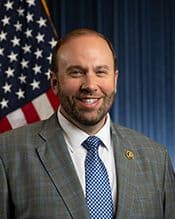
- Introduced
- 2/10/2025
- Last activity
- 3/13/2025 — Read the second time. Placed on Senate Legislative Calendar under General Orders. Calendar No. 29.
- Sponsored by
- Jason Smith
- Cosponsors
- - 25 - 0
- Introduced
- Passed House
- Awaiting Senate
- On Senate calendar
What this bill would do
This Act, known as the "Pandemic Unemployment Fraud Enforcement Act," aims to amend the CARES Act. It extends the statute of limitations for criminal prosecution or civil enforcement actions regarding fraud within specific unemployment programs. This extension applies to Pandemic Unemployment Assistance, Federal Pandemic Unemployment Compensation, Mixed Earner Unemployment Compensation, and Pandemic Emergency Unemployment Compensation. The new statute of limitations is set at 10 years after the date of the violation or conspiracy. However, this does not apply if the previous statute of limitations had already expired before this Act was enacted. Finally, the Act rescinds $5,000,000 from unobligated balances to offset the budget.
Yes· 3 of 4
Does this reduce what the federal government owes?+1
The bill rescinds $5,000,000 from unobligated balances to offset the budget.
Does this reduce what the federal government spends?+1
The rescission of funds acts as a small reduction in available government spending.
Does this make the government pay for what it commits to?+1
Extending prosecution capabilities and rescinding funds promotes fiscal accountability.
The opposite
Does this protect the right to fair treatment by the courts?-2
Extending statutes of limitations can be seen as reducing the finality of legal matters for individuals.
What Congress actually voted on
One recorded vote has been taken on this bill.
- The House: the vote on whether to pass the billPassed 295–127
This is the real decision in this chamber. Passing here sends the bill to the other chamber, which must pass it too before it can go to the President.
03/11/2025 · Roll call 68 · recorded as “On Passage”
Who it would affect, and how
Potential Positive Impacts for People
-
Extended Enforcement Period: Under Section 2, the bill extends the time allowed for criminal prosecution or civil enforcement actions to 10 years for violations related to Pandemic Unemployment Assistance, Federal Pandemic Unemployment Compensation, Mixed Earner Unemployment Compensation, and Pandemic Emergency Unemployment Compensation. This allows more time to pursue those who violated specific sections of the United States Code related to these claims.
-
Budgetary Offset: Section 3 rescinds $5,000,000 from the unobligated balances made available by section 2118(a) of title II of division A of Public Law 116-136, as added by section 9032 of Public Law 117-2.
Potential Negative Impacts for People
- Exceptions to Extension: Under Section 2, the new 10-year statute of limitations will not apply if the statute of limitations for a specific criminal prosecution or civil enforcement action had already expired prior to the date of enactment of the Pandemic Unemployment Fraud Enforcement Act.
Groups and Interests Ranking
Every group the model scored this bill for, from -10 to +10. Hover a score for the reason it gave.
- Economy And Finance
- Improves Fiscal Responsibility+1Reduces Government Spending+1Reduces National Debt+1
- Governance And Ideology
- Increases Federal Power+1Improves Due Process-2
| Updated | Bill | Title | Policy Area |
|---|---|---|---|
| 1 year ago | On agreeing to the Rules amendment (A001) Agreed to without objection. |
- 3/13/2025
- Read the second time. Placed on Senate Legislative Calendar under General Orders. Calendar No. 29.
- 3/12/2025
- Received in the Senate. Read the first time. Placed on Senate Legislative Calendar under Read the First Time.
- 3/11/2025
- Motion to reconsider laid on the table Agreed to without objection.
- Passed/agreed to in House: On passage Passed by the Yeas and Nays: 295 - 127 (Roll no. 68). (text of amendment in the nature of a substitute: CR H1093-1094)
- On passage Passed by the Yeas and Nays: 295 - 127 (Roll no. 68). (text of amendment in the nature of a substitute: CR H1093-1094)
- Considered as unfinished business. (consideration: CR H1124)
- POSTPONED PROCEEDINGS - At the conclusion of debate on H.R. 1156, the Chair put the question on passage of the bill and by voice vote announced that the ayes had prevailed. Mr. Davis (IL) demanded the yeas and nays and the Chair postponed further proceedings until a time to be announced.
- The previous question was ordered pursuant to the rule.
- DEBATE - The House proceeded with one hour of debate on H.R. 1156.
- Rule provides for consideration of H.J. Res. 25, H.R. 1156 and H.R. 1968. The resolution provides for consideration of H.J. Res. 25, H.R. 1156, and H.R. 1968 under a closed rule. Also, the resolution provides for one hour of general debate and one motion to recommit on each measure.
- Considered under the provisions of rule H. Res. 211. (consideration: CR H1093-1099)
- Rules Committee Resolution H. Res. 211 Reported to House. Rule provides for consideration of H.J. Res. 25, H.R. 1156 and H.R. 1968. The resolution provides for consideration of H.J. Res. 25, H.R. 1156, and H.R. 1968 under a closed rule. Also, the resolution provides for one hour of general debate and one motion to recommit on each measure.
- 2/25/2025
- Reported (Amended) by the Committee on Ways and Means. H. Rept. 119-6.
- Placed on the Union Calendar, Calendar No. 2.
- 2/12/2025
- Committee Consideration and Mark-up Session Held
- Ordered to be Reported in the Nature of a Substitute (Amended) by the Yeas and Nays: 24 - 18.
- 2/10/2025
- Referred to the House Committee on Ways and Means.
- 25 Cosponsors added.
- Introduced in House
2 bills Congress.gov lists as related to this one — companions in the other chamber, earlier versions, and bills this one absorbed or was folded into.
- 119-HR-8873: Recover COVID Unemployment Fraud in Banks Act
- 119-HRES-211: Providing for consideration of the joint resolution (H.J. Res. 25) providing for congressional disapproval under chapter 8 of title 5, United States Code, of the rule submitted by the Internal Revenue Service relating to ‘‘Gross Proceeds Reporting by Brokers That Regularly Provide Services Effectuating Digital Asset Sales’’; providing for consideration of the bill (H.R. 1156) to amend the CARES Act to extend the statute of limitations for fraud under certain unemployment programs, and for other purposes; providing for consideration of the bill (H.R. 1968) making further continuing appropriations and other extensions for the fiscal year ending September 30, 2025, and for other purposes; and for other purposes.
 Jodey Arrington
Republican · Texas
 Vern Buchanan
Republican · Florida
 Aaron Bean
Republican · Florida
 Mike Carey
Republican · Ohio
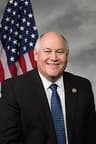 Ron Estes
Republican · Kansas
 Randy Feenstra
Republican · Iowa
 Brian Fitzpatrick
Republican · Pennsylvania
 Michelle Fischbach
Republican · Minnesota
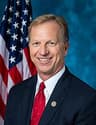 Kevin Hern
Republican · Oklahoma
 Mike Kelly
Republican · Pennsylvania
 David Kustoff
Republican · Tennessee
 Darin LaHood
Republican · Illinois
 Nicole Malliotakis
Republican · New York
 Carol Miller
Republican · West Virginia
 Gregory Murphy
Republican · North Carolina
 Blake Moore
Republican · Utah
 Max Miller
Republican · Ohio
 Nathaniel Moran
Republican · Texas
 Adrian Smith
Republican · Nebraska
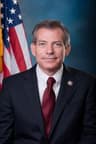 David Schweikert
Republican · Arizona
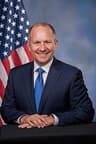 Lloyd Smucker
Republican · Pennsylvania
 W. Steube
Republican · Florida
 Claudia Tenney
Republican · New York
 Beth Van Duyne
Republican · Texas
 Rudy Yakym
Republican · Indiana