Bill · H.R. 3633· House(119-HR-3633)
Digital Asset Market Clarity Act

- Introduced
- 5/29/2025
- Last activity
- 9/15/2026 — Motion by Senator Tillis to reconsider the vote by which cloture on the motion to proceed to the measure was not invoked (Record Vote No. 234) entered in Senate.
- Sponsored by
- J. Hill
- Cosponsors
- - 14 - 7
- Introduced
- Passed House
- Awaiting Senate
What this bill would do
This bill establishes a comprehensive regulatory framework for the offer and sale of digital commodities, digital assets, and stablecoins through the SEC and CFTC. It provides specific definitions for blockchain technology and market participants while creating processes for blockchain systems to be certified as "mature." The legislation addresses the rights of individuals to maintain self-custody of digital assets and provides legal protections for software developers. Additionally, it establishes rules for digital commodity exchanges, brokers, and dealers to protect customer assets and prevent market abuse. The bill also includes the "Anti-CBDC Surveillance State Act" to prevent the issuance of a central bank digital currency directly to individuals. Finally, it creates innovation sandboxes and AI labs to encourage technological experimentation under regulatory oversight.
Yes· 3 of 14
Does this give people more protection from unfair business practices?+5
It enhances consumer protection through mandatory disclosures, asset segregation, and increased regulatory oversight.
Does this make housing cost less?+5
The bill incentivizes urban housing supply through adjustments to Community Development Block Grant allocations.
Would business owners be better off under this?+4
The bill provides legal clarity and regulatory sandboxes that benefit digital asset entrepreneurs and businesses.
The opposite
Does this leave more decisions to the states?-3
The bill exempts digital commodities from certain state laws, potentially limiting state regulatory authority.
Does this give the government more power to monitor people inside the country?-2
The expansion of information-sharing programs may increase federal surveillance capabilities.
What Congress actually voted on
2 recorded votes have been taken on this bill. One of them decided something; the rest moved it along.
- The House: the vote on whether to pass the billPassed 294–134
This is the real decision in this chamber. Passing here sends the bill to the other chamber, which must pass it too before it can go to the President.
07/17/2025 · Roll call 199 · recorded as “On Passage”
Who it would affect, and how
Potential Positive Impacts for People
-
Protection of Self-Custody Rights: The bill ensures that United States individuals retain the right to maintain hardware or software wallets for lawful custody of digital assets and engage in direct, peer-to-peer transactions (Section 105(c)(1); Section 22(a); Section 605).
-
Enhanced Investor Protection through Disclosure: Digital commodity issuers and ancillary asset originators must provide detailed information, including source code, transaction history, corporate history, and financial statements, to help investors make informed decisions (Section 202(b)(2); Section 4B(d)).
-
Incentives and Protections for Blockchain Development: The legislation provides specific protections for non-controlling blockchain developers and software providers, ensuring they are not treated as money transmitters solely for providing infrastructure or performing incidental tasks like maintaining a node (Section 109(a); Section 601; Section 604).
-
Streamlined Market Entry and Innovation: The bill creates an expedited registration process for digital commodity exchanges, brokers, and dealers (Section 106(a)(2)), as well as a Micro-Innovation Sandbox and AI Innovation Labs to allow firms to test new financial products and services (Section 501; Section 509).
-
Protection of Customer Assets: Digital commodity exchanges are required to establish policies to ensure the safety of customer money and assets, treating them as belonging to the customer (Section 404(d)(1) and (2)). Brokers and dealers must also hold assets in a manner that minimizes the risk of loss or unreasonable delay in access (Section 4U(j)(1)(A)).
-
Market Integrity and Fairness: The bill mandates rules to protect market participants from abusive practices, promotes fair and equitable trading, and prohibits the use of manipulative or deceptive devices (Section 404(c)(2)(B)(i); Section 204(e)(1)).
-
Regulatory Clarity for Digital Assets: Certain network tokens may be treated as non-securities if they meet specific criteria, providing clarity for assets linked to distributed ledger systems (Section 4B(b)(2); Section 105). Additionally, a safe harbor is established for many NFTs, such as collectibles or event tickets (Section 602).
-
Consumer Fraud Prevention and Financial Literacy: Digital asset kiosk operators must provide clear warnings about common scams and provide detailed receipts (Section 205(b)). The bill also directs studies to improve financial literacy for retail digital commodity holders (Section 506(a)(2); Section 803).
-
Banking Industry Integration: The law allows national banks, state banks, and credit unions to use digital assets for various financial activities, such as custody and lending (Section 401(g)).
-
Preservation of Consumer Rights: The bill preserves the right of individuals to bring civil actions for fraud, deceit, or manipulation involving digital assets (Section s 111(a)(1)).
Potential Negative Impacts for People
-
Compliance Burdens and Costs for Entities: Issuers face strict ongoing disclosure requirements, such as semiannual reports on development and finances (Section 202(b)(3)). Exchanges must also designate a chief compliance officer to prepare annual reports (Section 5f) and meet minimum capital requirements (Section 4U(d)(1)).
-
Restrictions on Asset Sales and Control: Individuals or groups with authority over a blockchain system face limitations on selling related digital commodities (Section 4W(a)). "Related persons" also face significant limitations on how and when they can sell holdings (Section 104(c)), and any profits made from violating these rules can be recovered by asset holders (Section 104(e)).
-
Strict Obligations for Non-Mature Systems: Issuers whose blockchain systems fail to become "mature" within a specified timeframe face additional disclosure obligations regarding the failure and future plans (Section 202(e)(1)).
-
Mandatory Disclosures for Unregistered Entities: Anyone acting as an exchange, broker, or dealer must disclose to customers that they are not yet registered with the CFTC (Section 106(d)(1)).
-
Increased Regulatory and Oversight Burdens: Digital commodity exchanges are subject to extensive requirements regarding financial resources, surveillance, and recordkeeping (Section 404(c)). Furthermore, the Commission can impose additional requirements on the operations of exchanges and their affiliates (Section 404(e)). Participation in the Micro-Innovation Sandbox is also subject to strict individual customer and monetary ceilings (Section 501).
-
Restrictions on Digital Asset Kiosks and Stablecoins: Kiosk transactions may be subject to a 72-hour holding period for new customers and an aggregate limit of $3,500 within a 24-hour period (Section 205(h)(1) and (l)). Additionally, service providers are prohibited from paying interest or yield on stablecoins that is equivalent to bank deposit interest (Section 404(c)(1)).
-
Transaction Holds and Bankruptcy Risks: The bill allows for "temporary holds" on digital asset transactions for up to 30 days, with potential extensions (Section 305(a)(5)). In bankruptcy, the treatment of customer property in liquidation will be governed by specific Title 11 provisions (Section 701).
-
Limitations on Financial Accounts: Under expanded securities portfolio margin account rules, the SIPC is prohibited from making advances to pay net equity claims of customers regarding digital commodities or swaps (Section 405).
Groups and Interests Ranking
Every group the model scored this bill for, from -10 to +10. Hover a score for the reason it gave.
- Economy And Finance
- Improves Consumer Protection+5Improves Economic Growth+3Improves Small Business Support+3
- Demographic And Interest Groups
- Good For Business Owners+4Good For Urban Residents+4
- Governance And Ideology
- Improves Privacy Rights+4Increases Federal Power+4Improves Government Transparency+3Increase States Rights-3
- Education And Technology
- Increases Big Tech Regulation+4Improves Data Privacy+3
- Social Issues And Justice
- Improves Affordable Housing+5Improves Freedom Of Speech+2
- National Security And Foreign Policy
- Improves Cybersecurity Defense+4Increases Counter Terrorism Funding+3Increases Domestic Surveillance-2
| Updated | Bill | Title | Policy Area |
|---|---|---|---|
| 1 year ago | On agreeing to the Rules amendment (A001) Agreed to without objection. |
- 9/15/2026
- Cloture on the motion to proceed to the measure not invoked in Senate by Yea-Nay Vote. 49 - 50. Record Vote Number: 234.
- Motion by Senator Tillis to reconsider the vote by which cloture on the motion to proceed to the measure was not invoked (Record Vote No. 234) entered in Senate.
- 8/8/2026
- Motion to proceed to consideration of measure made in Senate. (CR S4557)
- Cloture motion on the motion to proceed to the measure presented in Senate. (CR S4557)
- 6/1/2026
- Committee on Banking, Housing, and Urban Affairs. Reported by Senator Scott SC, with an amendment in the nature of a substitute. Without written report.
- Placed on Senate Legislative Calendar under General Orders. Calendar No. 423.
- 5/14/2026
- Committee on Banking, Housing, and Urban Affairs. Ordered to be reported with an amendment in the nature of a substitute favorably.
- 9/18/2025
- Received in the Senate and Read twice and referred to the Committee on Banking, Housing, and Urban Affairs.
- 7/17/2025
- Motion to reconsider laid on the table Agreed to without objection.
- Passed/agreed to in House: On passage Passed by the Yeas and Nays: 294 - 134 (Roll no. 199).
- On passage Passed by the Yeas and Nays: 294 - 134 (Roll no. 199). (text of amendment in the nature of a substitute: CR H3373-3397)
- Considered as unfinished business. (consideration: CR H3449)
- POSTPONED PROCEEDINGS - At the conclusion of debate on H.R. 3633, the Chair put the question on passage of the bill and by voice vote, announced that the ayes had prevailed. Ms. Craig demanded the yeas and nays and the Chair postponed further proceedings until a time to be announced.
- The previous question was ordered pursuant to the rule.
- DEBATE - The House proceeded with one hour of debate on H.R. 3633.
- Rule provides for consideration of H.R. 4016, H.R. 3633, H.R. 1919 and S. 1582. The resolution provides for consideration of H.R. 4016 and H.R. 3633 under a structured rule, and H.R. 1919 and S. 1582 under a closed rule, with one hour of general debate on each bill. The resolution provides for a motion to recommit on H.R. 4016, H.R. 3633, and H.R. 1919, and a motion to commit on S. 1582.
- Considered under the provisions of rule H. Res. 580. (consideration: CR H3373)
- 7/15/2025
- Rules Committee Resolution H. Res. 580 Reported to House. Rule provides for consideration of H.R. 4016, H.R. 3633, H.R. 1919 and S. 1582. The resolution provides for consideration of H.R. 4016 and H.R. 3633 under a structured rule, and H.R. 1919 and S. 1582 under a closed rule, with one hour of general debate on each bill. The resolution provides for a motion to recommit on H.R. 4016, H.R. 3633, and H.R. 1919, and a motion to commit on S. 1582.
- 6/23/2025
- Reported (Amended) by the Committee on Agriculture. H. Rept. 119-168, Part I.
- Reported (Amended) by the Committee on Financial Services. H. Rept. 119-168, Part II.
- Placed on the Union Calendar, Calendar No. 134.
- 1 Cosponsor added.
- 6/20/2025
- 10 Cosponsors added.
- 6/10/2025
- Committee Consideration and Mark-up Session Held
- Ordered to be Reported (Amended) by the Yeas and Nays: 47 - 6.
- Ordered to be Reported (Amended) by the Yeas and Nays: 32 - 19.
- 6/5/2025
- 1 Cosponsor added.
- 6/2/2025
- 1 Cosponsor added.
- 5/29/2025
- Referred to the Committee on Financial Services, and in addition to the Committee on Agriculture, for a period to be subsequently determined by the Speaker, in each case for consideration of such provisions as fall within the jurisdiction of the committee concerned.
- 8 Cosponsors added.
- Introduced in House
3 bills Congress.gov lists as related to this one — companions in the other chamber, earlier versions, and bills this one absorbed or was folded into.
- 119-HR-3690: Securing Innovation in Financial Regulation Act
- 119-HRES-580: Providing for consideration of the bill (H.R. 4016) making appropriations for the Department of Defense for the fiscal year ending September 30, 2026, and for other purposes; providing for consideration of the bill (H.R. 3633) to provide for a system of regulation of the offer and sale of digital commodities by the Securities and Exchange Commission and the Commodity Futures Trading Commission, and for other purposes; providing for consideration of the bill (H.R. 1919) to amend the Federal Reserve Act to prohibit the Federal reserve banks from offering certain products or services directly to an individual, to prohibit the use of central bank digital currency for monetary policy, and for other purposes; providing for consideration of the bill (S. 1582) to provide for the regulation of payment stablecoins, and for other purposes; and waiving a requirement of clause 6(a) of rule XIII with respect to consideration of certain resolutions reported from the Committee on Rules.
- 119-HRES-707: Providing for consideration of the bill (H.R. 4922) to limit youth offender status in the District of Columbia to individuals 18 years of age or younger, to direct the Attorney General of the District of Columbia to establish and operate a publicly accessible website containing updated statistics on juvenile crime in the District of Columbia, to amend the District of Columbia Home Rule Act to prohibit the Council of the District of Columbia from enacting changes to existing criminal liability sentences, and for other purposes; providing for consideration of the bill (H.R. 5143) to establish standards for law enforcement officers in the District of Columbia to engage in vehicular pursuits of suspects, and for other purposes; providing for consideration of the bill (H.R. 5140) to lower the age at which a minor may be tried as an adult for certain criminal offenses in the District of Columbia to 14 years of age; providing for consideration of the bill (H.R. 5125) to amend the District of Columbia Home Rule Act to terminate the District of Columbia Judicial Nomination Commission, and for other purposes; providing for consideration of the bill (H.R. 1047) to require the Federal Energy Regulatory Commission to reform the interconnection queue process for the prioritization and approval of certain projects, and for other purposes; providing for consideration of the bill (H.R. 3015) to reestablish the National Coal Council in the Department of Energy to provide advice and recommendations to the Secretary of Energy on matters related to coal and the coal industry, and for other purposes; providing for consideration of the bill (H.R. 3062) to establish a more uniform, transparent, and modern process to authorize the construction, connection, operation, and maintenance of international border-crossing facilities for the import and export of oil and natural gas and the transmission of electricity; and for other purposes.
 Nicholas Begich
Republican · Alaska
 Robert Bresnahan
Republican · Pennsylvania
 Earl Carter
Republican · Georgia
 Angie Craig
Democrat · Minnesota
 Donald Davis
Democrat · North Carolina
 Warren Davidson
Republican · Ohio
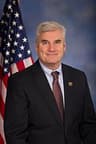 Tom Emmer
Republican · Minnesota
 Josh Gottheimer
Democrat · New Jersey
 Bill Huizenga
Republican · Michigan
 Dusty Johnson
Republican · South Dakota
 Michael Lawler
Republican · New York
 Daniel Meuser
Republican · Pennsylvania
 Mark Messmer
Republican · Indiana
 Riley Moore
Republican · West Virginia
 Kristen McDonald Rivet
Democrat · Michigan
 Zachary Nunn
Republican · Iowa
 Bryan Steil
Republican · Wisconsin
 Haley Stevens
Democrat · Michigan
 Glenn Thompson
Republican · Pennsylvania
 Ritchie Torres
Democrat · New York
 Shri Thanedar
Democrat · Michigan