Bill · H.R. 9827· House(119-HR-9827)
Wildfire Reduction Market Expansion Act of 2026
- Introduced
- 7/22/2026
- Last activity
- 7/22/2026 — Referred to the House Committee on Energy and Commerce.
- Sponsored by
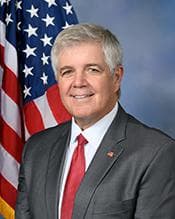
- Cliff Bentz
- Cosponsors
- - 21 - 12
- Introduced
- In Committee
What this bill would do
This bill is titled the Wildfire Reduction Market Expansion Act of 2026. It amends the Clean Air Act to change the definition of renewable biomass for the renewable fuel standard. The bill modifies the types of materials generated from forest and wood products manufacturing that qualify as renewable biomass under Section 2. It also updates the categories of trees, shrubs, and parts of trees or shrubs from non-Federal land, public lands, and Indian lands that qualify as renewable biomass. Additionally, the text includes provisions for certifications by landowners or the Departments of Agriculture or the Interior, alongside a savings clause regarding forest plans.
Yes· 3 of 13
Does this better protect public land such as parks and forests?+7
The bill facilitates the removal of hazardous fuels and supports ecological restoration on public lands.
Would people in rural areas be better off under this?+7
Rural residents benefit from wildfire risk reduction and expanded local forestry markets.
Does this put more money into wind, solar and other renewable power?+6
Expanding eligible biomass materials creates greater economic incentive for renewable fuel production.
The opposite
No question was scored the opposite.
Who it would affect, and how
Potential Positive Impacts for People
-
Section 2: This section includes materials generated from forest products manufacturing and wood products manufacturing, such as wood residuals, paper residuals, sawdust, wood, wood chips, shavings, bark, sanderdust, and paper recycling residuals, as renewable biomass. This is positive because it utilizes manufacturing by-products that might otherwise go to waste.
-
Section 2: This section includes trees, shrubs, and parts of trees or shrubs from non-Federal land managed under a forest sustainability certification program, classified as forest land for taxes, or certified by the landowner for long-term timber production. This provides clear pathways for private landowners to utilize forestry materials.
-
Section 2: This section includes vegetation obtained from within defensible space of a structure or infrastructure asset, or from wildfire risk reduction activities within the wildland-urban interface. This is beneficial as it encourages clearing materials that pose wildfire risks around buildings and communities.
Potential Negative Impacts for People
- Section 2: This section requires specific certifications from the Secretary of Agriculture, the Secretary of the Interior, or non-Federal landowners, including letters given to persons seeking to generate credits. This administrative requirement creates additional paperwork burdens for individuals and government offices seeking to participate.
Groups and Interests Ranking
Every group the model scored this bill for, from -10 to +10. Hover a score for the reason it gave.
- Environment Energy And Infrastructure
- Improves Public Land Management+7Improves Rural Development+6Increases Renewable Energy Investment+6Improves Environmental Protections+5Reduces Carbon Emissions+4Reduces Fossil Fuel Production+2
- Demographic And Interest Groups
- Good For Rural Residents+7Good For Native Americans+6Good For Business Owners+5Good For Farmers+4
- Economy And Finance
- Improves Small Business Support+3Increases Job Creation+3Improves Economic Growth+2
- 10/5/2026
- 1 Cosponsor added.
- 10/1/2026
- 1 Cosponsor added.
- 9/28/2026
- 1 Cosponsor added.
- 9/16/2026
- 1 Cosponsor added.
- 9/15/2026
- 1 Cosponsor added.
- 9/14/2026
- 3 Cosponsors added.
- 9/3/2026
- 1 Cosponsor added.
- 9/2/2026
- 1 Cosponsor added.
- 9/1/2026
- 1 Cosponsor added.
- 8/31/2026
- 1 Cosponsor added.
- 8/24/2026
- 1 Cosponsor added.
- 8/20/2026
- 1 Cosponsor added.
- 8/10/2026
- 2 Cosponsors added.
- 7/30/2026
- 5 Cosponsors added.
- 7/23/2026
- 1 Cosponsor added.
- 7/22/2026
- Referred to the House Committee on Energy and Commerce.
- 11 Cosponsors added.
- Introduced in House
One bill Congress.gov lists as related to this one — companions in the other chamber, earlier versions, and bills this one absorbed or was folded into.
 Sanford Bishop
Democrat · Georgia
 Ami Bera
Democrat · California
 Brian Babin
Republican · Texas
 James Clyburn
Democrat · South Carolina
 Kat Cammack
Republican · Florida
 Elijah Crane
Republican · Arizona
 Mike Ezell
Republican · Mississippi
 Russ Fulcher
Republican · Idaho
 Randy Fine
Republican · Florida
 Michael Guest
Republican · Mississippi
 Jared Golden
Democrat · Maine
 Maggie Goodlander
Democrat · New Hampshire
 James Gallagher
Republican · California
 Val Hoyle
Democrat · Oregon
 Abraham Hamadeh
Republican · Arizona
 Trent Kelly
Republican · Mississippi
 Robert Latta
Republican · Ohio
 Julia Letlow
Republican · Louisiana
 Max Miller
Republican · Ohio
 Nathaniel Moran
Republican · Texas
 Tim Moore
Republican · North Carolina
 Chellie Pingree
Democrat · Maine
 Mike Rogers
Republican · Alabama
 John Rutherford
Republican · Florida
 Emily Randall
Democrat · Washington
 Terri Sewell
Democrat · Alabama
 Austin Scott
Republican · Georgia
 Kim Schrier
Democrat · Washington
 Andrea Salinas
Democrat · Oregon
 Bennie Thompson
Democrat · Mississippi
 Glenn Thompson
Republican · Pennsylvania
 Derrick Van Orden
Republican · Wisconsin
 Bruce Westerman
Republican · Arkansas