Bill · H.R. 9720· House(119-HR-9720)
D.C. Taxing Authority Review Act
- Introduced
- 7/16/2026
- Last activity
- 7/22/2026 — Ordered to be Reported (Amended) by the Yeas and Nays: 23 - 18.
- Sponsored by
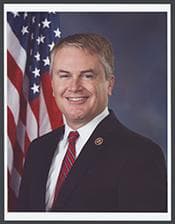
- James Comer
- Cosponsors
- - 21 - 0
- Introduced
What this bill would do
The ``D.C. Taxing Authority Review Act'' changes how certain District of Columbia laws take effect. It requires that any Act regarding title 47 of the District of Columbia Code or any Act that imposes or increases a tax or fee must be approved by a joint resolution of Congress. Under this bill, these specific Acts will not take effect after the standard 60-day period unless both Houses of Congress pass an approving resolution. The bill also limits debate on these specific resolutions to one hour. These changes apply to Acts transmitted after the bill is enacted.
Yes
Does this give the federal government more power?+5
The bill increases federal oversight by requiring Congressional approval for specific District of Columbia legislative actions.
Does this make what the government does easier for the public to see?+2
The bill mandates a specific legislative review process for D.C. taxes and Title 47 matters, subjecting them to formal Congressional action.
Would white Americans be better off under this?+1
The bill provides more Congressional oversight on D.C. fiscal policy, which can be viewed as a check on local government spending.
The opposite· 3 of 7
Does this leave more decisions to the states?-5
The bill reduces the local autonomy of the District of Columbia by mandating federal approval for certain local laws.
Would people in cities be better off under this?-3
The bill may delay the implementation of local laws in Washington D.C. through a new Congressional approval requirement.
Does this repair or build roads and bridges?-3
By requiring Congressional approval for D.C. Acts related to Title 47, which covers many infrastructure matters, the bill may delay local infrastructure funding or regulatory changes.
Who it would affect, and how
Potential Positive Impacts for People
-
Congressional Oversight of Taxes and Fees: According to Section 2(a), Acts that impose or increase a tax or fee will require a joint resolution of approval by both Houses of Congress before they can take effect. This provides a layer of Congressional review for financial changes in the District of Columbia.
-
Efficient Legislative Process: Section 2(b) limits debate on these specific resolutions to a total of one hour, divided equally between those in favor and those against. This is intended to expedite the consideration of these specific matters.
Potential Negative Impacts for People
- Delayed Implementation of Local Laws: Under Section 2(a), Acts related to title 47 of the District of Columbia Code or those increasing taxes or fees will not take effect after the 60-day period unless a joint resolution of approval has passed both Houses and been transmitted to the President. This could prevent local laws from becoming active if Congressional approval is not obtained.
Groups and Interests Ranking
Every group the model scored this bill for, from -10 to +10. Hover a score for the reason it gave.
- Demographic And Interest Groups
- Good For White Americans+1Good For Urban Residents-3Good For Low Income Households-2Good For Middle Class Households-2
- Economy And Finance
- Increases Corporate Taxes-2Increases Wealthy Taxes-2
- Environment Energy And Infrastructure
- Improves Roads And Bridges-3
- Governance And Ideology
- Increases Federal Power+5Improves Government Transparency+2Increase States Rights-5
- 7/22/2026
- Committee Consideration and Mark-up Session Held
- Ordered to be Reported (Amended) by the Yeas and Nays: 23 - 18.
- 7/16/2026
- Referred to the Committee on Oversight and Government Reform, and in addition to the Committee on Rules, for a period to be subsequently determined by the Speaker, in each case for consideration of such provisions as fall within the jurisdiction of the committee concerned.
- 21 Cosponsors added.
- Introduced in House
 Lauren Boebert
Republican · Colorado
 Andy Biggs
Republican · Arizona
 Tim Burchett
Republican · Tennessee
 Eric Burlison
Republican · Missouri
 Michael Cloud
Republican · Texas
 Elijah Crane
Republican · Arizona
 Byron Donalds
Republican · Florida
 Pat Fallon
Republican · Texas
 Paul Gosar
Republican · Arizona
 Glenn Grothman
Republican · Wisconsin
 Clay Higgins
Republican · Louisiana
 Jim Jordan
Republican · Ohio
 Anna Paulina Luna
Republican · Florida
 Nicholas Langworthy
Republican · New York
 Nancy Mace
Republican · South Carolina
 Richard McCormick
Republican · Georgia
 John McGuire
Republican · Virginia
 Scott Perry
Republican · Pennsylvania
 Gary Palmer
Republican · Alabama
 Pete Sessions
Republican · Texas
 William Timmons
Republican · South Carolina