Bill · H.R. 9471· House(119-HR-9471)
SAFE Banking Act of 2026
- Introduced
- 6/25/2026
- Last activity
- 7/17/2026 — Referred to the Subcommittee on Economic Opportunity.
- Sponsored by
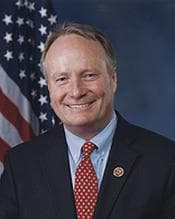
- David Joyce
- Cosponsors
- - 4 - 5
- Introduced
- In Committee
What this bill would do
This bill, known as the "SAFE Banking Act of 2026," aims to create protections for financial institutions that provide services to State-sanctioned marijuana businesses and service providers. It establishes a safe harbor to prevent federal regulators from taking adverse actions against depository institutions for providing these services. The legislation also extends protections to hemp-related legitimate businesses and their service providers. Additionally, it addresses the treatment of income from these businesses for the purpose of qualifying for federally backed mortgages. Finally, the bill includes requirements for guidance, examinations, and studies regarding diversity and inclusion within these industries.
Yes· 3 of 12
Would business owners be better off under this?+7
The bill creates a safe harbor for businesses and their owners from federal banking penalties and asset forfeiture.
Does this make it easier to run a small business?+6
The bill provides legal protections and banking access for small State-sanctioned marijuana and hemp businesses.
Would veterans be better off under this, taking everything together?+5
The bill expands mortgage eligibility through the Department of Veterans Affairs for those with marijuana-related income.
The opposite
No question was scored the opposite.
Who it would affect, and how
Potential Positive Impacts for People
-
Protections for Financial Institutions: Depository institutions are protected from having their deposit insurance terminated or being penalized solely because they provide services to State-sanctioned marijuana businesses or service providers (Section 3).
-
Legal Protections for Business Operations: Proceeds from marijuana-related activities of a State-sanctioned marijuana business conducting activity in compliance with State, Indian Tribe, or political subdivision law shall not be considered proceeds from an unlawful activity (Section 4).
-
Liability Shield for Financial Entities: Depository institutions, community development financial institutions, and insurers, along with their officers and employees, may not be held liable under Federal law solely for providing financial services to these businesses (Section 5).
-
Mortgage Eligibility: Income derived from a State-sanctioned marijuana business operating in compliance with local laws will be considered legal income when determining eligibility for a federally backed single-family mortgage loan (Section 9).
-
Collateral Protection: Entities with a legal interest in collateral for loans provided to owners, employees, or operators of State-sanctioned marijuana businesses—or those leasing real estate/equipment to them—will not be subject to criminal, civil, or administrative forfeiture solely for providing those services (Section 5).
-
Support for Hemp Businesses: The bill directs federal banking regulators to update guidance to address the needs of hemp-related legitimate businesses and service providers (Section 8).
-
Focus on Diversity and Inclusion: Federal banking regulators must submit annual reports on the availability of financial services for minority, veteran, women, and small State-sanctioned marijuana and hemp businesses (Section 11).
Potential Negative Impacts for People
-
No Requirement to Provide Services: The bill explicitly states that nothing within the Act shall require a depository institution, community development financial institution, or insurer to provide financial services to a State-sanctioned marijuana business, service provider, or any other business (Section 15).
-
National Security Exceptions: Federal banking agencies may still order the termination of customer accounts if they believe the customer poses a threat to national security or is involved in terrorist financing (Section 10).
Groups and Interests Ranking
Every group the model scored this bill for, from -10 to +10. Hover a score for the reason it gave.
- Demographic And Interest Groups
- Good For Business Owners+7Good For Veterans+5Good For African Americans+4Good For Hispanic Americans+4Good For Women+4Good For Low Income Households+3Good For Middle Class Households+3
- Social Issues And Justice
- Improves Affordable Housing+5Improves Racial Equity+4
- Economy And Finance
- Improves Small Business Support+6
- National Security And Foreign Policy
- Improves Veterans Benefits+4
- Governance And Ideology
- Improves Government Transparency+3
- 8/20/2026
- 2 Cosponsors added.
- 7/17/2026
- Referred to the Subcommittee on Economic Opportunity.
- 6/25/2026
- Referred to the Committee on Financial Services, and in addition to the Committees on the Judiciary, and Veterans' Affairs, for a period to be subsequently determined by the Speaker, in each case for consideration of such provisions as fall within the jurisdiction of the committee concerned.
- 7 Cosponsors added.
- Introduced in House
3 bills Congress.gov lists as related to this one — companions in the other chamber, earlier versions, and bills this one absorbed or was folded into.
 J. Correa
Democrat · California
 Troy Carter
Democrat · Louisiana
 Warren Davidson
Republican · Ohio
 James Himes
Democrat · Connecticut
 Brian Mast
Republican · Florida
 Mike Rogers
Republican · Alabama
 Guy Reschenthaler
Republican · Pennsylvania
 Dina Titus
Democrat · Nevada
 Nydia Velázquez
Democrat · New York