Bill · H.R. 8990· House(119-HR-8990)
Protect Domestic Oil and Gas Small Business Act of 2026
- Introduced
- 5/21/2026
- Last activity
- 5/21/2026 — Referred to the House Committee on Energy and Commerce.
- Sponsored by
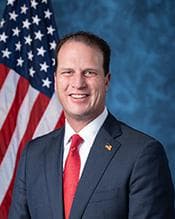
- August Pfluger
- Cosponsors
- - 27 - 2
- Introduced
- In Committee
What this bill would do
This bill is known as the Protect Domestic Oil and Gas Small Business Act of 2026. It changes the Clean Air Act to exclude marginal wells from certain standards of performance and other requirements. Under the bill, marginal wells and their owners or operators will not face requirements for monitoring, reporting, record-keeping, conducting fugitive emission surveys, detecting or repairing leaks, or estimating or measuring emissions. State plans submitted to the Administrator are also barred from including standards of performance for marginal wells. Furthermore, any pending enforcement actions related to these requirements for a marginal well must be terminated upon the enactment of the Act.
Yes· 3 of 9
Would business owners be better off under this?+7
Owners of marginal oil and gas wells benefit significantly from the removal of costly regulatory and monitoring requirements.
Does this make it easier to run a small business?+7
The bill directly benefits small independent domestic oil and gas operators by exempting marginal wells from stringent Clean Air Act requirements.
Does this leave more decisions to the states?+5
The bill gives states greater flexibility to exempt marginal wells from standards in their state plans.
The opposite
Does this cut the pollution that drives climate change?-5
Exempting marginal wells from Clean Air Act performance and monitoring standards could lead to higher unmitigated emissions.
Does this better protect air, water and wildlife?-5
Rolling back air quality standards and terminating pending enforcement actions weakens overall environmental safeguards.
Does this give the federal government more power?-2
The bill limits federal administrative oversight and enforcement flexibility regarding certain state air plans.
Who it would affect, and how
Potential Positive Impacts for People
-
Section 2(a), adding subsection (k)(1) to the Clean Air Act: This provision states that no standards of performance, monitoring, reporting, record-keeping, leak detection and repair, or emission estimation requirements shall apply to any marginal well or its owner or operator. This could benefit small business owners and operators of marginal wells by relieving them of these specific regulatory burdens and operational requirements.
-
Section 2(b)(2): This section mandates that any pending action to enforce a standard of performance or requirement specified in the new subsection (k)(1) with respect to a marginal well shall be terminated as of the date of enactment. This immediately stops ongoing enforcement actions against owners or operators of these wells.
Potential Negative Impacts for People
- Section 2(a), adding subsection (k)(1) to the Clean Air Act: By excluding marginal wells from requirements such as monitoring, reporting, record-keeping, fugitive emission surveys, and leak detection and repair, the bill removes these specific oversight and maintenance rules for such sites. This means these specific environmental monitoring and reporting protections will no longer apply to marginal wells or their operators.
Groups and Interests Ranking
Every group the model scored this bill for, from -10 to +10. Hover a score for the reason it gave.
- Demographic And Interest Groups
- Good For Business Owners+7Good For Rural Residents+4
- Economy And Finance
- Improves Small Business Support+7Increases Job Creation+2Improves Economic Growth+1Reduces Inflation+1
- Environment Energy And Infrastructure
- Improves Rural Development+3Reduces Gas Prices+1Improves Environmental Protections-5Reduces Carbon Emissions-5
- Governance And Ideology
- Increase States Rights+5Increases Federal Power-2
- 9/28/2026
- 1 Cosponsor added.
- 9/24/2026
- 1 Cosponsor added.
- 9/21/2026
- 1 Cosponsor added.
- 9/16/2026
- 1 Cosponsor added.
- 9/2/2026
- 1 Cosponsor added.
- 8/31/2026
- 1 Cosponsor added.
- 8/10/2026
- 2 Cosponsors added.
- 7/27/2026
- 1 Cosponsor added.
- 7/21/2026
- 1 Cosponsor added.
- 7/14/2026
- 1 Cosponsor added.
- 7/9/2026
- 1 Cosponsor added.
- 6/24/2026
- 1 Cosponsor added.
- 6/22/2026
- 1 Cosponsor added.
- 6/3/2026
- 1 Cosponsor added.
- 6/2/2026
- 1 Cosponsor added.
- 5/26/2026
- 2 Cosponsors added.
- 5/21/2026
- Referred to the House Committee on Energy and Commerce.
- 11 Cosponsors added.
- Introduced in House
One bill Congress.gov lists as related to this one — companions in the other chamber, earlier versions, and bills this one absorbed or was folded into.
 Jodey Arrington
Republican · Texas
 Stephanie Bice
Republican · Oklahoma
 Lauren Boebert
Republican · Colorado
 Troy Balderson
Republican · Ohio
 Henry Cuellar
Democrat · Texas
 Dan Crenshaw
Republican · Texas
 Mike Carey
Republican · Ohio
 Troy Downing
Republican · Montana
 Jake Ellzey
Republican · Texas
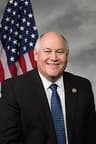 Ron Estes
Republican · Kansas
 Gabe Evans
Republican · Colorado
 Vince Fong
Republican · California
 Julie Fedorchak
Republican · North Dakota
 H. Griffith
Republican · Virginia
 Vicente Gonzalez
Democrat · Texas
 Craig Goldman
Republican · Texas
 Wesley Hunt
Republican · Texas
 Frank Lucas
Republican · Oklahoma
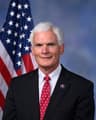 Robert Latta
Republican · Ohio
 Laurel Lee
Republican · Florida
 Nicholas Langworthy
Republican · New York
 Tracey Mann
Republican · Kansas
 Tom McClintock
Republican · California
 Nathaniel Moran
Republican · Texas
 Gary Palmer
Republican · Alabama
 Derek Schmidt
Republican · Kansas
 Randy Weber
Republican · Texas
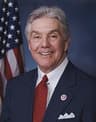 Roger Williams
Republican · Texas
 Ryan Zinke
Republican · Montana