
Judy Chu (D-CA)
Language Access Board Act of 2026
A Democratic bill with 14 Democratic cosponsors · See all 14 cosponsors
Last activity — Referred to the House Committee on Oversight and Government Reform.
In committee
Introduced and handed to a committee in the chamber it started in.
The committee holds it, and most bills are never heard from again. A hearing or a committee vote would be news; silence is the usual outcome, and it kills the bill without anyone voting against it.
Its path through Congress
- Introduced
- In Committee
What this bill would do
This bill establishes the Language Access Board to improve how people with limited English proficiency access Federal resources and programs. The Board will consist of 32 members, including public experts and heads of various Federal departments and agencies. It is tasked with creating standards, investigating violations, and providing technical assistance to ensure Federal materials are accessible. The Board has the power to conduct investigations, hold public hearings, and issue binding orders of compliance. Additionally, the act requires Federal agencies to evaluate their own accessibility and update their programs accordingly.
Yes· 3 of 8
- Scored +7
Would immigrants be better off under this?
The bill specifically targets improving the ability of those with limited English proficiency to access federal resources.
- Scored +6
Would Hispanic Americans be better off under this?
The bill enhances access to federal services for individuals with limited English proficiency, a group that includes many Hispanic Americans.
- Scored +6
Does this narrow racial gaps in how people are treated?
The bill establishes standards to ensure language-minority communities can access federal resources more effectively.
The opposite
No question was scored the opposite.
Who it would affect, and how
Potential Positive Impacts for People
-
Improved Accessibility to Federal Services: The Board is tasked with promoting language access and helping connect individuals with limited English proficiency to Federal resources and programs (Section 2(c)(5) and 2(c)(6)).
-
Standardized Communication: The bill requires the creation of specific language access standards to ensure public-facing resources, such as vital documents and websites, are accessible to those with limited English proficiency (Section s4(a)(1) and 4(a)(2)).
-
Accountability for Federal Agencies: The Board can investigate violations, hold public hearings, and issue binding orders of compliance to ensure agencies are following language access requirements (Section 2(c)(1) and 2(l)(1)).
-
Direct Recourse for Individuals: Any individual with limited English proficiency, or an organization acting on their behalf, can file a complaint with the Board if they believe a Federal agency is failing to comply with accessibility requirements (Section 4(d)(1)(A)).
-
Regular Progress Monitoring: The Board must submit a report to Congress and the President every two years to provide information on the extent of accessibility and the status of compliance (Section 2(o)).
Potential Negative Impacts for People
-
Potential for Exceptions via Waivers: Federal agencies can request a waiver from complying with the Board's standards if they determine that doing so imposes an "undue burden" (Section 4(a)(4)).
-
Limited Scope of Protection: The definition of "federally conducted program or initiative" excludes programs administered by non-Federal entities, such as State, local, Tribal, or territorial governments, even if they receive Federal funding (Section 5(2)(B)).
-
Exclusion of Certain Materials: The standards for "public-facing resources or materials" do not apply to technical, scientific, legal, or policy materials intended for specialized or expert audiences (Section 5(8)(B)(i)).
Groups and Interests Ranking
Every group the model scored this bill for, from -10 to +10. Tap or hover a score for the reason it gave.
- Demographic And Interest Groups
- Would immigrants be better off under this? — The bill specifically targets improving the ability of those with limited English proficiency to access federal resources. Would Hispanic Americans be better off under this? — The bill enhances access to federal services for individuals with limited English proficiency, a group that includes many Hispanic Americans. Would households on low incomes be better off under this? — Improved access to federal programs helps low-income households receive the benefits they are entitled to.
- Social Issues And Justice
- Does this narrow racial gaps in how people are treated? — The bill establishes standards to ensure language-minority communities can access federal resources more effectively. Does this make it easier for immigrants already here to become citizens? — Improved language access to federal programs can assist the integration process for immigrants. Is this likely to lift people out of poverty? — Ensuring access to federal programs may help individuals access nutritional and economic assistance more easily.
- Governance And Ideology
- Does this make what the government does easier for the public to see? — The board is required to publish reports and maintains a public record of its proceedings and compliance orders. Does this give the federal government more power? — The bill creates a new federal board with authority to investigate agencies and issue binding orders of compliance.
- 11/10/2026
- 1 Cosponsor added.
- 5/4/2026
- 2 Cosponsors added.
- 4/30/2026
- Referred to the House Committee on Oversight and Government Reform.
- 11 Cosponsors added.
- Introduced in House
 J. Correa
Democrat · California
 Gilbert Cisneros
Democrat · California
 Al Green
Democrat · Texas
 Jimmy Gomez
Democrat · California
 Daniel Goldman
Democrat · New York
 Timothy Kennedy
Democrat · New York
 Ted Lieu
Democrat · California
 Grace Meng
Democrat · New York
 Eleanor Norton
Democrat · District of Columbia
 Darren Soto
Democrat · Florida
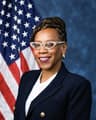 Lateefah Simon
Democrat · California
 Rashida Tlaib
Democrat · Michigan
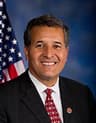 Juan Vargas
Democrat · California
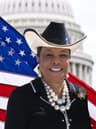 Frederica Wilson
Democrat · Florida