Bill · H.R. 8555· House(119-HR-8555)
Living Wage For All Act
- Introduced
- 4/28/2026
- Last activity
- 4/28/2026 — Referred to the House Committee on Education and Workforce.
- Sponsored by
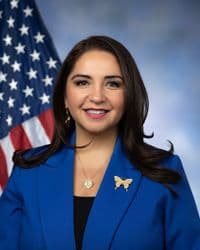
- Delia Ramirez
- Cosponsors
- - 32 - 0
- Introduced
- In Committee
What this bill would do
The Living Wage For All Act aims to establish a Federal minimum wage that aligns with the national median wage. It creates a phase-in schedule where large employers reach a $25 hourly wage by 2031, while other employers follow a slower path to the same amount. The bill seeks to end subminimum wages for tipped employees, youth workers, and workers with disabilities. Additionally, it expands the definition of "employee" to include incarcerated workers, prohibiting the deduction of board, lodging, or court-imposed fees from their wages.
Yes· 3 of 9
Does this raise the lowest wage an employer may pay?+8
The bill establishes a schedule to increase the federal minimum wage toward $25 per hour to align with the national median wage.
Would households on low incomes be better off under this?+7
Low-income households benefit from significantly higher minimum wage floors and increased economic security.
Would people with disabilities be better off under this?+6
The bill improves wages for individuals with disabilities and provides technical assistance for employment transitions.
The opposite
Would business owners be better off under this?-5
Business owners face increased labor costs due to the mandatory wage hikes.
Does this make it easier to run a small business?-4
Smaller employers face a much slower wage increase schedule compared to large corporations, which may create relative financial pressure.
Who it would affect, and how
Potential Positive Impacts for People
-
Increased Income for Workers: The bill establishes a schedule of wage increases to reach a minimum of $25 per hour, which is intended to align wages with the actual cost of living (Section 2(a)).
-
Economic Security for Tipped Employees: Tipped employees will see their base cash wages increase over time, eventually reaching the standard minimum wage (Section 6(a)).
-
Rights for Tipped Workers: The bill grants employees the specific right to retain any tips they receive (Section 6(b)).
-
Support for Youth and Individuals with Disabilities: The act increases the minimum wages for workers under 20 years old and those with disabilities, while also providing transition assistance for workers with disabilities (Section 7 and Section 9(a)).
-
Protection for Incarcerated Workers: The bill defines incarcerated workers as employees and prohibits employers from deducting the costs of board, lodging, or court-imposed fees from their wages (Section 10).
-
Economic Stability: By tying the minimum wage to a share of the national median wage, the bill aims to ensure wage standards rise with the economy and prevent the erosion of purchasing power (Section 2(a)).
Potential Negative Impacts for People
-
Burdens on Smaller Employers: The bill requires "other employers" (those not meeting the large employer definition) to follow a much slower wage increase schedule to reach the $25 threshold compared to large corporations (Section 4(a)).
-
Restrictions on Special Certificates: For individuals with disabilities, the bill prohibits the issuance of new special certificates for those who did not already have one before the act's enactment (Section 9(a)).
-
Phased Implementation for Certain Groups: While wages are increasing, some groups like tipped employees and youth workers are subject to a multi-year phase-in period before reaching the full standard minimum wage (Section 6 and Section 7).
Groups and Interests Ranking
Every group the model scored this bill for, from -10 to +10. Hover a score for the reason it gave.
- Demographic And Interest Groups
- Good For Low Income Households+7Good For People With Disabilities+6Good For Young Adults+5Good For Union Workers+3Good For Business Owners-5
- Social Issues And Justice
- Improves Poverty Reduction+6Improves Disability Rights+5Improves Criminal Sentencing Reform+4
- Economy And Finance
- Increases Minimum Wage+8Improves Economic Growth+3Improves Small Business Support-4
- 9/2/2026
- 1 Cosponsor added.
- 7/22/2026
- 1 Cosponsor added.
- 6/29/2026
- 2 Cosponsors added.
- 6/8/2026
- 1 Cosponsor added.
- 5/4/2026
- 2 Cosponsors added.
- 4/28/2026
- Referred to the House Committee on Education and Workforce.
- 25 Cosponsors added.
- Introduced in House
One bill Congress.gov lists as related to this one — companions in the other chamber, earlier versions, and bills this one absorbed or was folded into.
 Yassamin Ansari
Democrat · Arizona
 Judy Chu
Democrat · California
 Greg Casar
Democrat · Texas
 Danny Davis
Democrat · Illinois
 Christopher Deluzio
Democrat · Pennsylvania
 Adriano Espaillat
Democrat · New York
 Maxwell Frost
Democrat · Florida
 Jesús García
Democrat · Illinois
 Daniel Goldman
Democrat · New York
 Adelita Grijalva
Democrat · Arizona
 Henry Johnson
Democrat · Georgia
 Pramila Jayapal
Democrat · Washington
 Jonathan Jackson
Democrat · Illinois
 Ro Khanna
Democrat · California
 Ted Lieu
Democrat · California
 Summer Lee
Democrat · Pennsylvania
 LaMonica McIver
Democrat · New Jersey
 Christian Menefee
Democrat · Texas
 Analilia Mejia
Democrat · New Jersey
 Eleanor Norton
Democrat · District of Columbia
 Donald Norcross
Democrat · New Jersey
 Mark Pocan
Democrat · Wisconsin
 Emily Randall
Democrat · Washington
 Melanie Stansbury
Democrat · New Mexico
 Lateefah Simon
Democrat · California
 Bennie Thompson
Democrat · Mississippi
 Rashida Tlaib
Democrat · Michigan
 Jill Tokuda
Democrat · Hawaii
 Shri Thanedar
Democrat · Michigan
 Nydia Velázquez
Democrat · New York
 Frederica Wilson
Democrat · Florida
 Bonnie Watson Coleman
Democrat · New Jersey