Bill · H.R. 8002· House(119-HR-8002)
Fair Wages for Incarcerated Workers Act of 2026
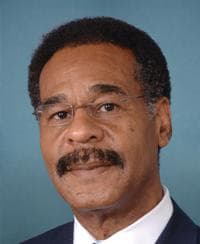
- Introduced
- 3/19/2026
- Last activity
- 3/19/2026 — Referred to the House Committee on Education and Workforce.
- Sponsored by
- Emanuel Cleaver
- Cosponsors
- - 10 - 0
- Introduced
- In Committee
What this bill would do
This bill, titled the "Fair Wages for Incarcerated Workers Act of 2026," seeks to amend the Fair Labor Standards Act of 1938. It aims to include incarcerated workers under the legal definition of an employee. The coverage applies to individuals working for public agencies that operate correctional facilities or private entities that operate facilities through contracts with public agencies. The bill defines the specific scope of work included and clarifies what constitutes a court-imposed fee.
Yes· 3 of 6
Does this raise the lowest wage an employer may pay?+6
The bill extends Fair Labor Standards Act protections to incarcerated workers, ensuring their wages cannot be offset by the cost of board or court fees.
Would households on low incomes be better off under this?+5
The bill provides higher net wages for those working in correctional facilities, which often includes low-income individuals.
Is this likely to lift people out of poverty?+4
Protecting the wages of incarcerated individuals can help prevent extreme poverty upon reentry.
The opposite
Would business owners be better off under this?-3
Private entities operating correctional facilities may face increased labor costs due to these wage protections.
Who it would affect, and how
Potential Positive Impacts for People
-
Wage Protections for Incarcerated Workers: By redefining "employee" to include incarcerated workers, the bill extends coverage under the Fair Labor Standards Act of s1938 to those working in public or contract-operated facilities (Section 2, subsection (e)).
-
Protection of Earned Wages: The bill ensures that the costs for board, lodging, or other facilities, as well as amounts taken for court-imposed fees, cannot be included in the calculation of the wages paid to an incarcerated worker (Section 2, subsection (m)(1)).
-
Broad Definition of Work: The law covers a wide range of work, including prison work programs, work release programs, the UNICOR program, State prison industries, and facility maintenance (Section 2, subsection (z)(1)).
Potential Negative Impacts for People
- No negative impacts are explicitly mentioned in the provided text.
Groups and Interests Ranking
Every group the model scored this bill for, from -10 to +10. Hover a score for the reason it gave.
- Social Issues And Justice
- Improves Poverty Reduction+4Improves Criminal Sentencing Reform+3
- Economy And Finance
- Increases Minimum Wage+6
- Demographic And Interest Groups
- Good For Low Income Households+5Good For Union Workers+3Good For Business Owners-3
- Governance And Ideology
- Increases Federal Power+3
- 9/16/2026
- 1 Cosponsor added.
- 4/20/2026
- 1 Cosponsor added.
- 3/19/2026
- Referred to the House Committee on Education and Workforce.
- 8 Cosponsors added.
- Introduced in House
2 bills Congress.gov lists as related to this one — companions in the other chamber, earlier versions, and bills this one absorbed or was folded into.
 Alma Adams
Democrat · North Carolina
 Danny Davis
Democrat · Illinois
 Jesús García
Democrat · Illinois
 Jahana Hayes
Democrat · Connecticut
 Henry Johnson
Democrat · Georgia
 Sydney Kamlager-Dove
Democrat · California
 Eleanor Norton
Democrat · District of Columbia
 Mark Pocan
Democrat · Wisconsin
 Delia Ramirez
Democrat · Illinois
 Melanie Stansbury
Democrat · New Mexico