Bill · H.R. 8516· House(119-HR-8516)
American Leadership in AI Act
- Introduced
- 4/27/2026
- Last activity
- 4/27/2026 — Referred to the Committee on Science, Space, and Technology, and in addition to the Committees on Energy and Commerce, Agriculture, Oversight and Government Reform, Education and Workforce, the Judiciary, and Ways and Means, for a period to be subsequently determined by the Speaker, in each case for consideration of such provisions as fall within the jurisdiction of the committee concerned.
- Sponsored by
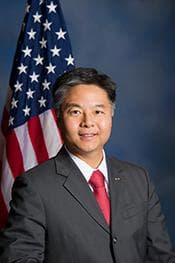
- Ted Lieu
- Cosponsors
- - 3 - 1
- Introduced
- In Committee
What this bill would do
The American Leadership in AI Act aims to improve the United States' position in artificial intelligence through various initiatives. It establishes a Center for AI Standards and Innovation to focus on the reliability, safety, and security of AI systems. The bill creates the National Artificial Intelligence Research Resource (NAIRR) to improve access to computing and data for researchers while introducing prize competitions to stimulate research in national security, health, and energy. The legislation seeks to modernize federal governance by establishing a Chief Artificial Intelligence Officers Council and agency-specific officers. Furthermore, it introduces frameworks to manage the impact of AI on the workforce, legal landscape, and security. Finally, the bill includes provisions for protecting workers, empowering small businesses, and expanding AI education and literacy.
Yes· 3 of 25
Would students be better off under this?+6
The bill expands access to AI research resources, scholarships, and specialized educational tools.
Does this put more money into scientific research?+6
The bill provides funding for AI literacy, research excellence centers, and expanded research capacity via the National Science Foundation.
Does this better protect the country from computer attacks?+6
The bill enhances cybersecurity through specialized training incentives and updates to the National Vulnerability Database.
The opposite
Does this shorten or soften prison sentences?-2
The bill increases maximum prison sentences for fraud offenses committed with the assistance of artificial intelligence.
Who it would affect, and how
Potential Positive Impacts for People
-
Enhanced AI Safety and Reliability: The establishment of the Center for AI Standards and Innovation aims to ensure the reliability, robustness, resilience, security, and safety of artificial intelligence systems. (Section 101)
-
Increased Research Access: The National Artificial Intelligence Research Resource (NAIRR) is designed to improve access to artificial intelligence resources, such as computational power and data, for researchers and students. (Section 201; Section 5602)
-
Medical Breakthroughs: The AI Grand Challenges Program includes a specific requirement for a prize competition aimed at advancing medical breakthroughs to address lethal forms of cancer. (Section 221)
-
Healthcare Efficiency: Grants provided through the National Institutes of Health can be used for research to improve the ability of practitioners to record notes, reduce administrative burdens, and expedite insurance claims. (Section 231)
-
Workforce and Education Opportunities: The bill includes provisions for an AI Workforce Research Hub, scholarships, fellowships, and the creation of community college centers of AI excellence to prepare people for an AI-literate future. (Section 401; Section 641; Section 643)
-
Small Business Support: The bill includes resources intended to help small businesses utilize artificial intelligence through developed resources, such as technical standards and best practices. (Section 411)
-
Protection against digital forgeries: Individuals can bring civil actions against those who knowingly produce, possess, or disclose "intimate digital forgeries" to seek damages and injunctions. (Section 501)
-
Workforce insight: The creation of the AI Workforce Research Hub allows for the evaluation of AI's impact on the labor market and the experience of United States workers. (Section 401)
-
Whistleblower safeguards: Employees and independent contractors are protected from retaliation when providing information regarding AI security vulnerabilities or violations. (Section 522)
-
Cybersecurity incentives: Employers can receive a tax credit for qualified employee cybersecurity education expenses. (Section 611)
Potential Negative Impacts for People
-
Data Privacy and Security Risks: While the bill aims to manage risks, the heavy reliance on large-scale datasets and the sharing of information through the NAIRR involves managing significant concerns related to privacy and ethics. (Section 5603; Section 5604)
-
Job Dislocation: The Government Accountability Office (GAO) is tasked with assessing jobs that could be at risk of dislocation due to the implementation of artificial intelligence. (Section 315)
-
Increased criminal penalties: Individuals involved in mail, wire, or bank fraud committed with the assistance of artificial intelligence face significantly higher fines and longer prison sentences. (Section 511)
-
Sunset of oversight: The directive for agencies regarding leadership roles and organizational structures related to artificial intelligence will expire 90 days after issuance. (Section 316; Section 317)
Groups and Interests Ranking
Every group the model scored this bill for, from -10 to +10. Hover a score for the reason it gave.
- Demographic And Interest Groups
- Good For Students+6Good For Young Adults+5Good For Business Owners+4Good For African Americans+3Good For Native Americans+3Good For Rural Residents+3Good For Children+2Good For Low Income Households+2Good For Union Workers+2Good For Women+2
- Economy And Finance
- Improves Small Business Support+5Increases Job Creation+5Reduces Small Business Taxes+2Improves Union Protections+1
- Education And Technology
- Increases Scientific Research Funding+6Improves College Affordability+4
- Governance And Ideology
- Improves Privacy Rights+5Improves Government Transparency+4
- Environment Energy And Infrastructure
- Improves Rural Development+4Improves Environmental Protections+3
- National Security And Foreign Policy
- Improves Cybersecurity Defense+6
- Healthcare
- Improves Healthcare Access+4
- Social Issues And Justice
- Improves Racial Equity+4Improves Disability Rights+1Improves Poverty Reduction+1Improves Criminal Sentencing Reform-2
- 5/20/2026
- 3 Cosponsors added.
- 4/27/2026
- Referred to the Committee on Science, Space, and Technology, and in addition to the Committees on Energy and Commerce, Agriculture, Oversight and Government Reform, Education and Workforce, the Judiciary, and Ways and Means, for a period to be subsequently determined by the Speaker, in each case for consideration of such provisions as fall within the jurisdiction of the committee concerned.
- 1 Cosponsor added.
- Introduced in House
9 bills Congress.gov lists as related to this one — companions in the other chamber, earlier versions, and bills this one absorbed or was folded into.
- 119-HR-2385: CREATE AI Act of 2025
- 119-HR-3460: AI Whistleblower Protection Act
- 119-HR-3679: Small Business Artificial Intelligence Advancement Act
- 119-HR-3707: NSF and USDA Interagency Research Act
- 119-HR-7434: AI Grand Challenges Act of 2026
- 119-HR-9326: USA Act
- 119-S-1269: Promoting United States Leadership in Standards Act of 2025
- 119-S-1792: AI Whistleblower Protection Act
- 119-S-3809: AI Grand Challenges Act of 2026
 Josh Gottheimer
Democrat · New Jersey
 Jay Obernolte
Republican · California
 Deborah Ross
Democrat · North Carolina
 George Whitesides
Democrat · California